
► 2025 was a big year for CEO musical chairs
► Why have so many changed post?
► Will 2026 be a calmer year?
After a frenetic reshuffle in recent months in which some of the more flamboyant and rule-busting CEOs have been ousted or left of their own accord, the ones chosen to replace them are all about preventing disruption, not creating it.
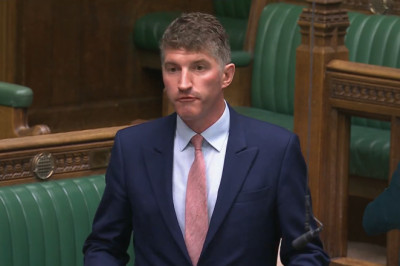
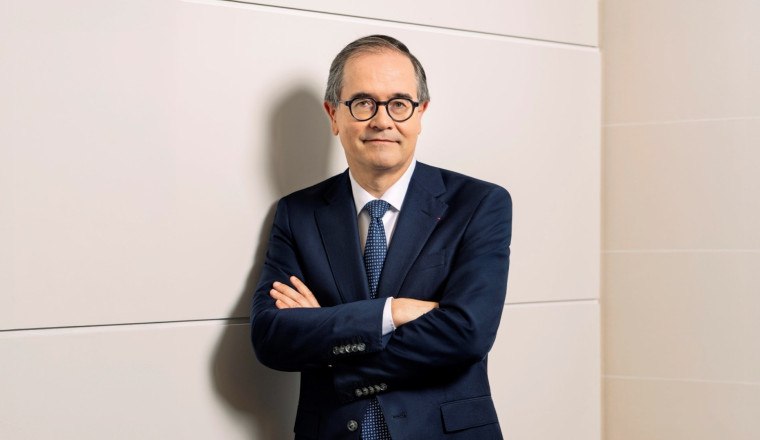
Freshly minted bosses like Antonio Filosa at Stellantis (replacing Carlos Tavares), Francois Provost at Renault (pictured below, stepping into Luca de Meo’s designer shoes), Hakan Samuelsson at Volvo (taking over from Jim Rowan), Ivan Espinosa at Nissan (the new Makoto Uchida) and PB Balaji at JLR (about to take over from Adrian Mardell) have all been promoted within their own organisation.
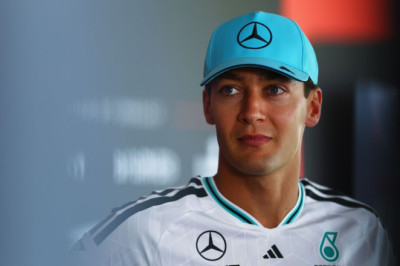
Porsche has also secured a new CEO in Michael Leiters, after Oliver Blume’s (above) combined role also overseeing the VW Group parent company was put into question by Porsche’s recent poor performance. China’s sudden lack of appetite for European premium cars is partly to blame. ‘The business model, which has served us well for many decades, no longer works in its current form,’ Blume warned Porsche employees in a July letter.
Essentially, executive committees right now are picking dependable generals from the ranks. No more poaching from rivals or even unrelated tech companies (eg Rowan, who came from Dyson).
The job now is storm-proofing their companies from the worst of the incoming threats. To do that you have to know where all the tarps and fire extinguishers are kept.
We’re a long way from the optimism of 2021, when EVs, software, direct sales and a host of other Tesla-sourced ideas were predicted to juice the balance sheets. Tesla, it transpired, was a terrible role model in many ways.
‘I don’t think any of the CEOs are comfortable,’ Andrew Bergbaum, global automotive lead at consultants AlixPartners, told CAR. ‘They’re dealing with multiple fires.’
The location of those fires will be different depending on their global market exposure, but top of any list will be tariffs if you’ve got a US footprint, plummeting market share in China for anyone with a remaining business there and stagnating sales in Europe, with the added pain of increased Chinese competition.
‘You’re dealing with the polarisation of the industry now, because the US is a very, very different place to China, which is a different place to Europe,’ said Bergbaum, a former Aston Martin executive.
How you, the new CEO, approach the task ahead will depend partly on whether your predecessor jumped or left under a cloud. For Provost at Renault for example, the job is to assume the mantle of de Meo following his big-money signing to Kering, the parent company of Gucci. ‘My strategy is based on continuity,’ the former head of purchasing, partnerships and public affairs told journalists at the Munich motor show.
As with most companies, the job at Renault is to cut costs and speed up development to track the Chinese, the biggest threat to its sales in markets like the UK, Spain and Italy. Next to come is the Twingo small EV, created in a rapid 21 months.
Antonio Filosa’s job at Stellantis, by contrast, is to be the anti-Tavares.
Whereas Tavares went all-in with the 2021 Dare Forward plan with wild promises like €20 billion of software-generated revenues by 2030, Filosa is axing some of the more buoyant predictions and reviving cancelled or delayed launches in the US, in a wind-back of the planned EV transformation.
Filosa, in a recent chat hosted by the bank Kepler Cheuvreux, outlined the ways he’d got the backs of US dealers, who were fuming with Tavares over his preference for margins over volume.
Espinosa at Nissan, meanwhile, is facing the reverse problem of Filosa – too many cars to sell as a result of his predecessor’s fairly desperate attempt to stem Nissan’s volume shrinkage. In response he announced he would close seven of the company’s 17 plants globally and axe 11,000 jobs. ‘Our fixed costs are higher than our current revenue can support,’ Espinosa said.
For Volvo’s Samuelsson (above), the return to the hot seat marks a troubling fragmentation of the markets as rising barriers prevent easy shipping between regions. Essentially he’s creating three Volvos, one for the US, one in Europe and a third in China. ‘We are creating much more empowered regions,’ Samuelsson said at the a Financial Times conference earlier this year, giving himself a deserved pat on the back for for the foresight to open a US plant during his first stint in charge.
JLR is a tougher one. The announcement that Tata Motors chief financial officer and all-round Tata Group stalwart PB Balaji will take over from Adrian Mardell in November follows the patten in that it’s an internal promotion, but JLR is a VERY different animal to the parent company’s budget-focused Indian operation.
Given that JLR’s healthy profits are being eroded by all the common global undercurrents, even before the devastating hack, Balaji might just want a closer look at the books. ‘It’s a harbinger of tighter Tata financial control as the firm enters choppy waters around the shift to EVs, Trump tariffs etc,’ David Bailey, professor of business economics at the Birmingham Business School, told CAR.
If there was a manual for the new automotive CEO approaching 2026, it would contain a mass of contradictory advice: increase profits while also discounting to push volume; match Chinese development speeds but don’t drop our quality reputation; cut costs while offering EVs, hybrids and combustion engine cars; follow the Chinese EV trend while planning for a possible future right-wing-led bonfire of environmental targets. Good job they’re paid well.
Nick Gibbs is CAR magazine's go-to newshound. An experienced automotive news reporter and analyst who's on first-name terms with the industry decision-makers who are shaping the cars of the future.
By Nick Gibbs
Contributor and newshound who specialises in unravelling the machinations of the car industry