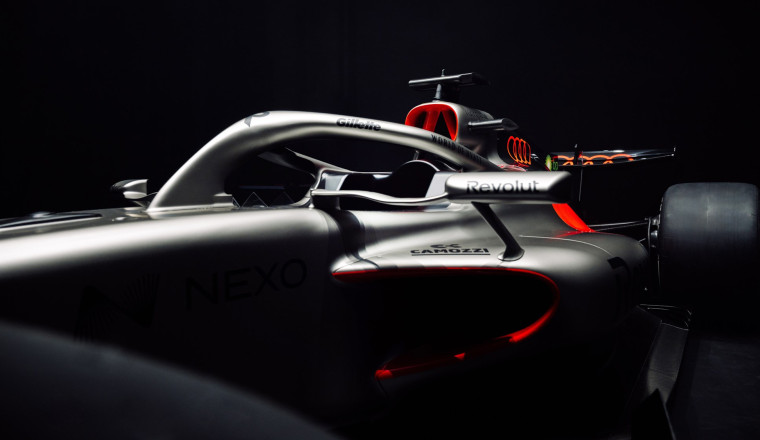

► Audi’s F1 car shown in Berlin
► But we go behind the scenes at Neuburg
► Binotto and Wheatley speak
Audi’s F1 era has begun. At a glitzy event in Berlin, the four rings marked their debut in F1, following successful spells in virtually every other form of motorsport. As you’d expect, the event was a heady mixture of influencers, celebrities, punchy quotes and big sponsors – such as Revolut, BP and, of course, Adidas.
‘Today, a lot of pieces of the puzzle are coming together,’ said Gernot Döllner, CEO of AUDI AG and Chairman of the Board of Management of Audi Motorsport AG, at the team presentation. ‘For the first time, the full power of the project is on display. We are ready and excited to inspire people around the world by taking part in Formula 1.’
The most crucial piece of that puzzle, however, is around 340 miles south west of Berlin in the quiet town of Neuburg. Located in Bavaria, it has around 30,000 residents – and it houses Audi Sport’s motorsport and R&D hub. The chassis rules are changing for 2026, but the powertrains inside them are set to transform more next year than in the previous decade. F1 in 2026 could well become a power-unit formula – but is Audi ready?
To get a closer look at Audi’s F1 programme, we looked around its real engine room late last year and spoke to some of the people looking to focus the brand’s expertise on an altogether new formula.
‘When you’ve got big changes to the technical regulations on the chassis, on the power units – one of the biggest in the last… maybe 30 years,’ says Mattia Binotto, head of the Audi F1 project. ‘It’s like starting from scratch for everyone.’
‘Starting from scratch means that we are all coming from the same baseline in terms of technical challenge,’ he adds. ‘And that certainly is an opportunity.’ One of Audi’s high-profile signings, the ex-Ferrari team principal is no stranger to F1, nor the importance of power units
2026 will see new rules that place a greater focus on the electric element of F1, as well as greater freedom on the fuel side. The hybrid element will be responsible for 350kW of energy next year (double that allowed so far) and the MGU-H – which captures energy and reduces turbo lag – is also out. The result is a more powerful and trickier-to-use powertrain, but one that should be cheaper to make: the powertrain budget cap is just €180 million (around £160m) this time.
As we look around the factory in Neuburg, it’s clear Audi is building from the very beginning. It’s no stranger to motorsport success, but its time at Le Mans was decades ago – and even then, focused on a turbocharged diesel engine. Audi’s most recent motorsport experience instead comes from the all-electric Formula E programme. It means Ingolstadt feels better prepared for the hybrid element of the 2026 powertrain rules than the ICE side – just as well, given it’s 50/50 next year.
However, Audi is approaching these rules from a standing start – and that’s evident when we walk around its heavily upgraded Neuburg facility. Newly optimised for the brand’s F1 project, the halls of Audi’s factory have a new-building vibe. The carpets are unblemished, monitors in its control rooms are still stickered up, and the reek of new equipment is everywhere. It’s the smell of investment, but also inexperience.
‘I’m fully aware and conscious as well that we are fighting against settled organisations, very strong competitors,’ warns Binotto. ‘The ones that are winning today are winning because they are strong, well organised, and have the assets, the resources and the tools that are required to be the best. And that will be unchanged.’
‘We know as well that becoming a successful team in F1 may take several seasons. I think we are humble enough to understand that the others may be stronger.’
Still, it’s worth noting that neither testing nor the first race will offer a clear read on the competitive picture. The performance order is likely to fluctuate widely as teams get to grips with their new machines. With that in mind, it’s not just Audi’s initial development that will be crucial – but its adaptability and response time.
‘I think we measure the best organisations, or the best teams,’ said Binotto, ‘by the ways that they react – how long it takes to address the problem.’
The link between Sauber’s base in Hinwil, Switzerland and Neuburg will be crucial to Audi’s chances of success, as will the culture needed to gel the two together and fix issues as quickly as possible.
‘Most have mainly two locations for chassis and powertrain, only really Ferrari having everything under the same roof,’ says Binotto of the split-site model. It’s a challenge, but it’s not an impossible one. ‘There have been winning teams set up like that – and, as a matter of fact, chassis and powertrain are different competencies, requiring different skills,’ he reminds us.
Linking the two sites is where Ingolstadt’s other huge signing comes in: ex-Red Bull man Jonathan Wheatley, now in Audi’s team principal role. It’ll be his job to get Audi’s extensive and ongoing investment firing on all cylinders and working in harmony – a bit like the marriage of hybrid and ICE power in the car itself.
‘Momentum is so important in a Formula One team, especially when you’re trying, as a team, to catch up with the big teams, to break through this establishment,’ he said. ‘We have an ambitious target, and the way we’re going to get there is going to involve keeping this momentum going, keeping continuous improvement in the team, and really using everything we have in our power to keep progressing.’
Audi’s ambitions are realistic for 2026, but get loftier after that, with wins targeted from 2030 onwards. To achieve those aims, Audi must tool up not just for next year, but for the future – just like its well-established rivals.
‘We are really investing in young generations,’ says Binotto. ‘Our long-term ambition is not only 2026 – it’s a long journey, aiming to fight for a championship in 2030, but then becoming stable and becoming a successful, winning team for the future.’
We’ll know Audi’s short-term performance in just a few months’ time, but it’ll be years before we truly get to judge Binotto and Ingolstadt’s latest project.
Curtis Moldrich is CAR magazine’s Digital Editor and has worked for the brand for the past five years. He’s responsible for online strategy, including CAR’s website, social media channels such as X (formerly Twitter) and Facebook, and helps on wider platform strategy as CAR magazine branches out on to Apple News+ and more.
By Curtis Moldrich
CAR's Digital Editor, F1 and sim-racing enthusiast. Partial to clever tech and sports bikes