

► Official: EU drops 2035 combustion ban
► Emissions to be reduced by 90 per cent
► Includes other means of decarbonising car industry
After months of speculation, lobbying and even a few talkative MEPs, the European Commission has officially confirmed that its combustion engine ban that would come into effect in 2035 has been scrapped.
Instead, the Commission has announced that a 90 per cent reduction in CO2 emissions will be the rule for passenger cars instead – still a significant reduction. The remaining 10 per cent will be reduced or removed via ‘compensation mechanisms’ like using ‘low-carbon’ steel manufactured in the European Union, or engineering the engines to run on biofuels or synthetic fuels.
Beyond 2035, the EU Commission says that ‘Plug-in hybrids, range extenders, mild hybrids, and internal combustion engine vehicles will still play a role, in addition to full electric (EVs) and hydrogen vehicles.’
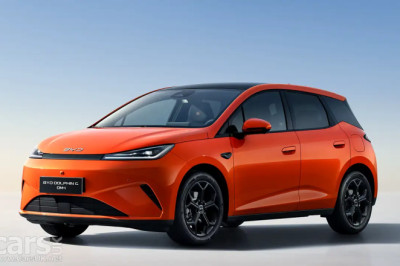
There was also tacit confirmation of a plan for a new type of ‘small affordable electric car’ class, with the EU pointing out that manufacturing these kinds of vehicles will allow car makers to ‘make a larger contribution to CO2 target compliance through ‘super credits.’’
This new class of small car, nicknamed the E-Car, has already been mooted by EU Commission president Ursula von der Leyen. During her 2025 State of the Union speech on 10 September, she said: ‘Millions of Europeans want to buy affordable European cars, so we should also invest in small, affordable vehicles. I believe Europe should have its own E-Car. E for ‘environmental’, ‘economical’ and ‘European.’’
Cars like the Dacia Hipster hit a lucky break when that statement was made, as this new ‘E-Car’ vehicle class could be just the right solution for that car to make production as close to the concept as possible. Stellantis, too, is investigating this E-Car program, having lobbied the EU just as much as the Renault Group has.
Commentators point out that this is a win for China. The argument is that in a market where EVs are dominant, China already has a leg-up; reducing the mandatory requirements in Europe for other car makers reduces the need to innovate and could leave them further behind. A repeal or watering down of the ban was also lobbied against by the likes of Volvo and Polestar (below), according to The Guardian.
Climate campaigners also see this as a significant rollback. Dominic Phinn, head of transport at Climate Group said via Reuters that this is a ‘tragic win’ for conventional combustion engine use. ‘The watering down of the petrol and diesel-engine phase-out flies in the face of leading companies across Europe, who are investing billions in electric fleets and desperately need the stability it provides,’ he says.
It’s also worth pointing out that this, for now at least, doesn’t affect the UK’s plans. Its ZEV Mandate is entirely separate to the EU’s own emissions rules and, given we’re not in the European Union, we’re not obliged to follow this new rule set.
We’ll update this story when we know more.
Jake has been an automotive journalist since 2015, joining CAR as Staff Writer in 2017. With a decade of car news and reviews writing under his belt, he became CAR's Deputy News Editor in 2020 and then News Editor in 2025. Jake's day-to-day role includes co-ordinating CAR's news content across its print, digital and social media channels. When he's not out interviewing an executive, driving a new car for review or on a photoshoot for a CAR feature, he's usually found geeking out on the latest video game, buying yet another pair of wildly-coloured trainers or figuring out where he can put another car-shaped Lego set in his already-full house.
By Jake Groves
CAR's news editor; gamer, trainer freak and serial Lego-ist