
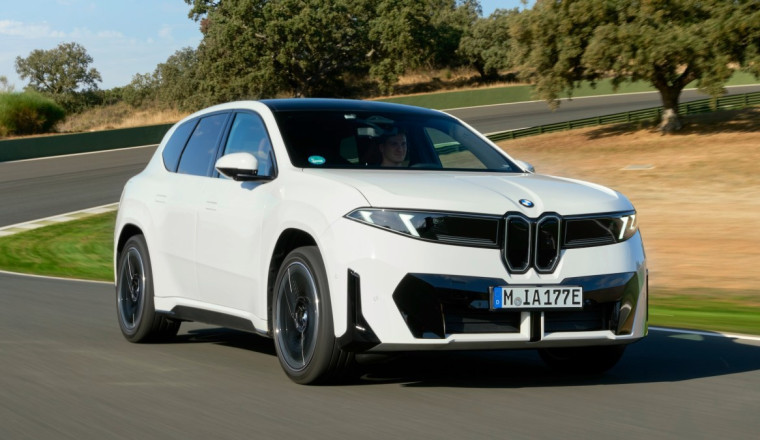

The Rock of Gibraltar looms behind me as I stitch turns together behind the wheel of the 2027 BMW iX3. Over the course of the day, I’ll connect the dots between villages in Andalusia, with the instant-on thrust of battery-electric power and a suspension tuned to snub bumps softly, with gentle but unmistakable reproach.
I’ll also hop into a unit prepped with performance summer tires and flog Circuito Ascari, where a tuned M5 and a driving instructor tease a game of lead-follow before our pack of wagons turns back toward the water, threading through mountain passes to end up back in view of Gibraltar.
It doesn’t take all that driving or stunning scenery to convince me. As much as I like BMW’s gas-powered X3 SUV—my favorite in its lineup of all-around utility vehicles—this electric version works better in almost every way.
Rethought from the tire tread to the roof, the 2027 BMW iX3 will introduce the Neue Klasse range of battery-powered BMWs to American drivers next summer. It promises to remap the buying habits of anyone who might have defaulted to a certain American-branded electric SUV. And it delivers on a long-running BMW promise to revive some of its hallmark driving feel inside a vehicle type (two, really: SUVs and EVs) notoriously resistant to it.
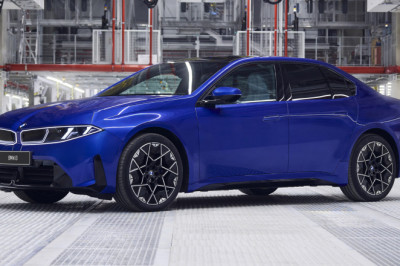
With the 2027 iX3, BMW finally puts its first Neue Klasse vehicles on the road. Conceived to lower the weight of battery packs and motors, while trying to claw back some of that hallowed touch, the Neue Klasse range takes a distinctive styling tack that strikes me as a kinder, gentler evolution of the radical iX already on the road. It wears a new version of BMW’s grille, now with taller kidneys that wear rings of LEDs to replace some chrome. Headlights band together across the front end like a mask, and sit atop a platform of deep air intakes. From the side, the iX3 works best, with a wagonlike greenhouse that perches over chunky fender flares. Thin banks of LEDs part across the tail to make way for a modestly sized BMW roundel. An M Sport package adds black diffusers and different wheels to the mix, while an M Sport Pro edition adds gloss-finished trim bits.
Step inside, and the iX3 hits two ways. A band of screens across the windshield base and an angled touchscreen seem uncomplicated, until the pushbutton lights them up, at least. Welcome toggles and rockers on the console and squircular steering wheel promise easy control access. My test car wore a rust-colored synthetic leather and gray paint that paired perfectly with the Spanish scenic vistas. It’s fashion-forward but user-friendly, at first glance.
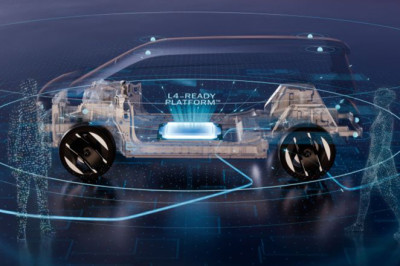
Under its floor, the iX3 factors in BMW’s latest thinking in electric power. With a front 123-kilowatt motor and a 240-kw rear unit, the dual-motor all-wheel-drive iX3 can scoot to 60 mph in five seconds or less, thanks to a 108.7-kWh lithium-ion battery pack. On this European setup, BMW promises 10-80 percent charging times of 21 minutes and a range of 679 to 805 km (422 to 500 miles) on the WLTP cycle. U.S. EPA ratings haven’t been published, but BMW estimates up to 400 miles on a full charge, which seems within reach. I saw a usage rate of about 2.6 miles per kWh, a good but not excellent efficiency rating, while I needled it between pine trees on plunging mountain roads.
It’s happy to do so, thanks to a four-zone electronic architecture that allows BMW to dedicate an entire control unit to driving dynamics. While the strut front and five-link rear end rely on passive mechanical operation, everything else, from steering to power delivery to individual motors, depends on that unit, which BMW dubs the “heart of joy.” (Joy actually happens in the brain when it goes skinny-dipping in oxytocin and serotonin, but nevermind.) Faster control of motors, more precise control of steering inputs, finer mastery over stability and traction controls—BMW says all are critical to synthesizing that deep satisfaction in electric cars that can mimic our memories of the mechanical joys of the past.
Does it work? It’s as close as any car company has yet come, save for Porsche. As the iX3 tackles these difficult roads (some of BMW’s favorites for press launches, for decades), it’s clearly capable in ways that render other electric SUVs clumsy. The iX3 can distribute torque to the wheels to decelerate and tighten corners, and emerge from one more quickly as it recaptures energy for the battery. It can change personalities, too. A series of taps on the screen cycles through drive modes: Sport works best, of course, along with a higher setting for regenerative braking, but my co-driver and I figure out that the car’s “B” setting gives the most regen and enables real one-pedal driving.
It has a poised ride on passive dampers and Euro-spec 255/45-R20 tires on 20-inch rims, though 21- and 22-inchers will be offered in the U.S. The suspension allows some impacts to thud into the body, but tire noise is only noticeable when the programmed-in driving sounds have been turned off. It can’t defy the weight batteries bring—all EVs need a weight-loss miracle, a kilo Mounjaro—but it manages its 5,000-plus pounds well.
BMW says the iX3’s highly regenerative braking system uses friction brakes only 2 percent of the time. There’s a slight lag before regen engages deeply, but its smoothness stands out. The iX3 has about 6.9 inches of ground clearance on non-M-Sport models, with about 16 inches of water fording, for anyone who dares.
But it’s the steering that draws the most attention. It’s BMW’s hallmark trait, and here it’s said to be more attuned to driving joy than past EV Bimmers, thanks to its big brain. It pulls up shy of the gas X3, but only just, and likely only because of the effect of its higher curb weight and how that interacts with its total dynamic envelope. It’s impossible to turn back time, to deliver the light and communicative feel of, say, a 325is or even that of the first-gen X3. The iX3 goes back far enough in time to provide a satisfying steering feel, with its agreeably quick responses and pinpoint reflexes. It’s a different kind of joy, but it is joy nonetheless.
Drive modes can significantly change the iX3’s responses, but to get there, you’ll have to tap multiple times on the central screen through this latest immersive version of iDrive. BMW keeps lots of physical controls in the mix, for wipers, mirrors, radio volume, heating and defrosting, and turn signals, but the new Panoramic iDrive interface takes control over the rest. This version blends the customizable band of screens at the windshield with the customizable touchscreen and a head-up display, and ties it together with steering-wheel switches and voice commands. It’s a powerfully flexible infotainment system that requires seat time and flight hours to become second nature. Without that training, it’s like Grandpa’s first iPad and, in an unwelcome development, the grandpa is me.
I found it easier, for example, to summon drive modes via voice commands after fumbling through a few screens in search of more steering feel. “Hey BMW,” I said, “engage sport mode”—and it did more quickly than any on-screen quest. Say the words, and a mouthless, noseless blue beach ball appears on screen, rotating and lolling around as it processes commands. It helps to know the language it shares with us humans. I said “sport mode” twice, which called up sports scores, before I found the right input string.
Elsewhere, the iX3’s interior offers a relatively uncomplicated joy of lots of space and a fine degree of fit and finish. At 188.3 inches long and with a 114.1-inch wheelbase, it provides excellent front-seat comfort and copious rear-seat space. I’m just under six feet tall, and I found great foot and knee room in the back, as well as a few extra inches of headroom thanks to a good seatback angle. The wide, deep cargo hold checks in at almost 62 cubic feet behind the front seats, suitable for at least four suitcases, and gets joined by a small frunk to carry a charging cable.
Prices haven’t been confirmed, and neither have standard equipment or options, but the iX3 will offer some of BMW’s best and newest functionality when it arrives in the summer of 2026. Its adaptive cruise control will be able to execute lane changes, which it prompts on-screen and which the driver OKs with a glance to the proper side mirror. BMW’s smartphone app will engage city parking while the driver stands outside, and will be able to maneuver around obstacles while it docks in a spot. The car’s navigation will determine which charging stations actually deliver good speed and reliability, and recommend those instead of laggards. LED ambient lighting, Harman Kardon audio, a panoramic glass roof, and sport seats with red trim will be in the mix.
The iX3 doesn’t deliver the carbon copy of driving joy that BMW’s finest archival pieces once delivered. But we can’t keep comparing today’s most advanced vehicles with those from the past. They only exist in memory and in some lucky collections. We don’t compare hand-lettered books to Kindles, after all. We just learn to appreciate how each creates a distinct kind of joy.
BMW provided The Drive with travel, accommodations, and access to the vehicle for the purpose of writing this review.
BMW hardwires sweet steering and swift battery power into a better-than-X3 SUV package.
Got a tip? Email us at tips@thedrive.com
Car Buying Service