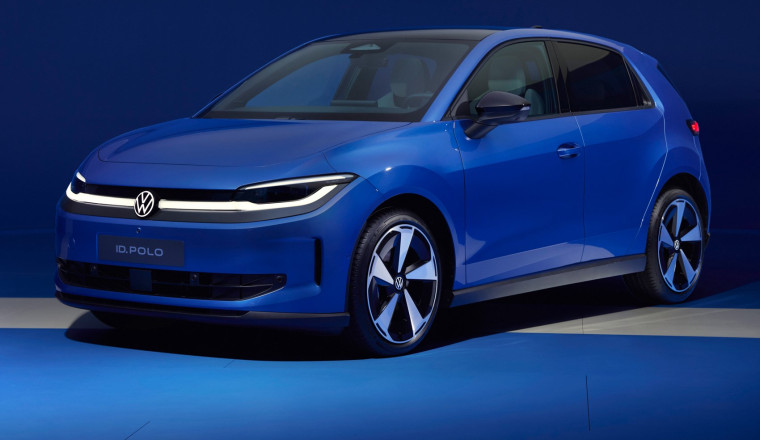

► New ID. Polo officially revealed
► EV supermini brings back some VW goodness
► UK price likely under £25k, launches October 2026
The Volkswagen ID. Polo has finally arrived. It’s a rather big moment for VW, as the brand hopes that a new generation of electric cars it’s launching will help patch up the, er… patchy reputation it has over its EVs.
As well as the ID.3 Neo that launched earlier in 2026, the new ID. Polo is a production car result from the ‘True Volkswagen’ scheme led by CEO Thomas Schäfer that’s designed to get the brand back making cars people want and, more importantly, actually like.
Put simply, the new ID. Polo is an electric supermini that’s designed to fight cars like the Renault 5, Nissan Micra, Hyundai Inster, Kia EV2 and Cupra Raval among others launching soon.
So… not ID.2, then?
Nope. That’s another part of the ‘True Volkswagen’ program; to bring back names and make VWs feel more welcoming. Schäfer confirmed this to CAR in 2025, saying that ‘names we’re familiar with’ would return. It’s pretty much a given that the ID.4 will be renamed ID. Tiguan, for example, while the ID.7 could be renamed ID. Passat.
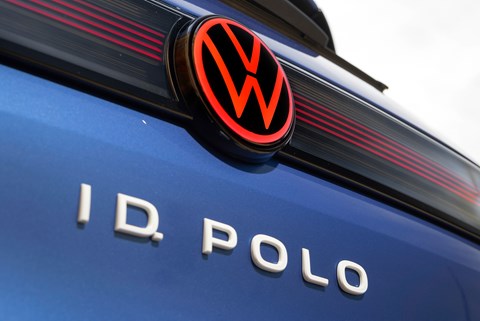
Anyway, back to the electric Polo. It measures 4053mm long, 1816mm wide and 1530mm tall, giving it a footprint and silhouette that’s very close to the combustion Polo that’ll remain on sale beside it.
The design has been led by Andreas Mindt and the VW design team. Schäfer tells the story of how he met Mindt, saying how his ‘life changed’ after the first conversation they had. ‘He was at Bentley at the time, and he described and sketched to me the way he saw Volkswagen and what he interpreted what our design should be: clear, timeless, confident,’ says Schäfer. ‘Andy then went to work over that Christmas and designed the ID.2 All show car that we presented in Hamburg in March 2023.’ That concept has spawned the ID. Polo you see here.
Not much has changed from that concept car. It’s a cleanly designed thing, with VW’s head of development Kai Grünitz saying that ‘a Volkswagen always needs a face, friendly eyes and likeable smile.’
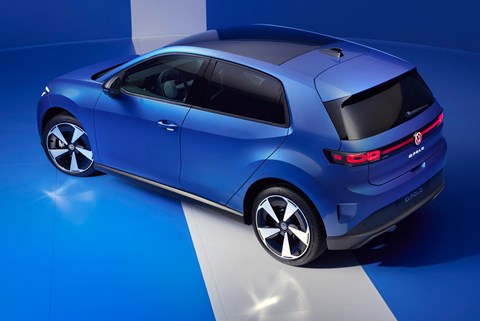
The front end has an optionally backlit panel across the bumper on higher-spec trims, but little else changes depending on what version you choose. VW says there’ll be three trims: Trend, Life and Style (but we’ll have to hang on a bit for specific UK trim levels). The car still has a chunky C-pillar that’s common for Volkswagen hatchbacks and includes details like rear lights that ‘look like whiskey glasses,’ says Grünitz.
And there are buttons inside now?
Yes! We’ve seen inside the ID. Polo for some time now, with VW so keen to show it off that the finalised design was announced months before the ID. Polo’s official reveal. That doesn’t dent the positive progress VW has made here, having listened to the public (and us grumpy media types) grumble for years about poor UI and rubbish interior quality on the brand’s EVs. This is particularly where VW hopes it can repair its reputation.
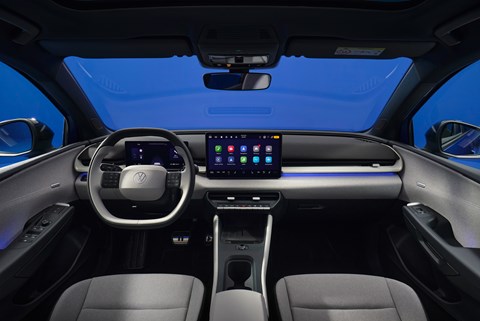
The interior layout, then, is straightforward and comes with a bunch of new physical controls. The steering wheel, for example, is a brand new design that has entirely physical buttons on it, and there is a bank of switches below the large infotainment screen that control the climate. VW has also added a physical volume dial for audio controls, and replaced the frustrating two-button window switch setup for a more conventional four-switch one on the driver’s side.
Some focus has been paid to the materials used, with new upholstery designs and colours launching. Soft but durable textiles are used in place of plastics in many areas like on the doors, with much a general lean away from using leather (genuine or manmade). From our experiences, it all feels like a genuine improvement over VW’s EV line-up, as well as the combustion powered Polo.
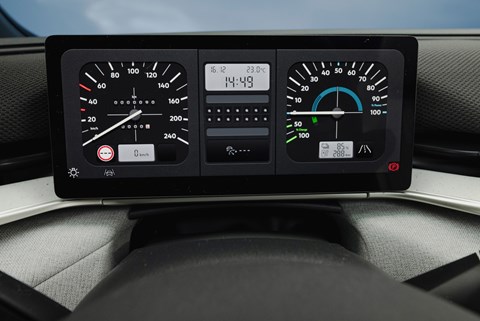
The infotainment itself has been improved, too. The user interface has been tidied up, and the central screen feels responsive from our early poke around. VW has introduced a ‘retro’ skin for the dials and central screen, too, so you can have a set of classic-looking instruments inspired by older Polo models.
VW also claims some big car tech can be had. As well as various driver assistance systems like the brand’s Travel Assist tech and matrix LED headlights being available, every ID. Polo has vehicle-to-load as standard.
Give me some ID. Polo specs and tech details
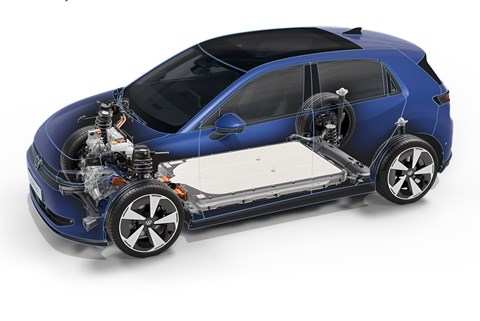
Under the bodywork is the new MEB+ architecture that VW Group is rolling out across its new range of small cars. The platform first launched on the Cupra Raval, the Spanish brand’s version of the ID. Polo, with Skoda also unveiling its small Epiq crossover soon.
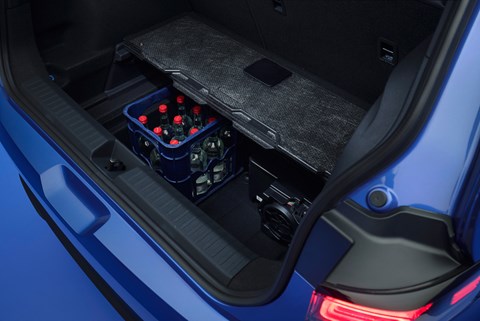
The MEB+ platform used here is strictly front-wheel drive only, enabling some packaging benefits in terms of interior and boot space. Rear legroom is good for tall adults behind tall drivers from our experience, and VW claims a 441-litre boot capacity – bigger than a Golf. That area is split by a false floor, with Grünitz claiming you can drop a pram or a few crates of drinks in the lower part.
Two battery sizes and three power outputs make up your powertrain choices. A base 37kWh LFP battery pack, which can be charged at up to 90kW via DC charging, can be linked to either a 114 or 133bhp electric motor. VW claims a maximum 204-mile range for this battery.
A top-spec 52kWh NMC battery is mated to a 208bhp is your punchiest choice before the ID. Polo GTI arrives later in 2026. VW says this one can reach a maximum of 283 miles of range, and charges at a quicker 105kW speed via DC charging.
We’ve already had a go in a prototype of the ID. Polo and came away rather impressed.
How much is a new ID. Polo and when can I buy one?
VW says the first orders for the ID. Polo will open towards the end of April, with deliveries likely starting in the summer. Specific UK pricing and specs are to be announced, but we’re confident that the ID. Polo will be priced from under £25k when it arrives here – and that’s before any UK Government electric car grant is potentially applied.