
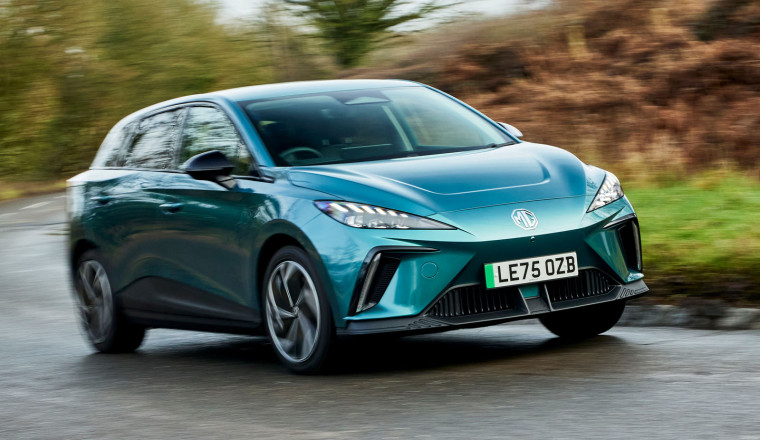

The MG 4 EV was and remains the car that represented MG switching gears. Decent range and superb value for money have ensured it a spot in the top five best-selling EVs for several years now, and so common a sight are these cars on our roads that no longer does anyone wonder what exactly that 'angular-looking hatchback with the pronounced rear spoiler' over there is.
For the 2026 model year, some mid-life alterations have been made, chiefly to the cabin and the battery options, as we will explore in a moment.
MG has chosen this moment to introduce the changes because of the arrival of its 'budget 4', the Urban, and because there are now a lot more competitors in the market that there were in 2022.
The update also has an implication on price, but not in the way you're probably expecting.
The 4 was launched with two powertrains and two trim levels. The standard-range model, called simply the MG 4 EV, had a 51kWh battery and 168bhp, while the Long Range model was rated at 201bhp and carried a 64kWh battery.
About a year later, those were joined by the 77kWh Extended Range and the dual-motor, four-wheel-drive XPower.
For 2026 on, the 51kWh Standard Range battery is no longer offered at all. Moreover, the entry-level SE version of the 64kWh Long Range model is also canned.
The new line-up starts with the 64kWh Premium Long Range, rising to the 77kWh Premium Extended Range, and tops out with the 64kWh dual-motor XPower.
Unlike previous electric MGs, such as the ZS EV and 5 SW EV, the 4 was designed as a ground-up EV. It was the first car to use the Chinese brand’s Modular Scalable Platform, which is natively rear-wheel-drive and supports wheelbases ranging from 2650-3100mm and batteries up to 150kWh, as well as an additional front motor for high-performance, four-wheel-drive versions.
The battery forms an integral part of the car’s structure and is designed to be just 110mm thick to make sure that hatchbacks and saloons actually feel like low cars. Intriguingly, MG claims the architecture is also designed for 800V applications and to integrate with battery swapping systems, such as the one that Nio is starting to roll out in Germany. We're yet to see where this approach leads, but it sounds interesting.
For the time being, the 4 is less ambitious, as is only fair for a mid-sized hatchback. It sticks with 400V electricals and is powered by a 64kWh (61.7kWh usable) or 77kWh (74.4kWh usable) battery. The smaller pack has lithium-iron-phosphate chemistry, while the 77kWh pack is nickel-cobalt-manganese.
The mainstream models are also rear-driven only, thanks to a single rear motor with 188bhp in the case of the Long Range 64kWh (now the base model, remember) and 241bhp for the Extended Range 77kWh. If you need four-wheel drive or simply want to accelerate very, very quickly, there's also the 429bhp, dual-motor XPower.
The design of the 4 is notably more hatchback-like than a lot of its crossover-leaning rivals. At 4287mm in length, it's also a fair bit shorter than the Kia Niro EV and the Volkswagen ID 3 and Cupra Born twins. Its closest analogue is the Renault Megane, but the Citroën ë-C4, Peugeot e-308 and Vauxhall Astra Electric are gunning for the same buyers too.
In this crowded segment, the 4 needs to stand out, and four years on from launch it still looks reasonably sharp, not following the design language of the Cyberster sports car, as the new 4 EV Urban does.
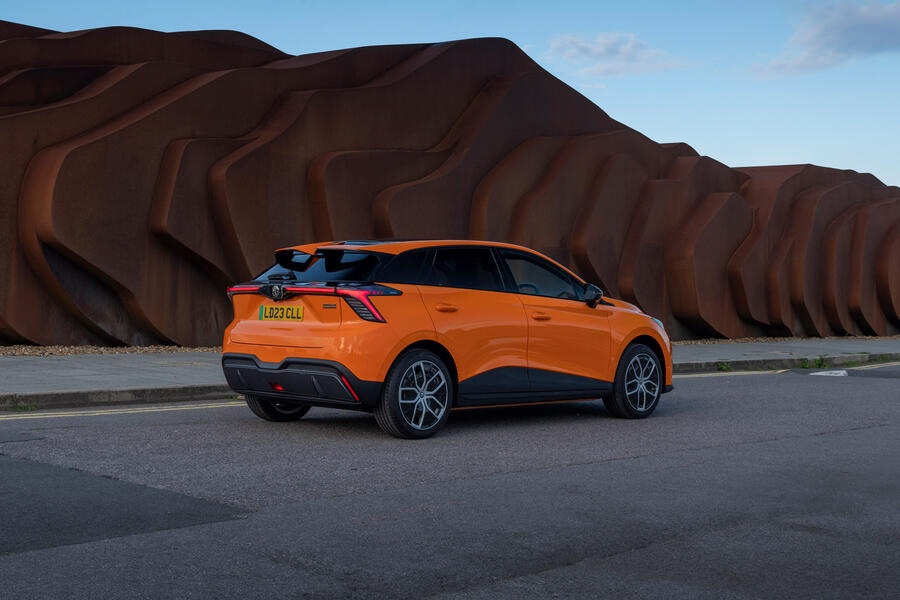
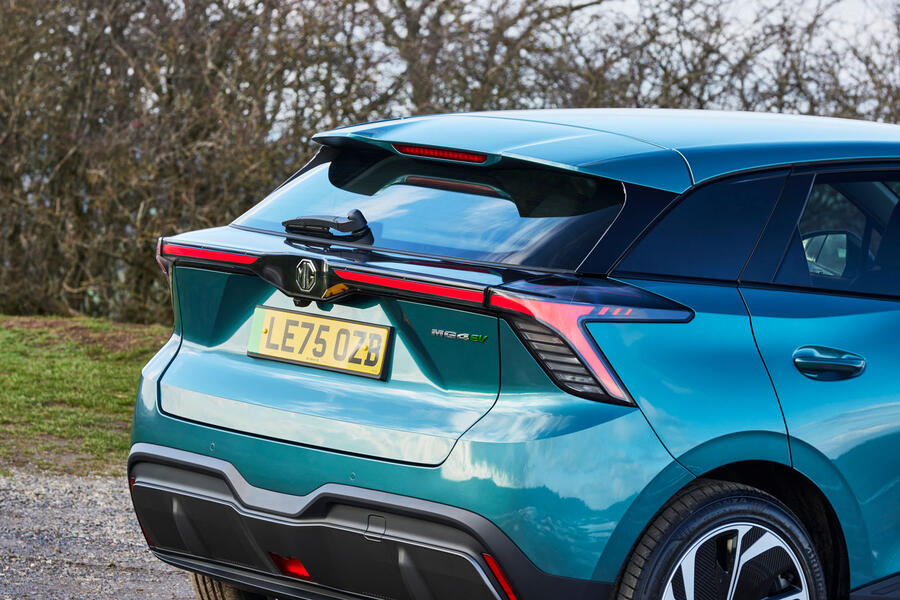
The smallish wheel wells mean there’s still an air of budget car to the 4 in the metal, but with its big headlights, busy slashes and strakes and the bold black unit that incorporates the rear lights and the boot spoiler, it makes enough a statement.
Note also that, for the update, the split rear spoiler design is gone, replaced by a unified piece of bodywork.
Immediately the 4 feels inviting, because the driving position is well set. It's unashamedly a hatchback in a world of SUVs, sitting the driver comparatively low down in the car, legs outstretched and with a generous amount of steering column adjustment.
Elsewhere there are considerable changes for 2026, not least with lighter hues to lift the ambience and more soft-touch materials on the dash and doorcards.
The unmarked directional pad on the steering wheel controls the media or, after pressing the star, the fan speed and temperature. Unconventional, but it works.Matt SaundersRoad test editor
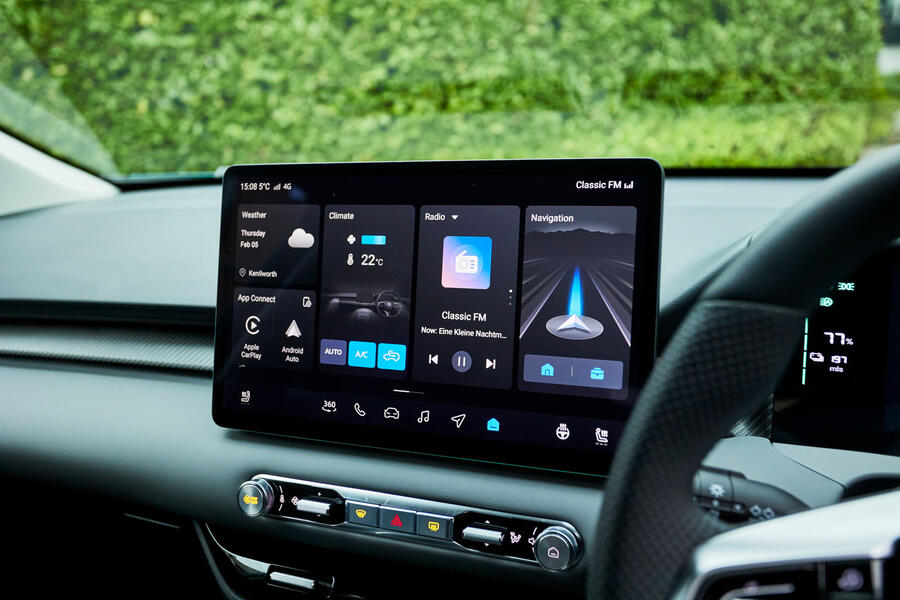
The new infotainment touchscreen is also much larger at 12.8in, brighter and slicker in use. The row of hard plastic and rather basic-looking button beneath it has disappeared, replaced by a neat row of metal-dipped roundels and rockers that control the audio volume and air-con. They feel good to use.
These controls sit above a simplified centre console, where the jutting plinth that used to support the rotary drive selector and an oddment tray has disappeared. As a result the entire cockpit feels less jumbled and more grown-up, some lingering hard plastics notwithstanding.
Helping matters is the fact that Premium trim is now standard and in effect the only available trim. It brings smart two-tone seats, metal-trimmed pedals, an electrically adjustable drivers seat (the front seats and steering wheel are also heated) and wireless connection for Android Auto and Apple CarPlay.
Meanwhile, oddment storage is reasonably good, thanks to several long bins in the centre console, a decent-size glovebox and some fairly shallow door pockets.
Occupying a middle ground in size between superminis and family hatchbacks, the 4 isn’t quite as roomy in the back as the ID 3 and Born but, thanks to the short bonnet and long wheelbase, is still more spacious than something like the Astra. What’s more, as the rear bench is angled upwards, it provides a more comfortable seating position than the vast majority of EVs, making the rear of an 4 a realistic proposition for adult passengers.
At 363 litres, the boot is about what you would expect of a family hatchback, but the floor isn’t quite flat, and in terms of raw capacity it's comfortably exceeded by that of the new 4 EV Urban.
When we timed the original 201bhp Long Range model in 2023, it recorded 7.1sec to 62mph – more than quick enough for a family hatchback. That model is no longer available, but the 187bhp of the new Long Range version still gives the car a claimed time of 7.5sec, which makes it perfectly competitive in the class.
Moreover, while the 5 and certain other models in the MG line-up have a frustratingly ham-fisted traction control system, the 4’s is more sophisticated and operates close to imperceptibly in most situations. In fact, some drivers might perceive it to sometimes be too permissive.
You will find very few fake grilles on this EV. To improve aerodynamics, this lower intake for battery cooling has slats that close when not needed. The trapezoid shape is mirrored in the high-level brake light and rear diffuser.Richard LaneDeputy road test editor
Performance naturally tails off at motorway speeds and when the battery’s charge is low but remains perfectly adequate at all times.
If you would like to go faster still then the Extended Range, with its 241bhp, is the one to have, with its 6.2sec time to 62mph. Or you could opt for the XPower, which is good for 62mph in 3.8sec – faster than a 996-generation Porsche 911 Turbo, incredibly.
MG offers four regenerative braking levels: low, medium and high, plus an adaptive mode, which uses the car’s sensors to determine the appropriate level of deceleration for the situation. That last option feels like a slightly token effort but rarely doesn't anything outright irritating.
By default, you switch between the regeneration modes through a menu in the infotainment system that's several layers deep. However, you can also map one of the two configurable steering wheel buttons to cycle through regen settings. Either way, the car defaults to medium every time you restart it. Adjusting it should be easier, we feel, and the setting should persist.
We have similar gripes about the braking. You can choose between normal and sport brake feel. Even the firmer setting can be a touch inconsistent, while the soft feel and long travel on the standard setting are downright disconcerting, but like the regenerative braking, the car always defaults to normal and resets the Custom mode to a default setting.
That said, when we tested the 4 at a proving ground in 2023, outright braking performance was actually very good: despite very wet and cold conditions, the 4 needed 8.6 metres less to stop from 70mph than the Megane, despite wetter conditions. It also pulled up in a perfectly controlled fashion, with not a hint of lock-up.
As we're seeing the EV era, manufacturers are divided about whether to make their EVs front- or rear-driven. Renault, Kia and Stellantis have chosen the former for their smaller EVs, as it reduces front-to-rear cabling and allows for a deeper boot on single-motor models. It also means EVs and ICE models can share more components. Volkswagen and MG (at least in the case of the 4) have chosen the latter, which has its own packaging benefits and potentially makes for a sweeter-handling car.
Those advantages might not be very obvious for a lot of drivers, but they are significant if you go looking for them. In the 4, the steering is pleasantly uncorrupted by the instant electric torque, and the feeling of being pushed rather than pulled out of corners is always a joy.
As with Volkswagen’s MEB platform, the MSP's battery pack is integrated into the floor’s structure and the main or only motor is at the rear. That results in an even weight distribution of 49:51, front to rear.Illya VerpraetRoad Tester
With no engine or motor between the front wheels, they have all the room in the world to pivot, which gives the 4 a fantastically tight turning circle. The figure of 2.8 turns lock to lock makes it seem like the steering is fairly slow but is simply a result of there being so much steering angle to play with. We did wish for some more feedback through that curious-looking steering wheel, though.
Compared with that other mildly sporting rear-drive EV, the Born, the standard 4 has relatively soft suspension that allows more body movement. As a result, it can feel a bit aloof and less tied down. However, you quickly attune to it and realise it simply takes craggy British roads in its stride.
The driver assistance systems, gathered under the banner of MG Pilot, are a mixed bag. All models get adaptive cruise control with lane following as standard, but they’re poor, and you can’t switch to standard cruise control. The adaptive cruise control can be panicky and jerky and the lane following system will drift to the very edge of a lane and then fight you for control. The lane keeping assistance, on the other hand, is totally unintrusive and the automatic emergency braking posed no problems either.
It's now fairly easy to enter (even if it still requires a swipe and press of the screen) the new 'MG Pilot Custom' function, where you can select which ADAS element you want active or disabled.
In general, potholes are rounded off and bumps are smoothed over as well as you could hope for from a car with conventional passive suspension. There is more suspension noise than in some rivals and some road surfaces cause a resonance and vibration that’s mildly irksome, but overall this is a pretty comfortable car and refined enough over long distances. The new cabin helps, for sure.
Mind you, the Born and Megane still isolate you from the outside world a touch better.
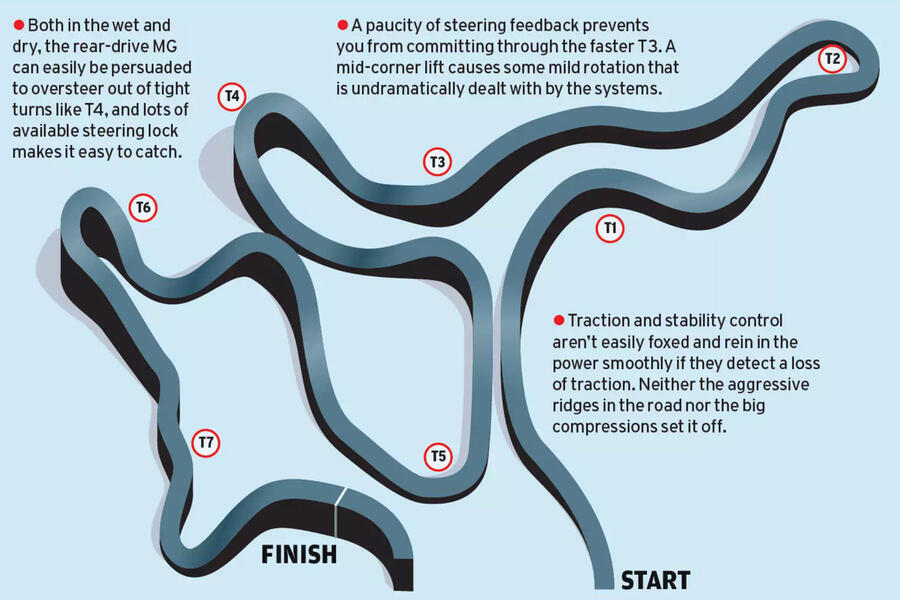
The wet conditions at Millbrook highlighted the 4’s only major dynamic weakness. Although the steering is consistently geared and weighted, it lacks any meaningful feedback, which makes it prudent to leave plenty of margin for error on a sodden road or track.
That being said, the 4’s balance is fundamentally sound. Lifting off mid-corner will elicit some gentle rotation, as will a decisive prod of the accelerator on the exit of a tight corner. An open differential means it’s liable to spin the instant electric torque away through the inside wheel, but this is a car that inherently wants to rotate.
A diversion to the skid pan proved our test car could be held in an extended powerslide if you have the space and turn off the stability control. Conversely, even when you leave it on, it permits a surprising amount of lateral movement. It is never unsafe but could be disconcerting to less experienced drivers.
When we tried the Extended Range model a few months later, there had been some odd changes to the stability control system. It was still just as permissive with everything on but had lost the option to turn the system off completely.
With the ESC in its 'off' mode, the system will panic when it detects a certain amount of wheelspin and kill the power completely for about 10 seconds, which feels very unsophisticated and unnecessary.
Despite the new kit on the 4 for 2026, the starting price has actually dropped by £2700. This means the Premium Long Range version starts at £29,999, with the Extended Range at £32,995 and the XPower at £33,995 – and that's before you factor in the £1500 'grant' that MG is applying for the time being.
You just can’t argue with the numbers here. Entry-level version of the Megane, ID 3 and Born start at beyond £31,000 and rise quite quickly from there. The seven-year warranty sounds appealing, too, but note that it isn’t as generous as it seems, since it's limited to only 80,000 miles and there's no additional battery warranty. A lot of manufacturers will guarantee that the battery will maintain 80% of its capacity for eight years, but MG guarantees only 70% for the term of the normal warranty.
As for efficency, when we tested a MY22 car, single-digit temperatures for most of our running didn’t help the energy efficiency, which struggled to exceed 3.0mpkWh, translating to a test range of 185 miles. However, warmer weather later in the week yielded 3.6mpkWh, or a range of 222 miles – closer to the WLTP figure of 3.7mpkWh and what we observed in the Born.
For the MY26 Long Range model with the 64kWh battery, the claimed efficiency is slightly lower, at 3.5mpkWh (claimed range is 280 miles). Interestingly the Extended Range version, with its differing battery chemistry, manages 3.8mpkWh and 338 miles, so it's undoubtedly the one to have if you plan on longer journeys.
Meanwhile, all models can rapid-charge at at least 140kW, making them among the faster-charging cars in the class.
When we first tested the MG 4 EV in 2022, we said that although it didn't move any technological boundaries, other manufacturers should undoubtedly have seen it as a serious threat, because it did so many things so well and for such a keen price that it was hard to argue you should buy any other electric hatchback.
So it proved, and with a raft of updates for 2026, MG has kept the 4's appeal on the boil. It remains up there with the Born for chassis sophistication, delivering both a comfortable ride and an enjoyable rear-drive balance. It also makes excellent use of its footprint to offer generous interior space and mostly comfortable accommodation. Range, efficiency and charge speeds are all competitive if not groundbreaking, and to this you can add a more pleasant cockpit than before and seriously aggressive pricing.
As long as you’re not after an outright premium-feeling product, most of the criticism one can level at the 4 is a collection of niggles rather than any substantial failings. It remains a prodigiously appealing electric hatchback.
As a road tester, Illya drives everything from superminis to supercars, and writes reviews and comparison tests, while also managing the magazine’s Drives section. Much of his time is spent wrangling the data logger and wielding the tape measure to gather the data for Autocar’s in-depth instrumented road tests.
He loves cars that are fun and usable on the road – whether piston-powered or electric – or just cars that are very fit for purpose. When not in test cars, he drives an R53-generation Mini Cooper S or a 1990 BMW 325i Touring.