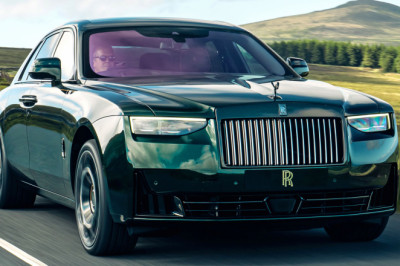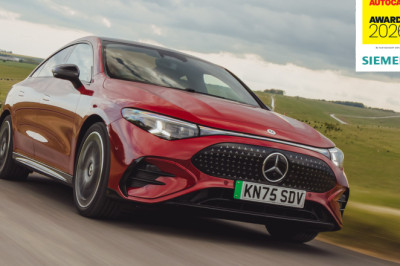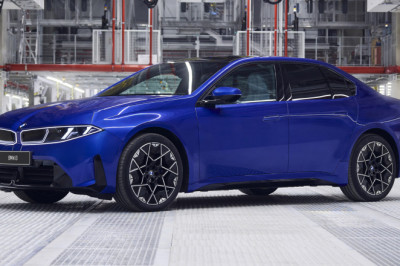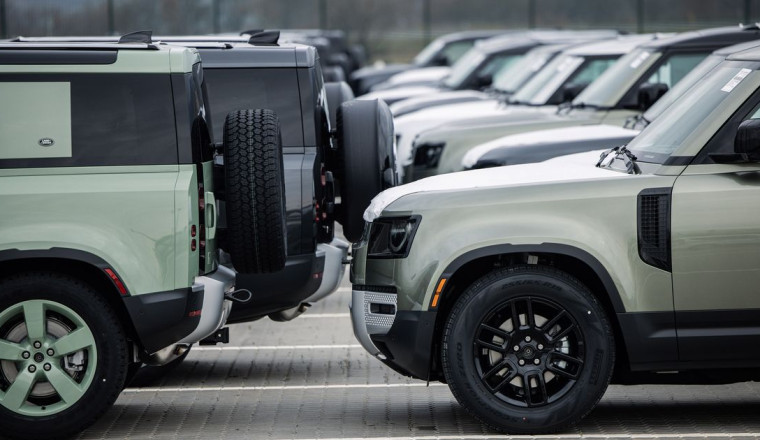

If you drive a Range Rover, Mercedes S-Class, Tesla Model S, or BMW 7 Series, you are now officially too big for certain UK council car parks. Not too wide. Too long. Five local authorities have imposed explicit bans on vehicles exceeding 5 metres in length, and the list of affected models reads like a luxury car showroom.
According to Freedom of Information responses obtained by Autocar, the councils enforcing 5 metre limits are Wokingham, South Hampshire, Broadland, South Suffolk, and West Devon. Thurrock Council operates a slightly more lenient 5.35 metre restriction that has been in place since 2005.
The problem is simple. Standard UK parking bays measure 4.8 metres in length and 2.4 metres in width, dimensions that have remained unchanged since the 1970s. Cars, meanwhile, have grown substantially. In 1965, the top five best-selling models in the UK averaged 3.9 metres in length. By 2020, that figure had increased to 4.3 metres. The average new car is now 10% longer and 16% wider than models from five decades ago.
New Forest Council stated in its official guidance that "national research has shown that on average, cars have got larger over time, both in width and in length," with 1965 top sellers averaging 1.5 metres wide and 3.9 metres long compared to 1.8 metres wide and 4.3 metres long for 2020's top five.
Modern safety regulations requiring larger crumple zones and additional structural reinforcements have driven much of this growth. Electric vehicles compound the issue, as larger battery packs and additional interior space to offset the loss of engine bay storage push dimensions upward across all segments.
At least 20 popular models now exceed the 5 metre threshold and face potential fines in affected council car parks. The banned list includes the Audi A8 (5.19m), BMW 7 Series (5.32m), BMW i7 (5.36m), Mercedes S-Class (5.29m), Mercedes EQS (5.22m), Range Rover (5.05m), Land Rover Defender 130 (5.36m), Tesla Model S (5.02m), Tesla Model X (5.05m), Kia EV9 (5.01m), Rolls Royce Cullinan (5.34m), Porsche Taycan Sport Turismo (4.97m when equipped with certain options), and various long-wheelbase executive saloons from Jaguar, Bentley, and Maserati.
Which? notes that even Jaguar's controversial Type .00 concept car measures 5.1 metres, putting it over the limit despite being a design statement rather than a production vehicle.
Wokingham Council updated its regulations in June 2023, explicitly stating that "all motor vehicles whose maximum length does not exceed 5.00 metres" are permitted. Between 2017 and 2024, the council recorded 153 instances of vehicles breaching the length rule, according to Yorkshire Live.
The enforcement mechanism varies. Some councils include the restriction in parking fine appeals and signage, while others rely on existing rules prohibiting vehicles from overhanging marked bays. Which? noted that parking officers are more likely to fine drivers for not parking fully within marked bays rather than measuring vehicle length with a tape measure, though the explicit bans give councils legal grounds to issue penalties.
RAC research found that 91.8% of the 287 councils that responded to Autocar's FOI requests have no plans to increase parking bay sizes despite acknowledging that vehicles have grown. The British Parking Association recommends increasing standard bay length from 4.8 metres to 5 metres and width from 2.4 metres to 2.6 metres, but adoption remains minimal.
The Institute of Structural Engineers updated its guidance in 2024 to reflect the new reality, increasing minimum recommended parking space length from 4.8 metres to 5 metres and width from 2.4 metres to 2.6 metres. Even with this updated guidance, a significant number of production vehicles still exceed the recommended dimensions.
Multi-storey car parks face additional complications. Overhanging vehicles block turning points, limit visibility, and make adjacent bays unusable. When a 5.3 metre BMW 7 Series occupies a 4.8 metre bay, the rear of the car protrudes into the access lane, creating hazards for pedestrians and other vehicles attempting to navigate tight corners.
Mark Tisshaw, editor of Autocar Business, told Yahoo News that "we know that cars are getting longer and wider, typically due to ever-stricter crash and safety legislation they must meet, and these figures show too few councils are adapting to this new reality."
Nicholas Mantel, head of Churchill Motor Insurance, added that "widening cars combined with parking bays that haven't been redesigned to accommodate today's models, means motorists all over the country are at risk of damaging their cars through no fault of their own," according to GB News.
The trend affects family vehicles as well as luxury models. Seven out of the top 10 best-selling car brands in the UK produce at least one model exceeding 5 metres, per Gap Insurance 123. Electric SUVs like the Kia EV9, designed for families requiring space and range, now find themselves excluded from council facilities in multiple regions.
The five-council ban could expand rapidly. With over 90% of authorities stating they have no budget or plans to modify existing parking infrastructure, imposing length restrictions offers a cheaper solution than rebuilding car parks to accommodate modern vehicle dimensions. Several councils told Autocar they are monitoring the situation and considering similar restrictions.
For drivers of affected vehicles, the practical advice is straightforward. Check council websites before parking in authority-run facilities. Look for designated larger vehicle bays where available. Consider private car parks that may have more generous dimensions. And accept that a £90,000 Range Rover might need to park on the street while a 2005 Volkswagen Polo fits comfortably in the bay your car is banned from using.
The regulations highlight a disconnect between automotive evolution and infrastructure planning. Cars have grown steadily for safety, comfort, and performance reasons. Parking spaces have not. Councils lack funding to rebuild thousands of car parks to accommodate vehicles that are 10% longer than those from the 1970s. The solution, apparently, is to tell drivers their cars are too big rather than admit the infrastructure is too small.
As electric vehicles continue to grow in size and weight to accommodate battery technology, the problem will intensify. The Kia EV9, Rivian R1S, Mercedes EQS SUV, and BMW iX all exceed 5 metres. These are not niche luxury vehicles but mainstream family cars marketed to parents seeking space and emissions compliance. When council car parks ban the vehicles the government is incentivizing people to buy, the policy contradiction becomes impossible to ignore.
For now, five councils have drawn the line at 5 metres. Ninety-one percent of UK councils say they will not widen their bays. And at least 20 popular models are now too long to park legally in certain public facilities because the infrastructure was designed when a Ford Cortina represented a large family car. Progress, apparently, has a maximum length.