

► Wayve and Verne under the microscope
► It’s all about the AI running them
► Can they really take over from the taxi driver?
What do autonomous taxis have in common with those controlled by conventional meat-based algorithms? Both habitually claim to be just around the corner: one physically, the other metaphorically. So you might reasonably be cynical about the recent announcements that both Google’s Waymo and London-based Wayve will bring self-driving cabs to London this year.
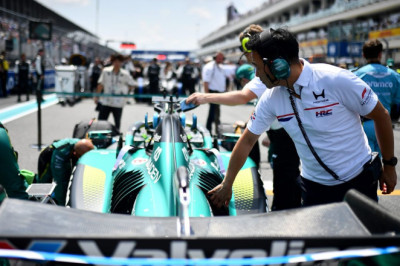
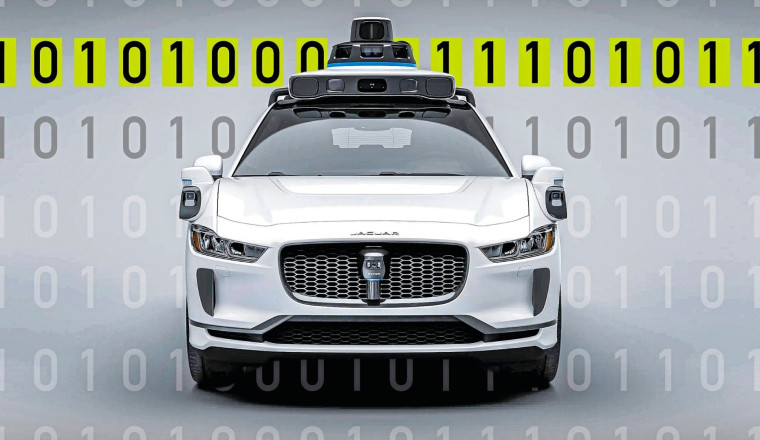
Regardless of when they actually show up, note that it’s two tech firms doing this, and not two car makers. Driverless cars are not about the car. You can design something free of the constraints of a steering wheel and pedals, as Mate Rimac has for his Verne project. But an adapted EV will do perfectly well, as Waymo’s many Jaguar iPaces prove. Nor is it about the sensors: more confident, reductionist systems like Wayve’s can find their way with just a few relatively cheap cameras.
Like this? Get more CAR delivered to your browser! Click here to add CAR Magazine as a preferred source on Google.
Instead, it’s all about the AI. Hybrid systems like Waymo’s combine artificial intelligence with conventional code and high-definition maps, and can demonstrate to law makers that they will stop at a stop sign because they have been told to. The autonomous American trucking firm Aurora takes a similar approach, and refers to it as ‘verifiable AI’.
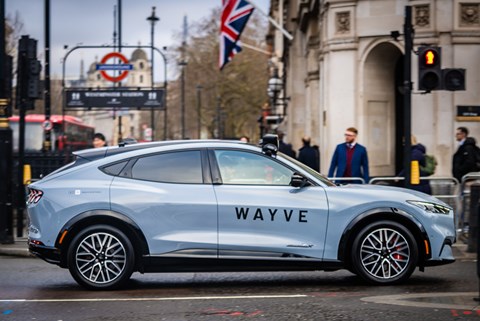
Wayve’s ‘end-to-end’ system is very different: a black box takes in all the sensor data and outputs driving instructions without reference to rules or maps. You can’t show regulators that you have told it to stop at stop signs, but you can prove in simulations and on the road that it will. Wayve argues that its single neural network is seamless and smarter and, like a human driver, can drive pretty much anywhere once it has learned the local rules.
There’s beef between proponents of the two system types over safety, transparency and applicability, but the governments who control their fate don’t seem to care much about the difference, or to have figured out a driving test for them. Nor are they likely to. The big tech firms have found autonomous driving among the toughest of all the nuts they’ve tried to crack.
These trials serve a double purpose. Like any other young driver, AI needs to learn on the road before it can be given a licence. Wayve already tests extensively in London, but with safety drivers aboard and ready to take over, and without paying passengers. It will learn more from operating commercially, wholly autonomously and with a much bigger fleet, while the government gets to test empirically the safety which it can’t or won’t assess in the lab. As in China and the US, it also gets to devolve the decision to permit driverless cabs to the local authority, in this case Transport for London. Central government can watch how it goes before formulating national policy, and can blame London mayor Sadiq Khan if it doesn’t go well.
If this seems an incredibly lax way to regulate driverless cars – turn a few loose and see if they kill anyone – it is at least highly self-policing. One bad crash killed GM’s Cruise self-driving project, and firms like Wayve, which rely on investors’ cash and confidence, won’t go driverless in full public view until they’re sure they’re ready.