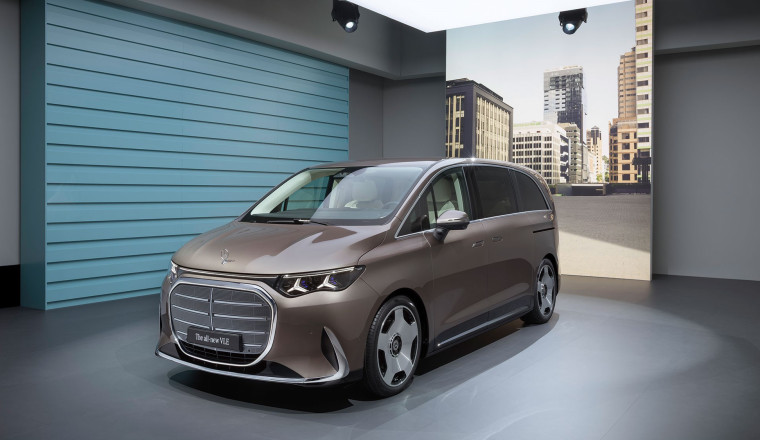

► New VLE revealed; replaces V-Class
► Long-range EV launches first, ICE versions will follow
► Big uplift in technology and luxury
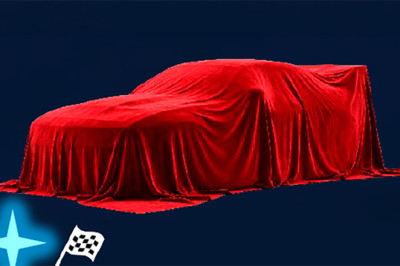
Mercedes is going even further upmarket with its van-based MPVs with the reveal of the new VLE.
Kickstarting a new VL nomenclature, the VLE will launch initially with purely electric powertrains and replace the Mercedes EQV right away when it arrives towards the end of 2026. It will then take over from the well-established V-Class when combustion engines join the line-up in 2027.
It aims to retain the V-Class’s domination in the posh airport shuttle and celebrity transport trades, as well as appealing to large families wanting a (likely much better) alternative to an SUV. That said, Mercedes claims the VLE is such a step up that it can’t be described as a ‘successor’ to the V-Class.
It’s implemented a raft of new technology and creature comforts to help it stand above the growing Chinese and Japanese competition, including the Denza D9 and Lexus LM, in the premium MPV market.
Based on a new architecture that will underpin the next-generation of Mercedes’ mid-size Vito and large Sprinter, the German firm has worked hard to shake off its van-based roots with a sleeker and lower look for the VLE than the old V-Class. We’ve now been able to have an in-person preview of it, so here’s everything you need to know about one of Mercedes’ most important new models coming this year.
Though the V-Class was never a bad looking vehicle, it was impossible for it to shake off its van-based roots. Though the VLE is still fundamentally based on a commercial platform, it has been heavily adapted for MPV use, with Benjamin Kaehler, chief engineer of Mercedes Vans, saying it wanted to have a ‘clear distinction between private limousines [such as the VLE] and commercial transport [such as the Vito]’.
One of the fundamental ways to do this is with the VLE’s look, which is headlined by its unmissable grille that isn’t dissimilar from new Mercedes cars such as the GLC EV and facelifted S-Class. Various grille patterns are available, depending on trim level and it features an illuminated surround for the first time. Mercedes’ three-pointed star LED lighting signature is also adopted.
Larger wheels than before are available, up to 22 inches, and though it’s still sort of van-shaped, the VLE is lower than the V-Class with a more curved window line compared to its predecessor’s boxier profile. Around the rear, the LED lights are integrated into a top-level brake light, which wraps around the whole boot of the car.
Even the old V-Class still feels quite opulent inside, especially in top versions, but Mercedes has worked to really lift the interior. There’s a raft of new tech for those in the front (as we’ll explore later) but the area that matters with a van like this is the rear.
While features such as electric sliding doors are now standard, the real talking point is the optional BMW i7-esque 31.3-inch 8K cinema screen that lowers out of the headlining. Controlled by business class flight-style controllers that pop out of the back of the front seats, you can use it to watch TV but it can also be used as a split-screen so a passenger on one side could be watching an episode of Stranger Things while the other takes part in a Teams call thanks to the internal camera.
Occupants can also use it to play games to pass the time on long journeys or during charging stops.
The VLE will initially launch in a standard wheelbase but a longer variant will launch later to offer even more space.
Available in a variety of configurations, it can come from the factory with between five and eight seats, and you can have the second row facing the third on select versions. Manually sliding and folding seats are standard, which can now be more easily removed than before as they feature four wheels per chair, allowing them to be wheeled into a garage when not in use.
But the most luxury is provided with the optional electric ‘grand comfort’ seats, which feature details such as a massage function and electric calf support. The seats can also be moved electronically via the usual seat buttons but also with the inbuilt Mercedes controller in the back of the front seats and through the Mercedes app. With such a broad range of positions the seats can be moved, Mercedes internally calls the system ‘seat ballet’.
A split tailgate also remains as standard, while electric windows in the second row (which go all the way down) are a significant step up over the V-Class’s fixed rear glass.
With Mercedes already leading the way in terms of EV driving range in multiple segments, it will do the same with the VLE, which will be able to go almost twice the distance of the previous EQV on a charge.
At launch it is offered as the VLE 300 and uses a huge 115kWh battery giving a claimed range of ‘more than 435 miles’, a significant figure for a vehicle of this shape. Mercedes says its new-generation NMC batteries are the key enabler of such a figure, but that the VLE’s more aerodynamic is a big contributor, as is the fact the underfloor area is fully covered.
Charging performance will also lead the way thanks to its 800-volt architecture, which Mercedes says will allow for a 10 to 80 per cent charge in just 25 minutes, and peak DC charging speeds of 320kW.
A lesser VLE250 will follow in 2027 with a smaller 80kWh LFP battery, as well as a four-wheel-drive VLE400, which gets a second e-motor on its rear axle to take total power up to 402bhp.
Technology is a way Mercedes is looking to stand out – or try and match – the Chinese competition, and as a result the VLE gets the firm’s latest fourth-generation MBUX infotainment system. It integrates a raft of AI assistants into one package, while also providing a significant amount of screen real estate.
It’s not quite at the ‘Superscreen’ levels of the Mercedes EQS or the latest S-Class, but combined there’s almost 40 inches of digital displays in its glass interface, incorporating an instrument cluster, main touchscreen and separate screen for the front-seat passenger. Adaptive air suspension will be available as an option, giving 40mm of height adjustment, and it works with Google Maps data to keep the vehicle low for as long as possible to maximise range.
Other tech to trickle down from high-end Mercedes models includes four-wheel steering, with the rear wheels able to turn at angle of seven degrees to give the VLE a similar turning circle to a standard hatchback like a Volkswagen Golf.
Mercedes faces greater competition in both the van market and posh MPV segment, and it’s been readying an entirely new architecture for such vehicles for some time, with the VLE being the first to sit on it.
Though combustion and electric vans will be labelled as different platforms (VAN.EA and VAN.CE respectively), 70% of the elements will be shared between them, enabling greater synergies and lowering prices. The new platform will be used on the next-generation Vito and Sprinter panel vans from 2027, as well as an even more luxurious MPV called the VLS.
Though the VLE range in Germany consists of multiple trim levels and even more option packs, which will come to the UK when it arrives towards the end of 2026 is currently unclear.
We do know that, despite its many advancements that pricing will keep close to the outgoing EQV, not that that means it will be cheap, with EQV’s starting prices from around £90,000. Mercedes is currently being tight-lipped about the forthcoming ICE variants, but we hope to know more by the end of the year.
New cars editor, car reviewer, news hound, avid car detailer
By Ted Welford
New cars editor for CAR and Parkers. Loves a car auction. Enjoys making things shiny