

► UK car market in 2025 analysed
► Almost one-in-10 new cars are from China firms
► Best year for sales since 2019
New car registrations bounced back to more than two million units for the first time since before the pandemic, according to figures released today by the Society of Motor Manufacturers and Traders (SMMT).
A total of 2,020,520 new cars were registered last year, with growth recorded in all three selling channels, private, fleet and business. Electric car sales also reached record levels, though fell shy of ZEV Mandate targets as buyers still remained uncertain about making the switch.
Here we analyse the figures to give you a full breakdown of the UK car market in 2025, the winners and losers, the UK’s best-selling cars and more.
New car sales have continued to recover since the damaging pandemic, and 2025’s figures were the best since 2019, growing 3.5% year-on-year compared to 2024 to smash through the two million mark.
Despite a sharp rise in electrified registrations, pure combustion models still took the majority of sales with a combined 51.6% share (46.4% petrol, 5.2% diesel), highly likely being the last year that ICE sales remain on top.
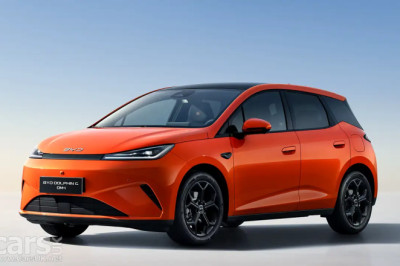
While electric car sales grew (as we’ll explore in a later section), plug-in hybrids were the fastest growing fuel type, growing by 34.7%, helped by the rise of more competitively priced Chinese PHEVs. The BYD Seal U, Jaecoo 7 PHEV and MG HS PHEV alone made up 21% of PHEVs sold last year.
Electric car registrations continued to grow throughout in 2025, with 473,348 units sold last year – a 23.9% increase to record a 23.43% market share. While promising, it lagged behind the 28% EV sales mix set out in the ZEV Mandate for 2025. December was the only month in the year that exceeded the required EV mix, with manufacturers heavily promoting electric deals and holding back ICE registrations.
Despite the reintroduction of the EV grant, the top £3,750 discount is currently only available on a handful of models. The SMMT says that ‘manufacturers continue to shoulder the burden of driving up demand’ and are having to massively subsidise them to sell them – averaging a shocking £11,000 per EV registered. It also said the early announcement of the electric and plug-in hybrid ‘pay-per-mile’ scheme ahead of its 2028 introduction sends a ‘confusing message to consumers’.
Though Chinese cars have been on sale in the UK for several years, 2025 was a real turning point with five new brands introduced – Changan, Chery, Geely, Leapmotor and Xpeng. With the UK not imposing tariffs on Chinese cars in the same way that the EU has, it has become a desirable place for firms to sell.
Driven by BYD, Jaecoo and MG’s ongoing success, Chinese manufacturers now make up just shy of one-in-10 new cars registered in the UK, and that doesn’t include the electric Mini Cooper and Aceman, or Polestars, produced in China.
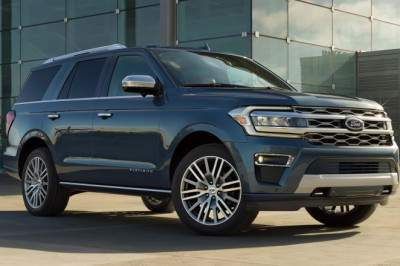
While Ford is often considered to be a shadow of its former self in Europe, its sales paint a different picture as the Ford Puma remained the best-selling car in the UK for a third consecutive year. With 55,488 registered last year, increasing by 7,000 units, it was likely helped by the introduction of the electric Ford Puma Gen-E. In fact, that’s the only electric car included in the top 10 list, with all other models being pure ICE or hybrids.
The Kia Sportage (47,788) retains its position as the second best-seller, aided by a facelift in the latter part of the year, and the Nissan Qashqai (41,141). The Vauxhall Corsa wasn’t even in last year’s top 10, but climbs back to fourth position with 35,947 registrations, with the Nissan Juke (34,773) rounding of the top five.
The full top 10 is as follows:
We’ve already mentioned about the growth – and struggles – with electric car sales, but looking at what individual EVs are performing well is a good way of looking at the overall health of the market. Though Tesla has had a turbulent year as it faces greater competition and the controversy surrounding Elon Musk, its Model Y (24,298 registrations) and Model 3 (21,188) were still the two top performing electric cars in the UK last year, and by some margin. That said, Tesla registered 8,000 fewer Model Ys than it did in 2024, even despite it having a considerable update throughout the year.
Audi’s EVs are also doing well, with the Q4 e-tron (14,433) and Q6 e-tron (13,148) taking up third and fourth place. One of the more interesting additions is the Ford Explorer (12,237), which rounds off the top five, and is selling in considerably higher volumes than the related Volkswagen ID.4, which doesn’t even make the top 10.
The full list is as follows.
Volkswagen had an excellent 2025, and retains its position as the UK’s most popular car brand, with 178,607 cars sold – 13,000 more than the previous year. It has quite a significant lead over BMW in second place, which sold 122,723 cars in 2025, marginally down on the previous year.
Driven by continued strong sales for the Puma and the new Explorer, Ford grew its sales by 10,000 units, climbing from fifth to third position with 118,998 vehicles registered. Kia (113,436) dropped a place to fourth in the manufacturer rankings, despite growing its sales marginally, with Audi swapping places with Ford to take fifth place with 111,115 sales, after a disappointing year with registrations down 9.24%.
Hyundai (93,124) jumped up the manufacturer table from ninth to sixth with continued strong sales for its Tucson and Kona. Toyota (90,126) takes seventh again, though its sales fell by 11.2% Nissan (90,102) and Mercedes (89,627) take eight and ninth spots, though each sold more than 10,000 fewer cars than the previous year. MG retains tenth position with a consistent performance, registering 85,155 cars in 2025.
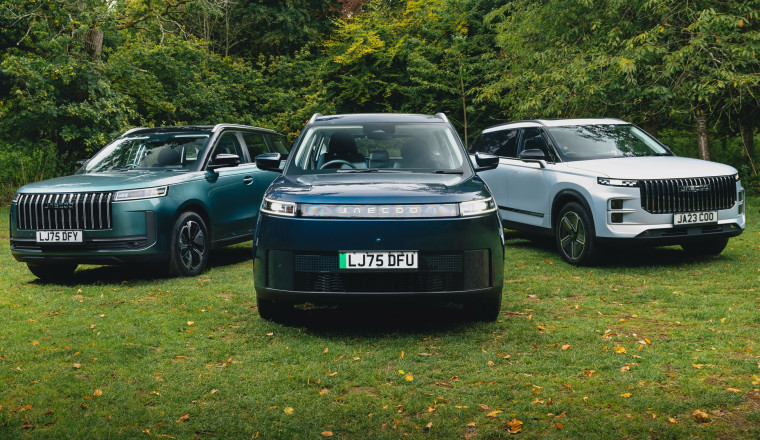
Jaecoo is probably the brand that exceeded all expectations in the UK in 2025, selling 28,232 cars in its first proper year is a performance many brands – including those from China – could only dream of. The fact most of that figure came from only one car, the Jaecoo 7, is all the more impressive when you consider it’s already overtaken the sales of established brands such as Citroen and Honda. Buyers have fallen for the Range Rover-esque styling, keen pricing and its already-strong dealer network.
In terms of outright percentage growth, Chevrolet comes next, with a ridiculous 8,400% increase, though dig deeper and you’ll realise it’s because it only registered one Corvette throughout the whole of 2024, compared to the 85 it sold in 2025. BYD also had an absolutely stellar year, with sales up 485% to more than 50,000 units, helped by a bursting model line-up and keen pricing. That momentum is only likely to continue in 2026. It’s a similar story for another Chinese car brand, Omoda, which grew by 447% to register just shy of 20,000 cars.
Alpine also had a bumper year, perhaps not surprising given the A290 hot hatch was only ever going to build on the niche A110, with sales up 370% to 1,742 units, while Polestar finally benefitted from its expanded model line-up with its 3 and 4 helping it to grow by 95% with 16,959 cars registered.
Looking at more mainstream and established brands, Alfa Romeo FINALLY saw a significant increase with sales up 80% thanks to its new Junior crossover, though admittedly remains small fry with only 3,000 cars sold. Cupra’s momentum continues too, with figures up 35.6% to 41,214 units.
Peugeot also deserves a special mention, growing by more than 14,000 units to 83,044 registrations courtesy of its popular 3008 and 5008, narrowly missing out on the top 10.
If you look at outright percentages, it is unsurprisingly Fisker and Jaguar that come out the worst – Fisker’s bankruptcy in 2024 meant it didn’t sell any cars in 2025, and Jaguar only had a few cars remaining in 2025 to shift as it cleared the decks ready for the arrival of its Type 00.
Abarth and Fiat each had a poor year. Abarth only registered 291 cars throughout the whole of 2025, down 71.7%, despite the introduction of perhaps its most ‘sensible’ car ever, the Abarth 600e crossover. Its decision to go EV-only has really not worked and, based on recent interviews, it looks like it might once again develop ICE models. It’s a similar story for Fiat, which was down 38.5% and registered fewer than 9,000 cars, which for what is considered a volume brand is poor. The arrival of the 500 hybrid, and long-delayed Grande Panda in 2026 cannot come soon enough.
Citroen also had a poor year, with registrations down 31.7% to just 20,732 registrations, not helped by model changeovers of its three core cars, the C3, C3 Aircross and C5 Aircross. With a full model line-up now up and running, it will be hoping for significant growth in 2026.
And while a lot of Chinese car brands might be enduring big success, one that isn’t is GWM, which saw sales drop by 53.3% to just 542 registrations. The 03 hatch, formely known as the Funky Cat, just hasn’t made headway and the Haval Jolion Pro isn’t on any buyer’s radar. Better products would certainly help.
Finally Seat’s sales continue to dwindle as it stands in the shadow of Cupra, which registered almost twice as many cars as Seat’s 23,015. The arrival of the refreshed Ibiza and Arona will help, but you can’t help but feel that the longer Seat is left to dawdle along with ageing models, the harder it will be if the Spanish brand ever wants it to be popular again.
Check out the full table of 2025 new-car sales figures from the SMMT here.
New cars editor, car reviewer, news hound, avid car detailer
By Ted Welford
New cars editor for CAR and Parkers. Loves a car auction. Enjoys making things shiny