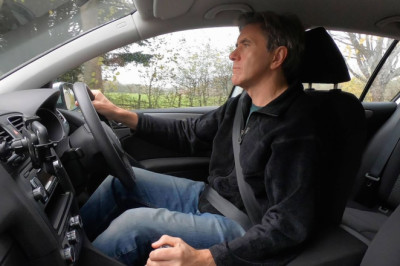



A retired nurse from Scotland tried claiming £87 for pothole damage. The insurer made her take an automated lie detector test first.
Carolyn Hornblow, 73, hit a pothole near Dalbeattie on December 11 while driving her Toyota Corolla at night. A warning light appeared later. The mechanic found a badly damaged tyre that needed replacing. Cost: £87.
She filed a claim with Dumfries and Galloway Council in late December. The council's insurer, Zurich, sent a questionnaire requesting MoT papers, insurance documents, dashcam footage she didn't have, and photos of the damaged tyre that was already in the bin because it had been replaced.
Then came the automated phone call using Clearspeed technology, according to the Scottish Daily Mail. The AI voice analyzer asked a series of questions designed to detect fraud. Accuracy rate: supposedly over 90 percent.
"The first question was, 'Is this 1995?' which seemed odd," Hornblow told the Mail. "I didn't know why that was being asked."
The system then asked if she had an email address and whether she'd claimed for something that didn't occur. After the call ended, she realized she'd been subjected to lie detection without explicit consent.
"I thought, 'How dare you?' I was very cross as I hadn't consented to this," she said.
A Dumfries and Galloway Council finance officer confirmed the technology's use in an email to Hornblow's local councillor. "This is a new tool that Zurich are using which is aimed at rooting out fraudulent claims and is as Ms Hornblow suggests a sort of lie detector," the officer wrote on February 4.
"No one is suggesting Ms Hornblow's claim is fraudulent and as long as any claim is an honest one the claimant has nothing to worry about."
Except for the part where they made her take a lie detector test.
The technology supposedly speeds up claim processing while reducing fraud. A Zurich spokesman told the Mail that "Clearspeed is one of several validation tools we use. It works alongside other systems and means genuine claimants benefit from quicker settlements."
Quicker is relative. A local Facebook group suggests pothole compensation claims in the area can take up to nine months to resolve. After accounting for wear and tear, Hornblow expects to receive around £40 of the £87 she claimed.
Dumfries and Galloway Council holds the distinction of having the worst pothole situation in the entire UK, with 16,819 potholes waiting to be filled as of November 2025. The region is followed by Dundee, Stirling, East Renfrewshire, and East Lothian.
The council spokesman said their understanding is that Zurich uses Clearspeed "primarily to support the processing of small claims."
Small claims. Like eighty-seven pounds for a replacement tyre.
The technology raises uncomfortable questions about proportionality. Insurance fraud is real and costs billions annually. But subjecting a 73-year-old retired nurse to AI voice analysis over a sub-£100 claim for a damaged tyre in a region with nearly 17,000 unfilled potholes feels like aiming a cannon at a fly.
Hornblow wasn't told in advance the call would analyze her voice for deception. She didn't consent to participate. She learned about the technology only after the fact when researching what had happened.
The council insists nobody suggested her claim was fraudulent. They just treated it like every other claim by running it through fraud detection software sophisticated enough to analyze vocal stress patterns and micro-hesitations in speech.
For forty quid. Maybe.
Cosla, the umbrella organization for Scottish councils, declined to comment on whether other local authorities use Clearspeed technology. Which means they probably do, and nobody wants to be the next council featured in a newspaper article about lie-detecting pensioners over pothole claims.
The system is spreading. Zurich described Clearspeed as "one of several validation tools," suggesting insurers are layering multiple fraud detection technologies on top of standard claims procedures. What used to require a few forms and some photos now involves voice analysis, AI pattern recognition, and algorithmic suspicion applied to every claim regardless of amount.
Insurance companies argue the technology protects honest customers by identifying fraudulent claims that drive up premiums for everyone. Fair point. Fraud costs the UK insurance industry an estimated £1.3 billion annually.
But there's a difference between investigating suspicious patterns and subjecting every claimant to automated interrogation. Hornblow provided documentation, explained the incident, and submitted a claim for less than a hundred pounds. Nothing about her case screamed fraud. She's a retired nurse living near Dalbeattie whose car hit one of the 16,819 potholes the council hasn't fixed yet.
The technology doesn't care. The algorithm runs on everyone. Guilty until proven innocent via voice stress analysis.
Hornblow still hasn't received her compensation. The claim continues winding through the process. She may eventually get £40. After nine months. After submitting multiple questionnaires. After being asked if the year was 1995 by a computer analyzing her voice for signs of deception.
All because she drove over a pothole the council should have fixed months ago.
Maybe the real fraud is making people jump through increasingly absurd hoops to recover pocket change for damage caused by government negligence. But there's probably no AI voice analyzer sophisticated enough to detect that particular lie.