
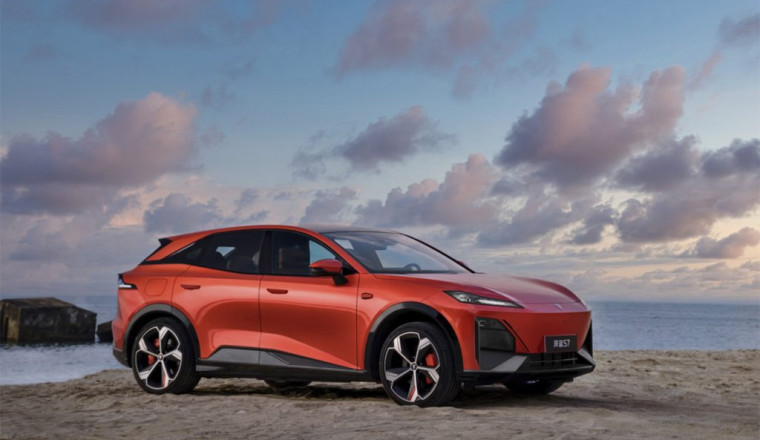

In 2025, several Chinese EV makers are not only dominating domestically but are increasingly expanding globally, reshaping the global automotive landscape.
This article provides an industry insight into the top 10 emerging Chinese electric vehicle manufacturers as of 2025, highlighting their market position, unique strengths, recent achievements, and outlook along with key sales statistics.
1. BYD Company
By far the most dominant force in China’s EV market, BYD sold over 3.5 million vehicles in 2024, representing a 28% year-over-year increase. Backed by Warren Buffett, BYD’s vertically integrated battery production—including its breakthrough Blade battery—and expanded lineup of models have made it the world’s largest EV manufacturer by volume in recent quarters, surpassing even Tesla. Its Super e-platform allows ultra-fast charging and extended ranges, positioning BYD well for continued expansion both at home and abroad.
2. Geely Group (Including Zeekr and Geometry Brands)
Geely, one of the fastest-growing automotive groups in China, posted 832,568 BEV sales in 2024, marking a remarkable 58% jump. The company leverages partnerships with Volvo and Polestar while delivering scalable, modern designs. Its premium electric sub-brands Zeekr and Geometry have gained substantial traction in China and pushed into Europe with competitive technology and styling.
3. XPeng Motors
XPeng focuses on smart, connected electric vehicles and innovative AI-driven autonomous features powered by its proprietary Turing chip. Although its 2024 sales reached around 150,000 units, XPeng’s aggressive adoption of diverse battery technologies and strong domestic market share fuel expectations for rapid scale. Their flagship models, including the G9 SUV, have earned praise for range and charging performance.
4. Li Auto
A pioneer in extended-range electric vehicles (EREVs), Li Auto combines battery and fuel-based range solutions, appealing to customers sensitive to pure BEV limitations. After starting with the Li ONE model, the company expanded its fully electric lineup with promising models like the MEGA MPV and i8 SUV. Li Auto’s sales exceeded 130,000 units in 2024.
5. SAIC Motor Corporation (Including Roewe, MG, and SGMW)
SAIC is China’s automotive behemoth with multiple joint ventures including SAIC-GM-Wuling (SGMW), maker of the wildly popular Wuling Hongguang Mini EV. SAIC sold nearly 1.2 million EVs in 2024. The SGMW brand dominates the city EV segment, offering ultra-affordable, no-frills vehicles ideal for urban commuters. SAIC strives to expand Roewe and MG globally with technology and competitive pricing.
6. NIO
Known for premium electric SUVs and sedans with a focus on battery swapping technology, NIO sold approximately 100,000 vehicles in 2024. The brand appeals to the high-end market with luxury and technology integration while pioneering battery as a service (BaaS) models for flexibility and ownership cost reduction.
7. Leapmotor
Founded in 2015, Leapmotor has quickly risen with a focus on affordability and high-tech features. In 2024, it sold around 80,000 units. Leapmotor invests heavily in battery supply chain control and is expanding internationally in joint ventures, including cooperation with Stellantis to build a global presence.
8. Great Wall Motors (Including Ora and Wey Brands)
Great Wall Motors is aggressively transitioning to EVs through its Ora brand for affordable models and Wey for premium SUVs. With a 2024 EV volume near 200,000, Great Wall is also focusing on overseas expansion and new energy commercial vehicles.
9. BYTON
Despite recent challenges, BYTON continues to target the luxury electric vehicle market with tech-forward features like fully digital cabins and autonomous capabilities. The company plans a relaunch and has global ambitions.
10. Changan Automobile
A rising star with a strong domestic footprint, Changan sold about 300,000 EVs in 2024, posting 43% year-on-year growth. Their SL03 and UNI-K EV models are driving growth, backed by government incentives and enhanced production capacity.
Market Snapshot – 2024 EV Sales and Growth of Top Chinese Makers
| Manufacturer | 2024 EV Sales (units) | Year-on-Year Growth | Notable Focus |
|---|---|---|---|
| BYD | 3,520,000 | +28% | Vertically integrated battery production |
| Geely (Zeekr, Geometry) | 832,568 | +58% | Premium EV design and global expansion |
| SAIC (SGMW, Roewe, MG) | 1,200,000 | +25% | Affordable city EVs and joint ventures |
| XPeng | 150,000+ | +40% | Autonomous tech, AI, and battery variety |
| Li Auto | 130,000+ | +45% | Extended-range EVs (EREVs) |
| NIO | 100,000+ | +30% | Premium EVs, battery swapping |
| Leapmotor | 80,000+ | +50% | Affordable, battery supply integration |
| Great Wall Motors | 200,000+ | +35% | Affordable + premium EV SUVs |
| BYTON | N/A (relaunch stage) | N/A | Luxury digital cabins, tech focus |
| Changan | 300,000+ | +43% | New models, strong production |
Industry Insights
China’s dominance in EV manufacturing is built on vast scale, government incentives, and mastery over the battery supply chain, often viewed as the global industry’s backbone. The ability to control mineral refining, cell production, and battery pack assembly provides Chinese manufacturers with a competitive edge on cost and technology.
Moreover, Chinese makers excel in software integration and autonomous driving features, crucial to future mobility. Investments in AI, IoT, and 5G connectivity enhance their vehicles’ appeal both domestically and in export markets.
International expansion is a strategic priority. Brands like BYD, NIO, XPeng, and Geely are making significant inroads in Europe, North America, and Southeast Asia through partnerships, localized production, and competitive pricing. This global reach challenges established automakers and reshapes the competitive landscape.
Challenges Ahead
Despite stellar growth, Chinese EV manufacturers face challenges including intellectual property disputes, quality perceptions abroad, growing competition from Western and Korean automakers, and pressures to meet stringent global emissions and safety regulations.
Supply chain risks, particularly around rare earth minerals and battery raw materials, remain a concern. However, ongoing innovation in battery chemistry, recycling, and alternative materials helps mitigate risks.
Conclusion
Chinese EV manufacturers have rapidly become true global contenders by leveraging cutting-edge technology, supply chain control, and effective government support. The top 10 emerging Chinese auto makers not only dominate volume and innovation domestically but are pillars of the global EV transformation.
Their expansion abroad promises to change how electric vehicles are designed, manufactured, and experienced worldwide, heralding a future where Chinese innovation and scale will remain central to the automotive industry’s evolution.
This article provides a comprehensive and expanded industry view of the top Chinese EV players, supported by recent sales data and market insights.