
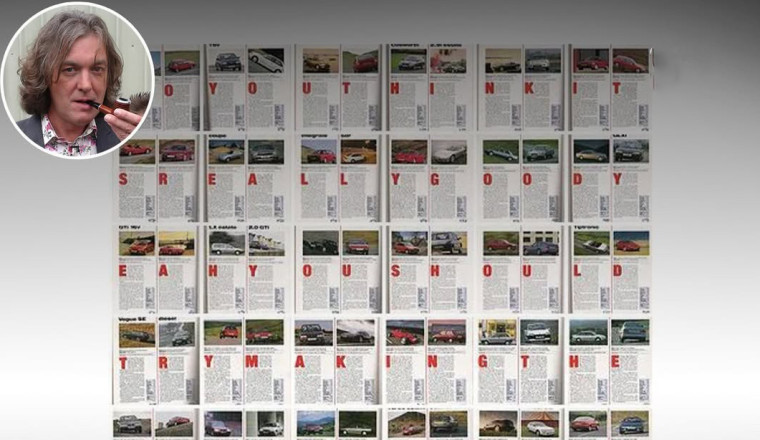

James May lost his job at Autocar magazine in 1992 after orchestrating an elaborate acrostic prank that management discovered only when readers began phoning to ask about prizes. Working as a sub-editor, May had grown weary of assembling the publication's Road Test Year Book, a tedious annual compilation of vehicle reviews. To relieve the monotony, he carefully arranged each review so the first letter of each page spelled out a message.
The opening spreads appeared innocent enough, spelling "ROAD," "TEST," "YEAR," and "BOOK" in sequence. Subsequent pages began with seemingly random letters: "SOYO," "UTHI," and so forth. Observant readers who continued tracking the pattern eventually decoded May's complete message, which read when punctuated: "So you think it's really good, yeah? You should try making the bloody thing up; it's a real pain in the arse."
According to May's later recollections in interviews and his autobiography, the joke required considerable effort. Each review needed editing to begin with specific letters while maintaining coherent content and proper length. The task demanded precisely the kind of meticulous attention to detail that made the original assignment so tedious, creating irony that May presumably appreciated even if his employers did not.
The acrostic slipped through editorial oversight and reached publication. Autocar's editors remained oblivious until readers contacted the magazine, many assuming the hidden message indicated some kind of competition or promotional puzzle. When management decoded what May had actually written, they treated the matter as serious misconduct rather than harmless workplace humour.
May was dismissed shortly afterward. The termination, while undoubtedly uncomfortable at the time, proved consequential in unexpected ways. Freed from staff employment, May pursued freelance writing and broadcasting opportunities that eventually led to his television career. His first major break came with the Channel 4 series Driven in 1998, where his deadpan delivery and evident automotive knowledge attracted attention.
Top Gear producers hired May in 2003 after original presenter Jason Dawe departed. May's chemistry with Jeremy Clarkson and Richard Hammond transformed the show from a straightforward motoring magazine format into a global entertainment phenomenon. His persona as "Captain Slow," the methodical counterpoint to Clarkson's bombast and Hammond's enthusiasm, became central to the programme's appeal.
The Autocar incident became part of May's public mythology, frequently referenced in interviews and profiles. He typically discusses it with characteristic self-deprecation, acknowledging the dismissal was justified while noting the absurdity of investing such effort into a prank. The story illustrates his particular brand of humour: cerebral, slightly subversive, requiring patience to execute and appreciate.
Autocar itself has addressed the incident occasionally in retrospective features. In a 2019 article marking the magazine's history, former colleagues described May as talented but somewhat bored in his sub-editor role. The Road Test Year Book assignment involved repetitive layout work with minimal creative input, precisely the kind of task that might prompt someone of May's temperament toward mischief.
The technical execution deserves recognition. Creating a coherent 50-plus word acrostic across multiple magazine spreads while maintaining readable reviews requires skill. Each article needed to flow naturally despite artificial constraints on opening letters. This meant sometimes rewriting introductions, adjusting headlines, or restructuring content to achieve the necessary alphabetical sequence.
May has suggested in interviews that part of his motivation involved testing whether anyone actually read the Road Test Year Book carefully. The publication served primarily as reference material, the kind of content readers might consult for specific information but rarely consume cover to cover. His acrostic functioned as both entertainment and editorial commentary on the format's limitations.
The message itself reveals May's frustration with the assignment. "It's a real pain in the arse" succinctly captured his feelings about the tedious compilation work. The sarcastic opening, "So you think it's really good, yeah?" suggests awareness that readers might not share his dim view of the publication's appeal.
Modern editorial processes make similar pranks considerably more difficult. Desktop publishing software, multiple editorial review stages, and digital workflows create numerous checkpoints where acrostics would likely get caught. May's prank succeeded partly because 1992 magazine production involved more manual processes with fewer oversight layers.
The incident raises questions about workplace humour boundaries. May clearly invested substantial effort into something he knew would likely cost his job if discovered. This suggests either confidence the prank would go unnoticed or acceptance that termination was an acceptable outcome. His subsequent career success makes it tempting to view the firing as intentional self-liberation, though May has never claimed such foresight.
Autocar survived the embarrassment without lasting damage. The magazine, founded in 1895 and Britain's oldest automotive publication, continued serving enthusiasts with its characteristic focus on technical detail and road test authority. The May incident became a footnote in its long history, occasionally mentioned but hardly defining.
For May, the firing became a crucial turning point. His Top Gear tenure from 2003 to 2015 made him internationally recognizable, leading to The Grand Tour on Amazon Prime Video from 2016 onward. He developed parallel careers presenting documentaries about topics ranging from toys to Japanese culture, all delivered with his distinctive dry wit.
The acrostic demonstrates qualities that later served May well on television: attention to detail, willingness to invest effort in elaborate jokes, and a slightly anarchic streak beneath his measured exterior. Television audiences responded to these characteristics, finding his persona refreshingly different from typical presenter energy.
Whether May would repeat the prank given hindsight remains unclear. He's expressed no regret about the incident in interviews, generally treating it as an amusing episode that worked out favourably. The story endures because it captures something essential about May's character while providing a satisfying narrative arc from termination to triumph.
The Road Test Year Book containing the acrostic has become a collector's item among automotive enthusiasts and May fans. Copies occasionally appear on eBay, typically commanding premiums over other Autocar annuals from that era. Owning the physical evidence of May's prank appeals to those who appreciate the intersection of automotive journalism and elaborate practical jokes.
Thirty-four years later, the incident remains May's most famous pre-television moment. It established a template for how he's discussed throughout his career: clever, slightly subversive, willing to commit fully to elaborate concepts regardless of practical consequences. The sub-editor who embedded a rude message in a car magazine became one of Britain's most recognizable television presenters. Classic Captain Slow indeed.