
► Analysing the globalised car industry
► Decades of efforts to simplify
► But has the world seen the end of the ‘world car’?
Europeans buy Mercedes-Benzes made in America and Fords from Thailand. Americans drive Buicks built in China and Dodges manufactured in Italy. Most BMW 3-series models sold in Australia are assembled in South Africa. That great British off-road icon, the Land Rover Defender, is produced in Slovakia. With its scattered factories and sprawling supply chains, the automotive industry has long been the poster child for globalisation.
But the buzzword echoing around boardrooms in Detroit and Wolfsburg and Nagoya and Seoul these days is localisation. Where once executives dreamed of giant global enterprises that took components from anywhere and turned them into products shipped everywhere, they are now talking about shortening supply lines, reducing exposure to geopolitical pressures, and better meeting customer expectations in key markets, namely China, the US and Europe.
‘The automotive industry… increasingly looks like a regional business,’ said Ford Motor Company boss Jim Farley in the aftermath of President Donald Trump’s decision to impose swingeing tariffs on vehicles and automotive components imported into the US from China and Europe.
Whether it’s for business reasons or because of differences in tastes, localising is not a new idea. Ford specifically designed its Model Y for Europe in the 1930s because the Model A was too expensive for the locals. Toyota has built full-size pick-up trucks specifically designed and engineered for the North American market in Texas since 2002.
The size of the Chinese market has recently prompted some Western manufacturers to tailor some cars specifically to local tastes. Audi has its new China-only AUDI brand, and Volkswagen is changing its whole approach to developing vehicles for China. ‘Typically, we developed a global platform in Wolfsburg and localised it in China, but this model doesn’t work any more,’ says Volkswagen Group COO and CFO Arno Antlitz. ‘Customers demand different cars, different technology, and different features. Also, from the cost side it didn’t work. We have realised that and embarked on a [product development] strategy of local vehicles for local customers.’
Does regionalisation and localisation mean the death of what was once regarded as the ultimate expression of a globalised automotive industry, the world car? That depends on how you define a world car.
Ford has spent a lot of time and money over the years trying to figure out the world car. Project Erika was a front-wheel-drive compact car jointly developed in the late 1970s by Ford’s North American and European operations. It was manufactured in Ford plants in the US, the UK, Germany, Portugal and Brazil, its components sourced from 17 countries. Europeans knew Erika as the Ford Escort. So did the Americans. In 1981 the Escort was the world’s best-selling car, with annual sales in the US topping 400,000 vehicles in the mid ’80s. But it was not a world car. While the European and American versions of the Escort looked almost identical, they shared only a handful of common parts and not a single body panel was interchangeable.
Alan Mulally, the former Boeing executive who took over troubled Ford as CEO in 2006, turned the world car idea into an entire corporate strategy. Mulally’s One Ford aimed to consolidate design, engineering, and manufacturing operations in the Americas, Europe, and the Asia-Pacific region so the company could more efficiently produce standardised and globalised mainstream cars, SUVs, and commercial vehicles.
For several years the Mondeo delivered on the One Ford dream. One Ford also gave Europe the Mustang and America the Fiesta. But it did not give Ford a repeatable blueprint for creating a world car, and over the last 20 years the clarity of Mulally’s vision has become increasingly clouded, and Ford’s products in different countries are far from universal.
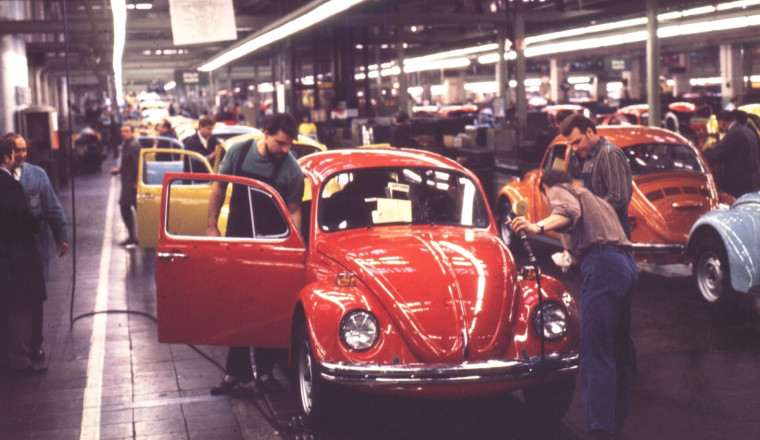
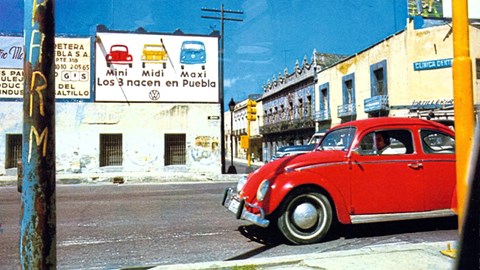
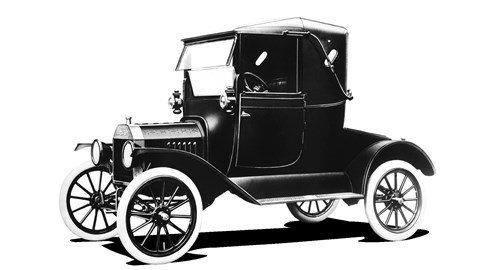
The company actually had much more success with making one car for the whole world back in the early days. The car that made Ford a big deal, the Model T, was a world car. In 1911, barely three years after the first Model Ts began appearing on American roads, it was also being built in Manchester. In 1925 alone, Ford exported more than 303,000 Model Ts from its American plants to countries all over the world. Volkswagen’s original Beetle was another world car, with 21.5 million sold around the globe over a 65-year period.
Today, Tesla’s Model 3 and Model Y, the world’s best-selling EV, are world cars. Many specialist vehicles – take the Porsche 911 and Range Rover – are near-identical everywhere. Ditto the most luxurious cars, such as Rolls-Royces.
The world car is also thriving at the other end of the market – and increasingly it’s being built in China, by Chinese companies. The level of innovation is high and costs are low; people who want that Model T-style mobility will find that combination hard to beat.
According to JATO Dynamics analyst Felipe Munoz, the C-segment SUV is the world’s single most popular vehicle format, and China is awash with well-built and technically impressive C-segment SUVs such as the electric-powered Xpeng G6, a cut-price Porsche Macan EV rival.
What made both the Model T and the Beetle world cars was that they were simple, durable, affordable vehicles that worked pretty much anywhere. The automobility they provided was what consumers desired, not the cars themselves.
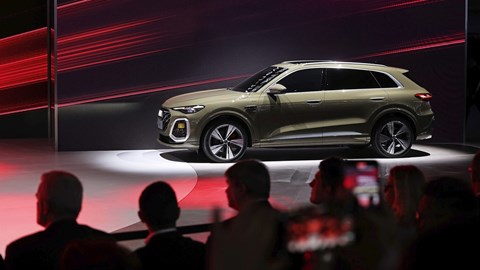
Today’s automotive desires are more nuanced, more self-indulgent, more focused on the product rather than the destination. Consumers don’t want a vehicle to simply get them somewhere; they want it to express something about themselves, to make their lives easier and more comfortable, while doing so. They don’t want to drive a commodity car.
But they also don’t want to pay over the odds. As so often, recently reinstated Volvo boss Håkan Samuelsson has a shrewd perspective on the rise of localised tastes at a time when production costs have to be reined in. His company’s best seller, the XC60, is made in both China and Sweden.
‘We have seen this trend going on for a long time,’ Samuelsson says. ‘We need to produce closer to our customers to be more agile and faster in delivery times. We need to listen to those customers and adapt to local preferences.’