
Bambas’ story is the kind that sits behind neat corporate recovery charts and bailout headlines. A U.S. Air Force veteran, he spent around four decades working for General Motors before retiring in 1999, expecting the mix of pension and health benefits that defined the old auto industry social contract. When GM collapsed into bankruptcy in 2009 and was rescued by the U.S. government, the restructuring allowed the company to jettison billions of dollars in pension and healthcare obligations, particularly for salaried and non union staff at GM and its parts arm Delphi. Thousands of workers saw pensions reduced and health coverage disappear. Bambas lost much of his security at the exact moment his wife was fighting cancer. He burned through savings to pay for her care, and after she died he kept visiting her grave daily, but the numbers no longer added up. A decade after he thought he was done with work, he put on a name tag again.
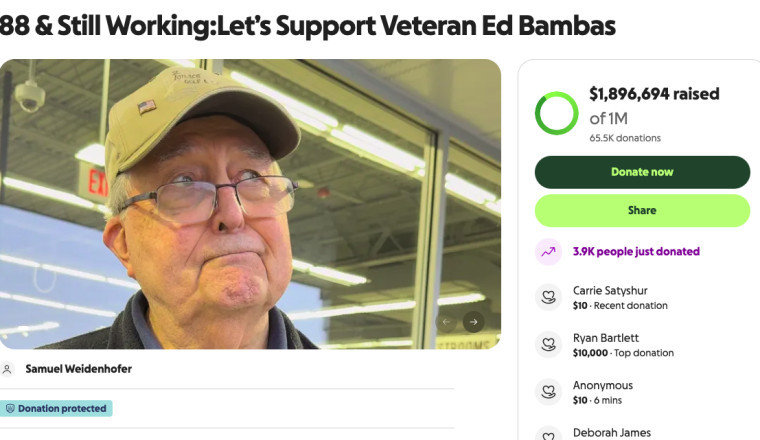
Weidenhofer walked into that reality with a camera and a simple pitch: he wanted to help Ed retire properly. The first videos show the creator quietly approaching Bambas in the store, paying for his groceries, handing him cash, and listening as the older man explains how he ended up back on the tills in his eighties. The clips struck a nerve. Viewers were furious that a man who had done everything “right” in mid century America could end up stocking shelves to survive, and many recognised the GM bankruptcy story from their own families. That anger turned into action when Weidenhofer launched a GoFundMe campaign titled “Help Ed Retire.” Within days, donations poured in from across the U.S. and overseas, in amounts ranging from a few dollars to thousands.
By the time the story hit national news, the fundraiser had blasted past its original $1 million target, climbing to more than $1.7 million. For Bambas, who had described himself as effectively penniless after years of caring for his wife and absorbing the body blow of slashed benefits, the sudden wave of support changes everything. It means he can leave the checkout lane, pay his bills, and grieve and live on his own terms rather than on Meijer’s rota. For Weidenhofer, it is another video series that cements his reputation as a kind of internet era philanthropist, though the deeper story is less about one generous influencer and more about the thousands of people who chose to patch a hole left by corporate restructuring and policy decisions.
Behind the feel good thumbnails and viral clips sits a stark contrast. GM’s balance sheet has long since recovered, the company reshaped for the electric era and back to posting solid profits. The workers whose pensions and health care were carved up to make that possible have not enjoyed the same rebound. Bambas’ journey from the shop floor to retirement, back to work and then finally out again thanks to online donations, throws that contradiction into sharp relief. The internet did, in the end, shower him with pennies. The question his story leaves hanging is why he had to rely on it at all.