Driving instruction teaches you how to operate a vehicle within legal parameters, pass tests, and avoid basic collisions. It doesn't teach tactical positioning, escape route planning, or defensive maneuvers that intelligence officers consider essential for survival in environments where vehicles become both transportation and tactical assets. These skills, developed through decades of operational experience, apply equally to hostile foreign cities and ordinary urban driving where awareness and positioning prevent problems before they start.
Part 1 | Situational Awareness HERE
Defensive Positioning: Staying Out of Danger Zones
Your position on the road determines options available when situations develop. Poor positioning creates vulnerabilities where threats can materialize faster than you can respond. Tactical positioning maintains maximum options and minimizes exposure to dangers you might not even recognize until too late.
Space cushion maintenance forms the foundation. Maintaining adequate distance from vehicles ahead provides time to react when they brake suddenly or when hazards appear. The standard two second following distance proves insufficient for tactical driving. Four seconds minimum, six when conditions are challenging or threat levels elevated, creates the time and space necessary for controlled responses rather than emergency reactions.
Space matters in all directions, not just ahead. Vehicles beside you eliminate escape routes if threats emerge. Maintaining lateral gaps allows you to swerve left or right if forward movement becomes blocked. This means avoiding traveling alongside other vehicles when possible, instead positioning yourself in gaps where open space exists to both sides.
Lane selection influences vulnerability. The centre lane on multi lane roads provides options to move left or right if blockages appear ahead. Outside lanes offer fewer escape routes, limiting you to one direction if you need to change position quickly. However, the left lane typically flows faster and contains fewer slow vehicles that might suddenly brake or create obstacles.
The tactical choice depends on threat assessment. In normal driving, the left lane's flow advantages outweigh the reduced lateral options. When threat levels increase, the centre lane's flexibility proves more valuable despite potentially slower traffic.
Following distance from vehicles behind matters as much as space ahead. Aggressive drivers tailgating eliminate your ability to brake smoothly or slow gradually without risking rear impacts. When vehicles close behind you too tightly, creating separation requires either accelerating to increase the gap or changing lanes to let them pass.
Never allow yourself to be pressured into uncomfortable speeds or risky maneuvers by aggressive drivers behind you. Their poor decisions don't obligate you to match their risk tolerance. Change lanes, let them pass, and maintain the following distances your safety requires regardless of their impatience.
Intersection positioning deserves special attention. Stopping directly behind the vehicle ahead at red lights creates vulnerability where you're boxed in with no escape if threats appear. Instead, stop far enough back that you can see the rear tires of the vehicle ahead touching the pavement. This distance provides enough space to steer around the stopped vehicle without reversing if you need to escape.
Escape Route Identification: The Habit That Saves Lives
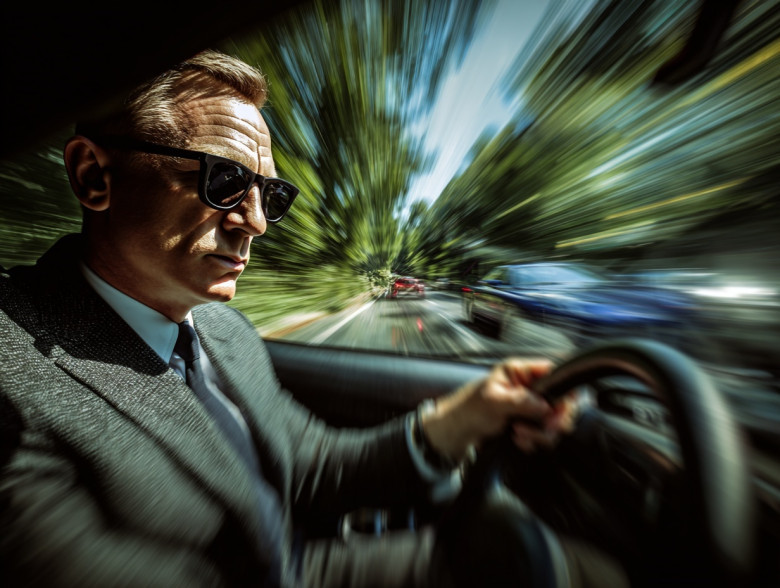
Every position your vehicle occupies should include identified escape routes, the directions you can move if current position becomes untenable. This continuous assessment becomes habitual with practice, requiring no more conscious thought than checking mirrors, yet it provides options that might save your life when situations deteriorate suddenly.
The minimum standard requires identifying at least two escape routes from every position. If you're stopped at a red light in the centre lane, your primary escape might be driving forward into the intersection if threats appear behind you. Your secondary escape could involve reversing rapidly to create distance. Tertiary options might include mounting the curb to your right or squeezing between lanes to your left.
The quality of these options varies dramatically based on positioning. Stopping in the left lane with vehicles to your right and curb to your left provides fewer and poorer escape routes than stopping in the right lane with a parking area to your right and open lanes to your left. Choose positions that maximize options, not positions that seem marginally faster or more convenient.
Escape routes require continuous updating as situations change. The right turn lane that offered escape when empty becomes useless when vehicles fill it during your wait at the red light. Your planned forward escape becomes blocked when the vehicle ahead closes the gap to the intersection. Continuous reassessment ensures your mental map matches current reality rather than conditions from 30 seconds ago.
Speed governs escape capability. Maintaining slight speed advantage over surrounding traffic creates flexibility to accelerate away from developing threats or sudden hazards. Traveling at exactly the same speed as vehicles around you eliminates this option, leaving only braking or lane changes that might not be available when needed.
A modest 5 mph speed advantage over traffic flow proves sufficient without creating aggressive driving or safety concerns. This allows you to pull ahead of vehicles that might otherwise box you in while maintaining legal speeds and safe following distances.
Parking lots and garages present unique challenges. The confined spaces, limited sightlines, and unpredictable pedestrian and vehicle movements create environments where escape routes require extra attention. When parking, always choose spots allowing forward exit rather than backing out into unknown conditions. The time saved by backing into spaces pays dividends in faster, safer departures where you can see what you're driving into rather than reversing blindly into areas you cannot observe.
Avoiding Being Boxed In
Being boxed in means hostile actors or circumstances have eliminated your escape routes, forcing you into positions where your options narrow to submission or desperate measures. Tactical driving prioritizes avoiding these situations rather than relying on skills to escape them once trapped.
Intersections present the highest boxing risk. Stopped at red lights surrounded by vehicles, you have limited mobility and predictable location. Someone wanting to box you in knows exactly where you'll be and when, making intersections natural ambush points for carjackings, kidnappings, or attacks.
The defensive counter involves maintaining enough distance from the vehicle ahead to drive around it, as discussed earlier, but also includes awareness of vehicles approaching from behind. If a vehicle stops unusually close behind you at an intersection, or if multiple vehicles seem to coordinate positioning around you, these are warning signs of potential boxing attempts.
Your response should be immediate. If the light is red but cross traffic has cleared, consider running the light to escape the box, accepting the traffic violation as preferable to whatever threat is materializing around you. If you cannot safely enter the intersection, prepare to drive over curbs, across pavements, or through other spaces that vehicles don't normally use but which provide escape from positions where you're surrounded.
Parking areas require particular vigilance. Walking to your car in a car park, you're vulnerable to approach from multiple angles with limited escape options until you're inside the vehicle with doors locked and engine running. Criminals know this and frequently stage attacks in car parks where victims are distracted, burdened with shopping, and vulnerable.
The tactical approach involves scanning the area around your vehicle as you approach, noting any people loitering without apparent purpose, vehicles occupied by people who aren't leaving, or anything else unusual. Your keys should be ready before you reach your car, eliminating fumbling that extends your vulnerable period outside the vehicle. Once inside, lock doors immediately and start the engine before adjusting mirrors, checking phones, or any other tasks that can wait until you're moving.
If you notice concerning indicators while approaching your vehicle, don't continue to it. Instead, walk past as if you're going somewhere else, circle back through different routes, or return to the building and request security escort. The embarrassment of overreacting to a false alarm proves infinitely preferable to walking into an ambush because you didn't want to seem paranoid.
Traffic jams create boxing opportunities where vehicles ahead, behind, and beside you eliminate escape options. While you cannot always avoid congestion, you can position yourself to maximize what limited options exist. Stay in lanes that allow shoulder access if you need to drive off the road. Maintain extra distance from vehicles ahead so you can steer around them if necessary. Note gaps in barriers or exits from the road that might provide escape routes if situations require them.
Breaking Contact When You're Being Followed
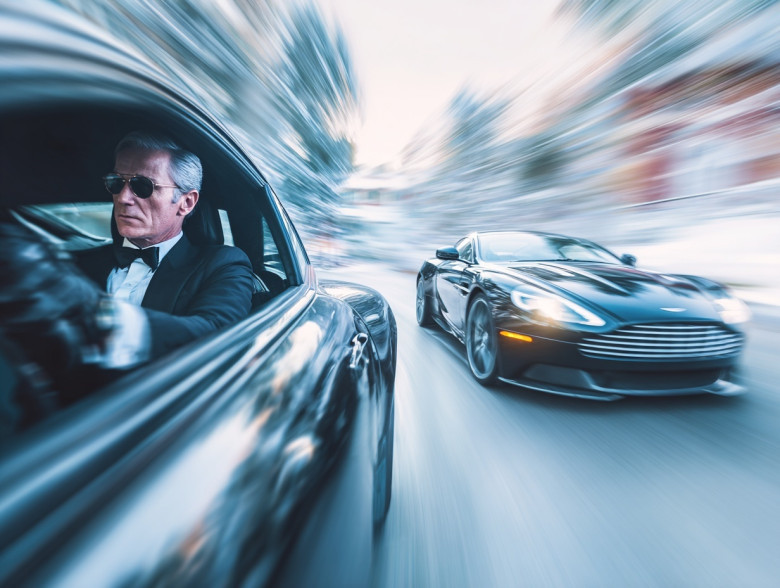
Realizing that someone is deliberately following you creates immediate stress and decision requirements. Your responses need to confirm the surveillance, avoid leading followers to your home or other sensitive locations, and ultimately break contact while reaching safety.
Confirmation comes first. The three turn test discussed in the situational awareness section provides high confidence confirmation. Three consecutive turns in directions that no legitimate destination requires eliminate coincidence as explanation if the suspect vehicle follows all three.
Once confirmed, never drive home. Leading followers to your home gives them your address and creates vulnerability where they know your location, routines, and potentially when you're alone. Instead, drive to police stations, fire stations, or well lit, populated public areas where you can seek help safely.
Simple following breaks through unpredictability. Change speeds erratically, make sudden legal turns, drive through areas with multiple turn options that make continuous following difficult without being obvious. Shopping center car parks work well because they offer multiple exits and areas where you can make several turns in quick succession, losing followers in the maze of aisles and exits.
Highway following requires different tactics. Take exits at the last possible moment, forcing followers to make obvious moves to stay with you. Enter highway rest areas but don't stop, instead driving through and immediately exiting back onto the highway. These maneuvers make following extremely difficult without the follower exposing themselves through matching your unexpected movements.
Multiple follower teams require professional help. If you notice different vehicles taking turns following you, or if one vehicle peels off but another immediately replaces it, you're facing sophisticated surveillance that basic evasion tactics won't defeat. Drive immediately to police, call emergency services, and request law enforcement response to your situation.
Emergency Maneuvers: Reality Versus Hollywood
Hollywood action films teach dangerous nonsense about vehicle dynamics and emergency maneuvers. The dramatic slides, impossible jumps, and miraculous saves that look spectacular on screen will get you killed or seriously injured if attempted in reality. Understanding what actually works versus what's fiction could save your life.
The bootleg turn or J turn, that dramatic 180 degree spin reversal, almost never works as shown. In films, drivers reverse at high speed, crank the wheel, hit the brakes, and magically end up facing the opposite direction at speed ready to drive away. In reality, the maneuver requires specific vehicle types, extensive practice, and often results in losing control, rolling the vehicle, or ending up stuck rather than smoothly reversed.
If you need to reverse direction quickly, use a three point turn in the road width available or find a side street or driveway to turn around conventionally. These methods prove slower than Hollywood's version but actually work without destroying your vehicle or getting you killed.
High speed ramming through barriers or vehicles creates catastrophic results far beyond what films suggest. Modern vehicles have crumple zones designed to absorb impact energy by deforming, which means that even modest speed impacts can disable vehicles through damage to cooling systems, suspension, or other critical components. The movie hero who rams through gates or vehicles and drives away unscathed is fantasy. Reality involves disabled vehicles, deployed airbags, and potentially serious injuries.
If you must breach barriers, do so at the lowest speed possible while still generating enough momentum, aim for weakest points rather than reinforced sections, and accept that your vehicle may not be drivable afterward. This is a last resort when being stopped by a barrier proves less dangerous than whatever threat you're escaping.
Handbrake turns look dramatic but serve no practical purpose in emergency situations. The maneuver involves pulling the handbrake while turning sharply to break rear traction and slide the vehicle sideways around corners. This might shave a second or two off cornering time on a closed course, but on public roads it creates massive risk of losing control, hitting obstacles, or sliding into oncoming traffic.
Emergency cornering should involve heavy braking before the turn to reduce speed, then smooth steering through the corner while gradually reapplying throttle as you straighten. This proves slower than handbrake turns but maintains control and doesn't risk catastrophic loss of traction.
Shooting from moving vehicles hits nothing except in movies. The combination of vehicle motion, road vibration, and the difficulty of aimed fire from unstable platforms means that gunfire from moving vehicles almost never hits intended targets. Police and military training emphasizes stopping vehicles before engaging threats specifically because accuracy from moving platforms proves nearly impossible.
If facing armed threats while in your vehicle, your best response involves using the vehicle's speed and mass to escape the area rather than attempting to return fire. Two tonnes of metal moving at 60 mph provides far better protection and offensive capability than attempting handgun accuracy from a bouncing, swerving platform.
Practical emergency maneuvers that actually work include threshold braking and collision avoidance through steering. Threshold braking means applying maximum brake pressure without locking wheels or triggering anti lock brake systems' pulsing, providing shortest possible stopping distances. Modern ABS systems largely handle this automatically, but understanding the feel of maximum effective braking helps in emergencies.
Collision avoidance through steering involves recognizing that swerving around obstacles often proves safer than attempting to stop, particularly at higher speeds where stopping distance exceeds available space. The key is committing to the swerve rather than half measures that result in both braking and steering, which reduces effectiveness of both.
Vehicle as weapon remains your most effective option in many emergency situations. If blocked by hostile actors on foot, driving through or past them using your vehicle's mass and speed provides better odds than stopping and confronting them on their terms. Vehicles are heavy, fast, and highly effective at creating space and breaking through obstacles that stop people on foot.
This doesn't mean carelessly driving into crowds. It means recognizing that in situations where genuine threats attempt to stop your vehicle, accelerating through the threat using the vehicle as a barrier between you and danger often proves the safest response available.
Integration and Practice
These tactical driving principles require practice to become habitual. Begin with escape route identification during normal driving, forcing yourself to consciously note options from every position until the assessment becomes automatic. Progress to defensive positioning, choosing lanes and following distances that maximize options rather than minimize travel time.
The concepts feel unnatural initially because they contradict normal driving habits developed through years of focusing solely on getting from point A to point B efficiently. Tactical driving prioritizes options and safety over efficiency, accepting slightly longer travel times in exchange for maintaining freedom of maneuver and defensive advantages.
Most drivers will never face situations requiring emergency maneuvers or escape from deliberate following. However, the habits of maintaining space, identifying escapes, and positioning defensively improve safety even in normal circumstances by providing time and options to avoid the everyday hazards that cause ordinary collisions.
Intelligence officers drive this way constantly because their lives depend on it. Your life probably doesn't depend on it every day, but the one time it does will justify every moment spent developing tactical habits that keep you safe when situations deteriorate from normal to dangerous.
These tactical driving techniques form just one component of comprehensive operational driving training. The complete Drive Like A Spy guide covers these skills and many more in depth, providing detailed protocols, practice exercises, and advanced techniques for everything from counter surveillance to tactical vehicle maintenance.
Download your free copy of Drive Like A Spy exclusively at GAUKMotorbuzz Substack. Learn the skills intelligence agencies teach their operatives, delivered in practical format anyone can master. This book isn't available anywhere else, and this giveaway opportunity won't last forever.
Claim your guide now and discover what professional operatives know about staying safe on the road.