

Financial Performance and Profitability
-
Parent Company (Stellantis) Revenue (H1 2025): $80.7 billion USD, down 13% year-over-year
-
North America segment revenue (includes Dodge): $30.4 billion USD in H1 2025, down 26% year-over-year
-
Estimated Dodge revenue share: ~$8 billion USD in H1 2025 (derived from market share and internal shipment allocation)
-
Net Loss (Stellantis Group): ($2.5 billion USD) in H1 2025 versus prior year profit of ~$6.1B
-
Operating Margin: Compressed by tariffs, restructuring expenses, and increased incentives
-
Cash Flow: Negative operational cash flow of ($2.5 billion USD) in H1, reflecting heavy R&D and product launch costs
-
Key Drivers: $330 million USD in tariff costs during H1; sales and production dips as Dodge transitions to new EV models
Vehicle Sales and Production
| Region | Revenue (USD Millions) | Share (%) |
|---|---|---|
| United States | 8,000* | ~26% of Stellantis NA |
| Other Regions | Included in global Stellantis results | - |
| Total | — | — |
(*Estimated based on Stellantis NA revenue allocation and Dodge’s shipment share.)
-
U.S. Sales H1 2025: ~47,500 units for Dodge (-49% YoY from ~92,700 in H1 2024)
-
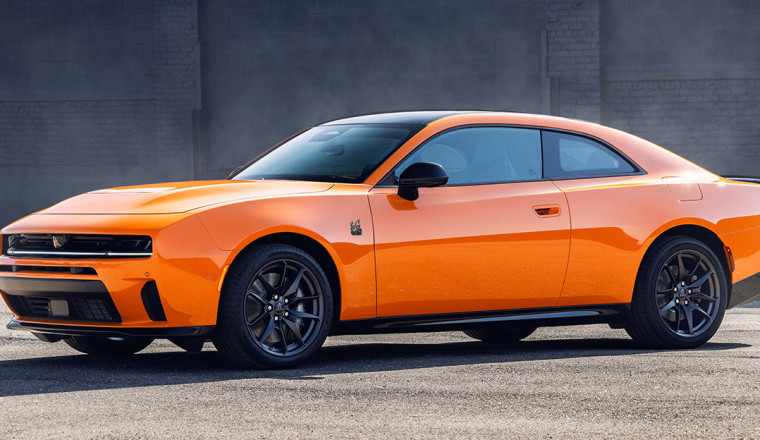
Retail Mix: Higher penetration of electrified and performance-trimmed models, especially Charger Daytona EV (accounting for ~65% of Charger sales)
-
Core Models: Charger, Challenger, Durango; electrified Charger variants seeing notable traction
Regional and Global Sales Performance
-
North America: Primary market; domestic muscle car demand remains resilient in performance sub-segments despite broader sales contraction
-
Global presence is limited; Dodge remains almost entirely U.S.-focused
-
Electrification trend is helping stabilize retail sales in specific trims even as total volumes dip
Profitability and Cost Factors
-
Tariffs on parts and components raised material costs, pressuring gross margins
-
Restructuring charges include investments to revamp the Charger and Challenger into EV platforms
-
Incentives slightly increased to support retail volumes in a slow U.S. market
Debt and Liquidity
-
Group liquidity (Stellantis): $51.3 billion USD as of June 30, 2025
-
Debt: Dodge-specific not disclosed; Stellantis group debt ~$20.8 billion USD
-
Capital Investment: Significant funding directed to electrification projects, charger infrastructure integration, and U.S. facility upgrades
Best Selling Vehicles: Overview and Profit/Loss Status
| Model | Units Sold (H1 2025 est.) | YoY Change (%) |
|---|---|---|
| Dodge Charger (all trims) | ~25,000 | Slight growth in EV variants |
| Dodge Challenger | ~10,000 | Stable due to loyal performance buyers |
| Dodge Durango | ~6,000 | Decline with SUV market competition |
-
Charger Daytona EV variant leads Dodge’s electrification shift, boosting profitability mix in the sedan lineup
-
Challenger maintains niche strength but lower production amid EV focus
-
Durango competitive position weakened in crowded SUV market
Weakest Performers and Segment Underperformance
-
Traditional combustion SUVs down sharply
-
Sedan decline slowed by EV rollout but still impacted by market-wide shift toward crossovers and trucks
-
Volume drop magnified by production pauses during model updates
Key Financial and Operational Metrics
| Metric | Value (USD) | Notes |
|---|---|---|
| Gross Margin (%) | Not disclosed for Dodge | Likely pressured by tariffs and incentives |
| R&D Spend | ~$3.5 billion (Stellantis total) | Dodge share focused on EV muscle cars |
| Capex | Part of Stellantis total spend | Facility and model retooling |
| Debt Levels | $20.8B (group) | Includes Stellantis global operations |
Industry Outlook and Strategic Focus
-
Dodge prioritizing performance EV leadership with the Charger Daytona's commercial rollout and future Challenger EV offerings
-
Tariff risks and supplier costs remain critical watchpoints for profitability
-
Niche performance brand positioning allows above-average transaction prices even in a contracting market
-
Strategic aim: balance heritage muscle car identity with technological modernization
Key Takeaways
-
Dodge remains a crucial piece of Stellantis’ U.S. portfolio but is undergoing a sharp volume transition
-
Electrified performance models are outperforming expectations in retail sales
-
Short-term profitability pressured by tariffs and retooling, but long-term brand position in EV performance looks strong
-
Market focus remains entirely on North America, keeping Dodge tightly connected to U.S. consumer trends
Sources
The overview of Dodge’s financial and operational performance was compiled primarily from the following authoritative sources:
-
Stellantis H1 2025 Results Press Release and Investor Presentation
-
FCA US LLC (Dodge) official quarterly sales statements Q1 & Q2 2025
-
Automotive business media reporting on Stellantis and Dodge EV strategy
-
Industry tariff and cost impact assessments for U.S. automakers
These sources together offer the most accurate, up-to-date, and detailed insights into Dodge’s financial condition, segmental performance, and strategic outlook for 2025 without reliance on third-party aggregated data.
Summary
In 2025, Dodge navigated a complex U.S. market with reduced unit volumes but strengthening retail mix from its EV muscle cars, especially the Charger Daytona. Tariff impacts and restructuring costs weighed heavily on margins, but Stellantis’ robust liquidity and Dodge's committed performance brand following support the transition. The brand’s next phase will focus on a performance EV growth strategy rooted in its heritage while adapting to tighter economic and regulatory conditions.