
EPA Administrator Lee Zeldin stood in the White House Roosevelt Room on February 12, 2026 and declared victory over what he called "the almost universally hated start-stop feature" in modern vehicles. According to official EPA statements, the Trump administration eliminated all off-cycle credits that rewarded manufacturers for installing automatic engine shut-off systems. President Trump, standing alongside Zeldin, described the technology as forcing "the hated start-stop feature onto American consumers" while driving up vehicle costs.
Zeldin didn't hold back. He called the system the "Obama switch" that makes engines "die" at every red light and stop sign. In his announcement, he stated "not only do many people find start-stop annoying, but it kills the battery of your car without any significant benefit to the environment. The Trump EPA is proudly fixing this stupid feature at Trump Speed."
The technology works exactly as its name suggests. When a vehicle equipped with automatic stop-start comes to a complete halt at a traffic light or in congestion, the engine shuts down automatically. When the driver releases the brake pedal, the engine restarts. The system was designed to eliminate fuel consumption and emissions during idling, particularly in urban driving where vehicles spend significant time stationary.
According to Consumer Reports, the fuel savings are real but conditional. "If you're constantly on the highway and the engine never shuts off, the fuel savings are going to be much lower," says Alex Knizek, associate director of auto test development at Consumer Reports. "But if you're doing a lot of city driving with frequent idling, there is a legitimate reduction in fuel use with start-stop technology."
Testing by multiple organizations confirms this. Edmunds found that stop-start improved fuel economy by 9.5 percent in a Mini Cooper when air conditioning was turned off. With A/C running, savings dropped to 2.9 percent. Jaguar and BMW models tested alongside the Mini reduced fuel consumption by approximately 10 percent using the technology. Natural Resources Canada research shows similar results, with savings varying based on driving conditions and how long the engine remains off at each stop.
The Associated Press reported that Zeldin's claims about battery damage are "generally debunked." Modern stop-start systems use absorbed glass mat batteries specifically designed to handle repeated discharge cycles. These AGM batteries discharge more slowly and last longer than traditional lead-acid batteries. Manufacturers engineer starters, alternators, and electrical systems specifically for the increased demands. Some vehicles use integrated starter-generator units or mild hybrid systems with dedicated 12-volt batteries for auxiliary power.
"There's sometimes a misconception that these systems are bad for the engine or starter, so some drivers disable the functionality," Knizek told Consumer Reports. "They're designed for this function, but like any added technology, there's the possibility that they'll need maintenance or repair down the road."
Research published in ScienceDirect examining the environmental and practical effects of stop-start systems concluded that vehicles equipped with intelligent start-stop technology use less fuel and emit fewer pollutants overall than conventional vehicles. The study found that in idle mode, engines release between 6 and 8 percent CO2 and 0.2 to 0.5 percent CO by volume, with hydrocarbon emissions between 1.5 and 2.5 ppm. With stop-start systems, these emissions are eliminated during stationary periods.
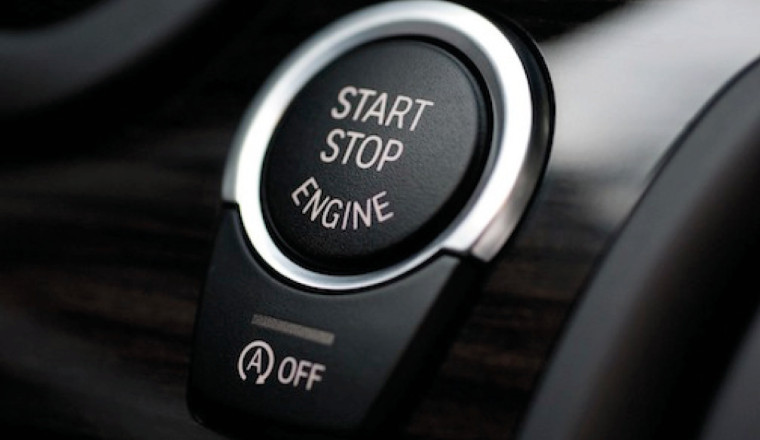
Despite the documented benefits, the technology remains deeply unpopular with many American drivers. The most common complaint centers on the inability to permanently disable the feature. Most vehicles include a button that deactivates stop-start while driving, but the system resets to active every time the car is restarted. Drivers who dislike the feature must press the disable button every single trip, which creates frustration that builds over months and years of ownership.
The sensation of the engine shutting off and restarting contributes to the negative perception. Early systems were jerky and intrusive. Modern implementations have improved significantly with smoother restarts and better integration into the overall powertrain, but the fundamental behavior of stopping and starting the engine at traffic lights feels unnatural to drivers accustomed to conventional vehicles.
Automaker responses to the EPA's announcement were cautiously supportive. Stellantis, which makes Jeep, Ram, and Dodge vehicles, stated they "remain supportive of a rational, achievable approach on fuel economy standards that preserves our customers' freedom of choice." Ford Motor Company said it appreciates "the work of President Trump and Administrator Zeldin to address the imbalance between current emissions standards and customer choice."
The elimination of off-cycle credits doesn't ban stop-start technology. Manufacturers can continue installing it if they choose. But without regulatory incentives, the calculus changes. Stop-start systems add cost through specialized batteries, reinforced starters, additional electronics, and engineering integration. If those costs no longer provide compliance credits toward greenhouse gas targets, manufacturers have little reason to include the technology unless customers specifically demand it.
Ed Kim, president of AutoPacific Inc., told Headlight News that the move appears to be "pushing back against anything seen as green, even though consumer surveys clearly show overwhelming support for boosting fuel economy." Kim questioned whether removing stop-start will meaningfully impact vehicle pricing because "it doesn't add a lot of cost" compared to other fuel-saving technologies.
Industry observers predict manufacturers will take different approaches. Some may eliminate stop-start entirely from price-sensitive model lines and large trucks where buyer ideology opposes green-minded technologies. Others may shift it to optional trim levels or luxury packages. Vehicles that deeply integrated stop-start into powertrain strategies to meet previous standards may pivot toward other efficiency technologies like improved transmissions or lightweight materials.
The broader context matters. This announcement was part of what the Trump administration described as "the single largest deregulatory action in U.S. history." The EPA eliminated the 2009 Greenhouse Gas Endangerment Finding and all subsequent federal GHG emission standards for vehicles with model years 2012 through 2027 and beyond. The administration projected over $1.3 trillion in total regulatory relief, translating to approximately $2,400 less in compliance-driven costs per vehicle.
Whether those savings reach consumers remains uncertain. Automakers have been cautious about anything that might reduce fuel economy and contradict consumer demand at a time when the average transaction price exceeds $50,000. The administration also eliminated Biden-era targets for electric vehicle sales, ended federal tax credits for new and used EVs, and weakened rules for corporate average fuel economy standards.
The stop-start debate highlights tension between regulatory mandates and consumer preference. Research clearly demonstrates the technology saves fuel and reduces emissions in city driving. Engineering analysis shows properly designed systems don't damage engines or batteries. But approximately 60 percent of new cars included the feature, and surveys suggest a significant portion of drivers actively disliked it enough to disable it every trip.
Zeldin framed the change as restoring consumer choice and ending mandates that forced unwanted technology on buyers. "Automakers should not be forced to adopt or rewarded for technologies that are merely a climate participation trophy with no measurable pollution reductions," he stated in the EPA announcement. "Consumer choice is a top priority for the Trump EPA, and we are proud to continue delivering commonsense rules for the American people."
Critics note that eliminating incentives for fuel-saving technology contradicts consumer surveys showing strong support for improved fuel economy, particularly as gas prices fluctuate. The technology demonstrably reduces pollution in measurable ways, contrary to Zeldin's claims. And consumer choice already existed through the disable button; drivers uncomfortable with stop-start could turn it off every trip.
What changes now is that manufacturers no longer receive regulatory credit for installing systems most buyers will immediately disable. From a purely economic perspective, that makes sense. Building features customers don't want increases costs without providing value. From an environmental perspective, eliminating technology that reduces urban emissions and fuel consumption moves in the opposite direction of most developed countries' policies.
The EPA's action means future American vehicles will likely return to conventional starting systems without automatic shutoff. Drivers who hated the constant engine cycling at traffic lights get what they wanted. Manufacturers avoid engineering costs for features that provided little customer satisfaction. And urban air quality loses a technology that, however unpopular, genuinely reduced emissions during the portion of driving where vehicles contribute most to local pollution.
The "stupid feature" is dead. Whether that represents consumer victory or environmental defeat depends on whether you valued fuel savings and emission reductions over the annoyance of engines that turned themselves off at red lights.