

► Mercedes changes tact
► Volume and growth will be key
► So it’s time for mainstream premium
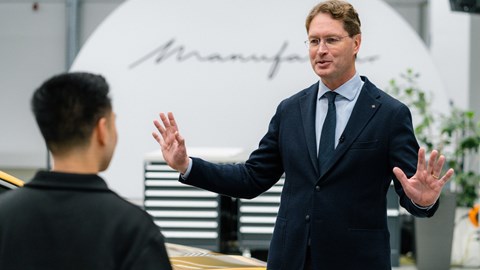
Back in 2022 Mercedes-Benz boss Ola Källenius emphatically declared that the increasingly crowded pool that the car industry calls ‘mainstream premium’ was no place for his company to wallow in. No: Mercedes, he insisted, is a luxury company.
‘I say it here officially: the entrance point into the Mercedes-Benz brand in the future will be a different one than it is today,’ Källenius told a crowd of analysts at an exclusive venue high above Monaco.
Like this? Get more CAR delivered to your browser! Click here to add CAR Magazine as a preferred source on Google.
These were the new ‘economics of desire’. In a slide show littered with images of diamonds, Källenius’s chief financial officer pointed to a chart that drew a stark comparison between a decrease in the volume of sales and an increase in the average selling price. More was less. Value was more important than volume. Sell fewer cars, but make more profit on each sale.
‘We’re not going to go in and compete with volume makers. We’re a modern luxury company,’ Källenius said. More top-end sales and fewer entry models, including axing the VW Golf-size A-Class, would bring predicted profit margins of 14 per cent by 2025.
What a difference four years makes. The gulf between the brand’s standpoint in 2022 compared to now is highly illustrative of the way seemingly deeply held beliefs in the automotive industry have had to be dramatically revised to fit the new reality – a reality few could have guessed at.
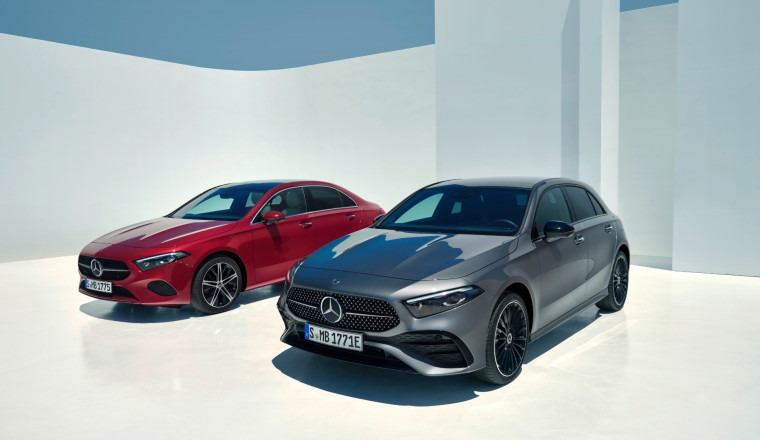
For example, not only does the A-Class still exist, and still compete with the likes of the Golf with an entry price of €34,577 in Germany, but the plan is now to replace it with a new model from 2028.
When Källenius met with investors back in February, there was no more talk of ‘trimming the tree’. He said: ‘The absolutely clear priority in the mid-term is to grow.’ After throttling back car sales to 1.8 million last year from 2.3 million in 2019, the goal is to get back up to two million within the next five years.
When Källenius made his declaration in 2022, Mercedes wasn’t the only car maker touting value over volume amid a computer chip crisis that slowed car factories and pushed up the prices of those models that did get built. But few others built an entire strategy out of it.
The recent climbdown has worried investors. ‘I don’t think I’ve heard the word “growth” as often from you guys since Monaco,’ Tim Rokossa, analyst at Deutsche Bank, said at the February meeting. ‘Is “value over volume” over with this announcement?’
Mercedes assured them it wasn’t, highlighting the fact that 30 per cent of upcoming launches such as the new S-Class and GLE SUV were in its top-end segments that account for 15 per cent of sales.
But it’s clear that, going forward, squeezing the rich is a smaller part of the equation. That much-vaunted average selling price, up to €71,500 in the second quarter of 2022, slipped to €52,765 last year amid a torrent of headwinds, led by a US tariff bill of around €1bn and rampant competition in China that slashed sales by 19 per cent last year to 551,932.
That hurt profits to the point that margins weren’t at the 14 per cent mark predicted in 2022 but instead slumped to 2.6 per cent in the fourth quarter. Mercedes predicts margins of three to five per cent this year for its car division, with a medium-term aim of eight to 10 per cent.
These are tough figures to reach given the return to lower-margin compact segments, but Mercedes pointed to the 400,000-car annual capacity it now has in its Kecskemét plant in Hungary. Here, production is around 70 per cent less expensive than in Germany, ensuring that the new A-Class built there might have a competitive margin. A round of job cuts started in 2025 and continuing in 2026 and 2027 will also control costs.
It’s hard to blame Mercedes for the cloudiness of its crystal ball. Anyone back then who dared to predict today’s reality would have been met with many a raised eyebrow. At that time, Mercedes was ‘all in on BEV, all out of ICE’ as an electric future beckoned.
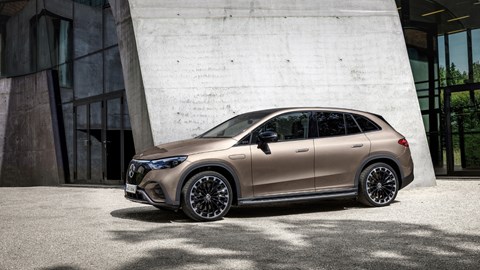
Consumers weren’t so sure, however, and then President Trump decided to completely rewire US emissions rules to put the market on the opposite path to Europe and China. In February there was an honest admission that Mercedes got it wrong. ‘We definitely totally overestimated the speed with which customers would be willing to switch over to electric mobility,’ sales chief Mathias Geisen said. ‘We also overestimated their desire for having a completely differentiated design for their electric vehicle,’ he added in reference to the EQS and EQE with their ‘soap bar’ styling.
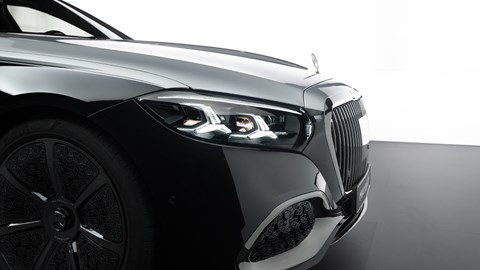
Now V8s are back and there’s even a V12 for the Maybach version of the new S-Class.
BMW arguably played a better hand here, jamming batteries into regular combustion-engine models and only launching its all-electric Neue Klasse platform when the technology was up to scratch.
Outgoing CEO Oliver Zipse attributed the brand’s success in riding out this rollercoaster phase of electromobility transition to not following the herd. ‘To be consensual is probably the first mistake if you want to compete in pretty high-level competition in our industry,’ he told investors on a March call covering the company’s annual results, in which profit margins were considerable better than Mercedes’ at 7.7 per cent.
Now that Mercedes is back in the growth game can it actually hit its two million goal? ‘The targeted growth rates and margin improvements are very ambitious, in our view,’ Deutsche Bank’s Rokossa wrote in a note to investors.
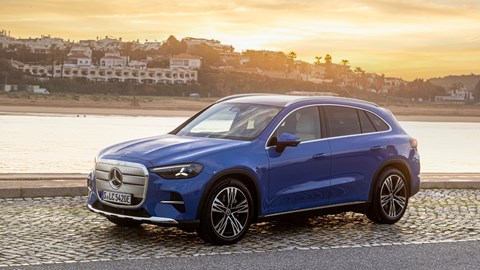
A-Class sales have jumped 20 per cent in the first two months of this year across Europe, suggesting Mercedes has taken the brakes off discounts in its somewhat inflexible direct sales system in key markets including the UK.
However, China is on the decline for all Western premium brands and already the company is refusing to play the brutal discount game with its new electric CLA, resulting in sluggish sales for what should have been a key model. ‘We did not participate in those measures,’ China head Oliver Thöne said, a trifle sniffily, at the investor event. ‘We believe that the substance of the product will require a certain amount of time to be fully understood and fully appreciated.’ The new electric GLC should be a better fit, if Mercedes can price it right.
Being fully appreciated was never a Mercedes weakness, and for one brief period it thought it could leverage that appreciation to elevate itself onto a higher level. But now the diamonds are becoming harder to mine, it recognises it’s time to get back into its civvies and muck in with ‘mainstream premium’ again.
Context:
Mercedes abandoned its luxury-only strategy and will return to mainstream premium cars by 2028.
Context:
This shift shows how quickly automaker strategies must adapt to market realities and competitive pressures.
Context:
Mercedes' profit margins fell from a targeted 14% to just 2.6% in Q4, forcing the strategic pivot.