

► We speak to Li Auto head of design, Ben Baum
► The Li Auto Mega’s rollercoaster in popularity
► What China speed really means for car brands
You may have heard about ‘China speed’ before – the ability to create, develop and produce cars at a rate unlike anything usually seen in the Western world.
Somewhere between motorsport feedback loops and conventional production car timeframes, China speed relies on mainlining feedback, vertical integration across the supply chain, technologies such as gigacasting – and enormous scale across every aspect.
Like this? Get more CAR delivered to your browser! Click here to add CAR Magazine as a preferred source on Google.
Put it all together and it means some brands can move a car from sketchbook to road in as little as 30 months. That’s half the time it usually takes for legacy car makers. It might be a lot to keep up with from the outside looking in, but it’s a whole other ball game for the people within the vortex.
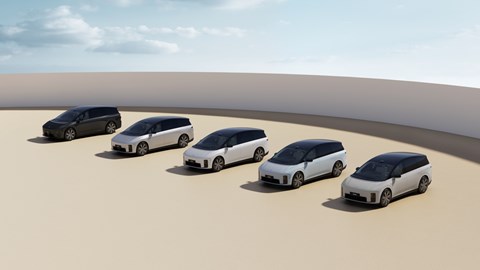
To find out just how stressful, this year I reconvened with Li Auto’s head of design – and father of the Mega – Ben Baum. As I go to meet him on the Li Auto stand – just as I did two years before – I spot the Mega MPV, but there are several new cars next to it. And two that look as though they’ve been birthed from the sci-fi SUV. All of them are surrounded by crowds, because China may have infinite cars, but it has a seemingly endless amount of interest for each of them.
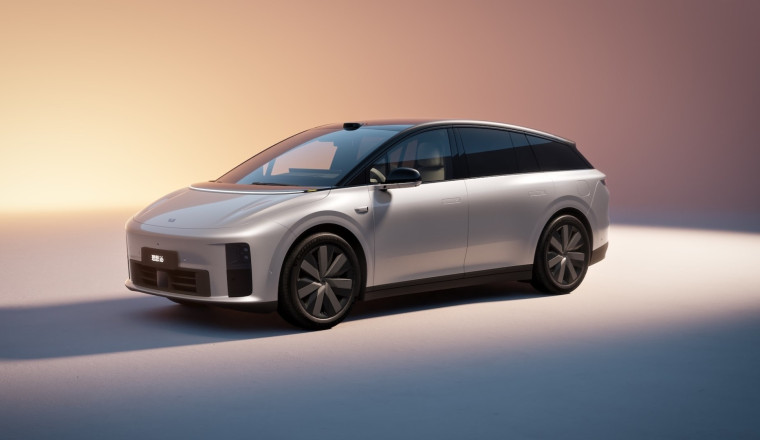
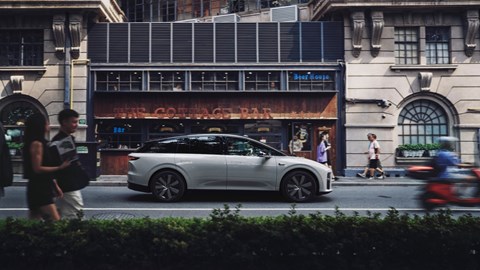
Last time Ben and I spoke, the Mega was the talk of the show – so it’s a good place to start – but it has been anything but plain sailing: ‘It’s a story with ups and downs,’ says Ben, glancing over at the MPV that still looks as forward-thinking now as it did two years ago.
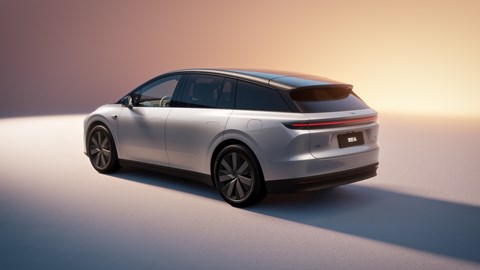
‘We had an extreme number of pre-orders for an MPV when we first released the exterior of the car. Like 70,000 to 80,000 pre-orders within two or three weeks, he says. ‘But then there was an internet storm.’ Some bad press about the Mega – which compared the rear of the car to a coffin, killed those pre-orders and turned an excited buzz into a hum of disapproval. ‘This is a very bad thing in China – like a bad omen.’
Now they are back where they started. ‘It’s the best-selling MPV in the segment, with like 4000 cars a month now, which is actually very, very good for this car,’ says Baum. ‘But it’s had this very dramatic curve of first, super successful then down for eight nine months, and then up again.’
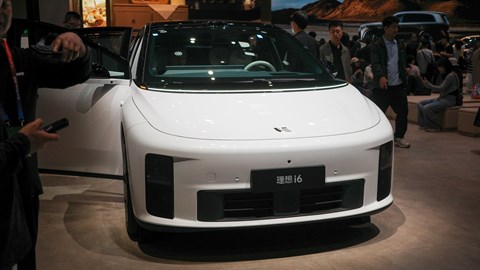
That low period wasn’t great for the Mega, but it had repercussions for other products too. China speed meant that both the i6 and i8, two electric SUVs Li Auto hoped it would sell bucket loads of, were already in the final stages of testing – but they were based on a car that was becoming increasingly unpopular.
Perhaps in the West that would be the end of the story, but in China the i6 and i8 still had time to be reworked. And as I look around the two SUVs you can see the panic-induced conservatism.
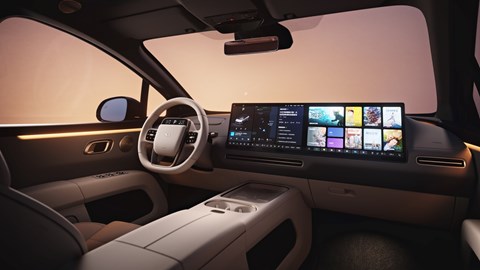
‘They were more avantgarde before,’ Baum admits as we inspect the rears of the SUVs. ‘Before we had a completely different rear end.’ The designer and his team have really pulled their punches here, but the front, with its halo light, is like the Mega.
‘You’ll find a lot of the original designs on the Chinese internet’ he sighs. ‘Because there were already, pre-production models running around.’
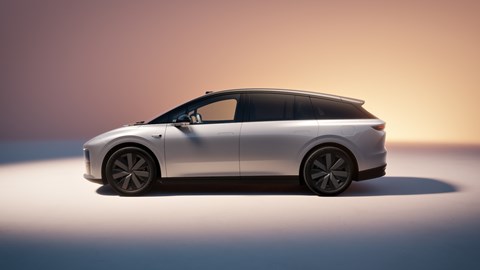
The kicker? Chinese public opinion also seems to move at an accelerated speed. Just as Baum and his team revealed the more conservative i6 and i8 models to consumers, the cloud around the Mega lifted. Now, next to the flagship MPV, the two electric SUVs look a little too conservative to my eyes.
Baum agrees: ‘It was a pity,’ he says. ‘We could have gone more extreme, but for us, it’s very important that every car is successful. You cannot have any failure. With these ones, we had to take the safe route.’
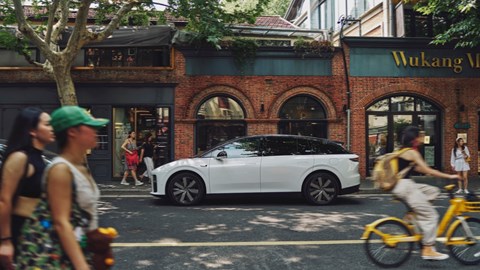
Still, the safe route appears to have worked: the i6 and i8 are both winning in an electric SUV sector that’s growing in China just as fast as everywhere else.
‘These are selling very, very well,’ Baum tells me. ‘The i6 sells more than 20,000 cars a month – that’s five times more than the Mega.’ The impact of the i6, i8 and Mega has had a drastic effect on the overall split of powertrains, too: Li Auto now sells more EVs than REX cars – its traditional heartland.
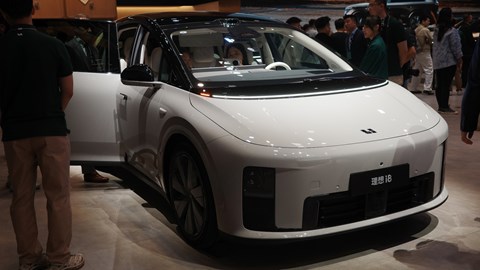
At the time of writing, it sold 28,000 EVs (Megas, i6s and i8s) a month compared between 6000 to 8000 range-extenders. That’s partly because the EVs are newer, with fresher tech and design, and it’s also because the range-extended L series is due an imminent update – but it’s still a dramatic swing. The plan next year? To match the numbers and achieve something closer to 60,000 sells a month.
In addition to that, Baum tells me they’re working on the car as a companion rather than a product – along with all the design and tech solutions that entails. What will that look like? Well, we’ll probably find out in a few months.