

► What’s going on in China?
► The key trends
► What’ll make it to the UK?
This year’s vast Chinese motor show in Beijing has finished, but many of the trends we saw there could soon be making their way to your next car, or the one after that. China has become a key source of automotive innovation, with manufacturers speeding cars from sketchpad to showroom in as little as 30 months in some cases – half the time typically taken by long-established European car makers, for example.
With that in mind, the Beijing show is one of the first places to spot automotive trends – some of which will make it Europe, while others seem destined to remain in China. Keep reading for some of the key trends we spotted on the Beijing show floor.
1. Turquoise means autonomous
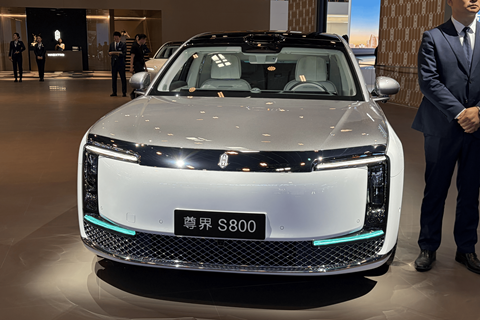
Turquoise lights have become increasingly prominent on China’s streets, and seemed to almost be the norm at this year’s Beijing auto show. Usually located on a car’s corners and wing mirrors, they’re used to signify the presence and/or use of autonomous technology. The blue-green lights come on when Level 3 or Level 2 self-driving or driver-assistance technology is used and then go off when it’s disengaged.
Their use is not compulsory in China yet, but it soon will be – and a quick peek at the Beijing traffic will tell you it’s already caught on. Part warning to other road users, part technology flex, turquoise lights were a strong trend at this year’s show – and their use could well jump across to Europe, in time.
2. Porsche clones
Chinese brands have a habit of taking strong inspiration from their Western counterparts, and it’s a sensible decision in many ways. If you’re after new customers or launching in a new market, it’s worth paying attention to what works and using that as your starting point. The evidence is unmissable on UK streets, where Jaecoo and, to an extent, BYD are selling huge numbers of cars that draw heavily on familiar European models.
This year’s Beijing motor show was rich in new Chinese cars that seem to have taken particular notice of what’s currently in Porsche showrooms. Whether it was a handsome Leapmotor hatchback with a Taycan/Cayenne rear end, or the Xiaomi SU7 – with heavy hints of McLaren as well as Porsche – Stuttgart’s influence was strong on the show floor.
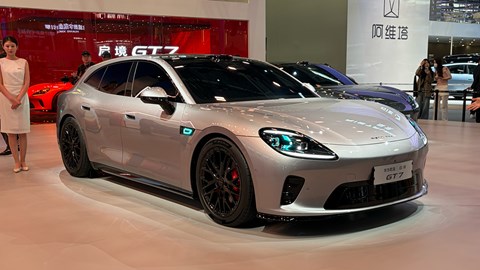
The most extreme case is the Aistaland GT7. It bears an incredibly strong resemblance to both the Panamera and the Taycan. Add some jet lag to a pinch of motor show delirium and you could mistake the GT7 for a genuine lost Porsche.
3. Chinese brands and their China-only cars…
The Chinese manufacturers currently active in other countries represent only a fraction of those in China itself, and even those brands already in the UK bring in only a small slice of their total model line-up.
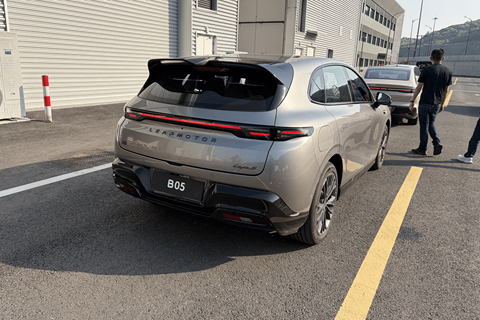
Take Leapmotor, for example; it has a global line-up of nine cars in total, but the B05 hatch will be the fourth model to land in the UK. There are no plans for us to get either the hottest Ultra model or the lower-battery-capacity models. But then again, things change fast in China.
4. …and European brands do the same thing
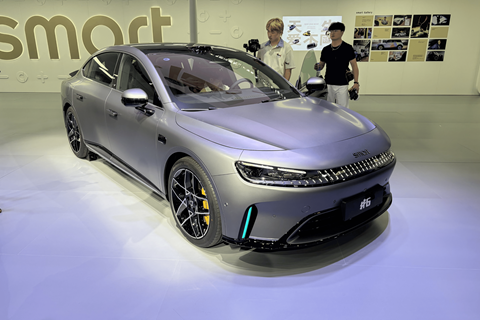
Walk around the Smart stand and, from a European perspective, you’d recognise most of the cars there – as well as a new pint-sized concept, in the original Smart spirit. However, they shared the stand with a new #6, a clean-looking four-door sedan which has very little in common with the usual Smart ethos.
Finished in matt grey and relatively aggressive-looking, it’s a mile away from the image Smart has carved for itself in Europe – and that’s even stranger given the fact it’s styled by Mercedes. And one more thing – it’s a plug-in hybrid.
5. AUDI beats Audi
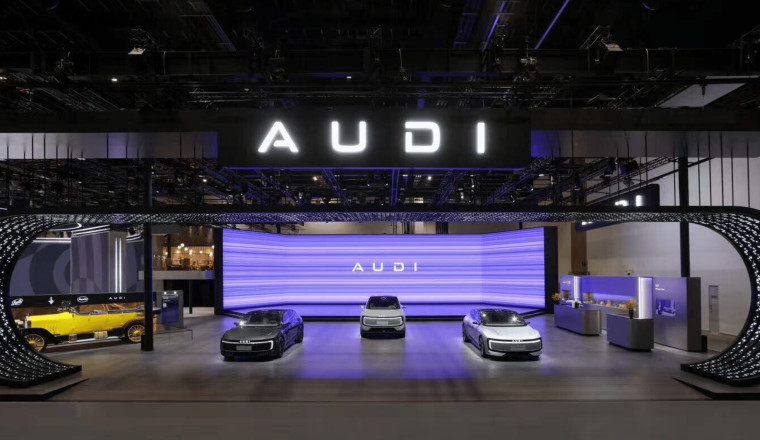
The Beijing auto show was a welcome opportunity to see Audi’s much-discussed China-only brand AUDI in the flesh. And there’s good news: our first impressions of the Audi and SAIC joint venture were very positive.
Unlike so many other legacy brands, which feel a little behind the curve compared to the newest arrivals from Chinese manufacturers, AUDI’s two cars – a sedan and an SUV – felt very much on the pulse. In fact, we’d argue that AUDI would work in Europe at least as well as its parent brand.
Both cars are bold, handsome and stood out from everything else at the show – which is a hard task. What’s more, they felt cutting-edge inside, too, with sharp screens and physical switchgear combining the best of old and new.
We’ve not driven any of the AUDI cars yet, and although we’re not sure how they’ll handle (the default for Chinese-tuned cars being on the soft side) they certainly look the part.
6. The car as a companion
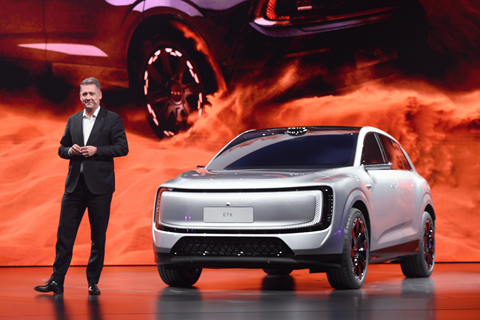
It turns out voice recognition in the car is old news – it’s all about voice recognition outside of the car in 2026. With that in mind, car manufacturers are now installing microphones on the exterior of the car, so owners can command their vehicle to do their bidding – whether it’s preconditioning the battery, reversing itself out of a parking space, or performing various other tasks.
This technology, which works with speakers and microphones for the exterior and interior, also means cars can now do things like ‘be transparent’: for example, drivers can talk to people outside the car by using a combination of interior microphones and exterior loudspeakers.
Throw in the use of AI and more natural language, and it looks as though your next car could actually be somewhere in between an Amazon Alexa and a Tamagotchi.
According to Ben Baum, design director of Li Auto, this new interface between person and machine will eventually have some knock-on effects for design too. Cars may start to look more approachable in the future, with less emphasis on sporty aggression.
7. Cars and smartphones
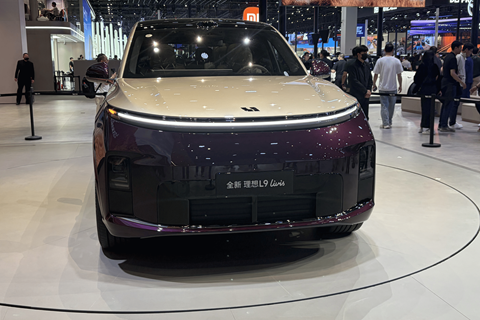
The Apple car never materialised, but that hasn’t stopped China’s tech giants from getting into the car game. Xiaomi is the most obvious name, with its SU7 and now YU7 SUV, but there are many others. Huawei doesn’t have its name on the bonnet of anything, but it’s the deeply involved tech partner of several EV brands, including Maextro, Stelato and Avatr. Those names don’t ring a bell? That’s because they’re currently China-only.
Leapmotor arguably counts as a tech brand too, as its co-founder is also a tech entrepreneur. Zhu Jiangming first specialised in digital TV boxes before moving on to co-found a company in the field of CCTV surveillance. With that in mind, it makes sense that Leapmotor goes about things in a similar way to a technology giant – albeit with the added experience of Stellantis, its partner in a joint venture to sell its vehicles outside China.
8. Hot coupes… just because
This year, several Chinese brands revealed cars that could be considered as Porsche 911 rivals. The brands in question usually focus on luxury cars, so taking on the iconic German sports car is quite a leap.
Among the more interesting is the Hongqi Concept S, which is a very clear departure from Hongqi’s ‘China’s Rolls-Royce’ ethos. Low, sleek and somewhere between a muscle car and supercar, it’s a world away from the limousines the brand usually makes.
At the same time, we also got to see the Denza Z convertible, which is aiming more directly for the 911. An open-topped version of the previously unveiled coupe was revealed at this year’s show. It retains the four seats of the coupe, as well as the flowing lines and performance. It’s battery-electric, and so far, technical information is scant beyond Denza’s claim that the production model will develop ‘more than’ 1000bhp – good for a 0-62mph sprint in under two seconds.
We’ll find out more about the Denza Z when the car appears in the UK at July’s Goodwood Festival of Speed.