

► First Hyundai EV designed for and made in Europe
► New ‘Aero Hatch’ design brings space and efficiency
► Renault 5 and VW ID.Polo in its sights
Hyundai has revealed its most important electric car in Europe so far: the Ioniq 3.
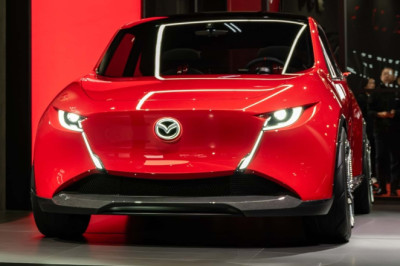
Arriving in the UK in summer 2026, it’s the smallest Ioniq model to date and the first that has been designed specifically for the European market. Previewed by the Hyundai Concept Three, revealed at last year’s Munich Motor Show, the striking electric hatchback-come-crossover has the Renault 5 and forthcoming Volkswagen ID.Polo firmly in its sights, and aims to be Hyundai’s electric car sales champ in the UK.
Like this? Get more CAR delivered to your browser! Click here to add CAR Magazine as a preferred source on Google.
Funky looking thing, isn’t it?
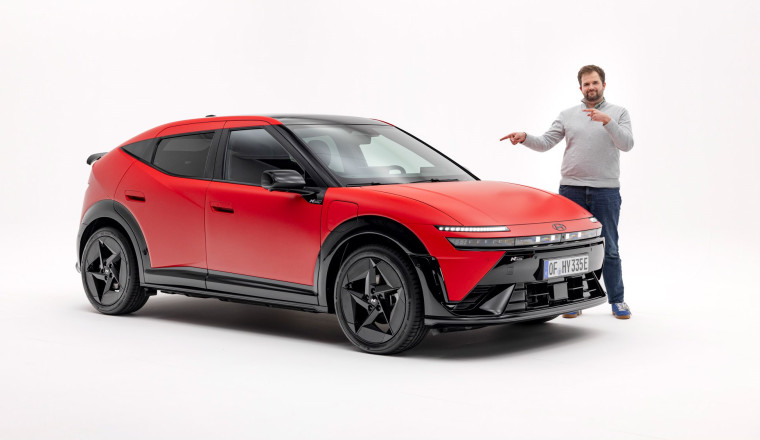
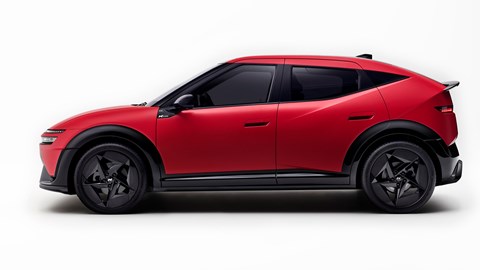
Yes, it’s certainly different. Depending on the angle it looks like a Hyundai Veloster (the one not sold in Europe) mixed with a Genesis GV60. Hyundai bills it as an ‘aero hatch’ owing to its slippery shape and spacious interior, but it’s not as low as a conventional supermini like an i20 – nor indeed the Concept Three that previewed it – and it blurs the boundaries between Polo and Golf in terms of size.
Inspired by Hyundai’s steel-making roots, its introduces its ‘art of steel’ design philosophy, with details – such as the way the B-pillar pulls over the shoulder line and the way the rocker cover stretches over the bonnet – looking as if steel has been draped over the body.
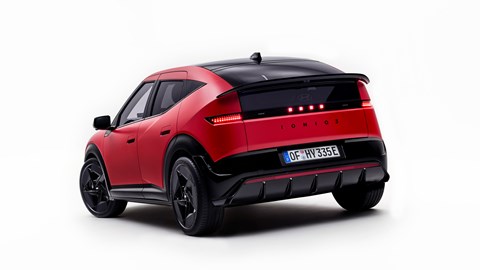
While Hyundai tries not to make its Ioniq models look too similar, this new car gets the firm’s trademark pixel lighting front and rear, as well as four dots at either end of the car, said to represent a ‘H’ in Morse code.
Other noteworthy details include a ducktail spoiler, while the sloping window line gives more of an impression of a ‘coupe’. The N-Line model, pictured, also gets an extended spoiler, different bumpers, a more aggressive diffuser and more gloss black trim.
Generous interior dimensions – and a huge boot
Hyundai says it set out to make a proper five-seater with the Ioniq 3, something which isn’t all that common in the small EV class. Aided by its EV platform, it has a flat floor in the rear, while there’s more headroom than you might expect because the sloping window line makes the roof look like it tapers more than it does.
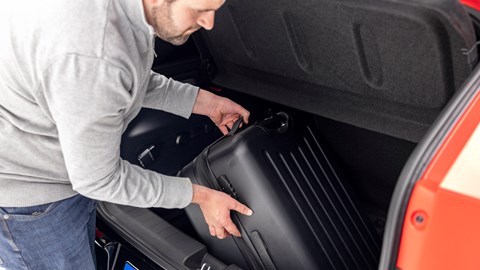
Its hidden trick, though, is the boot. At first glance it doesn’t look anything special, but it offers a similar MegaBox solution to the Ford Puma, with a huge storage area beneath the boot floor, enough to store a large suitcase. Hyundai says it engineered the Ioniq 3 to have this from the start.
It uses Hyundai’s E-GMP electric car platform
The Ioniq 3 uses Hyundai’s dedicated E-GMP platform, though it features a 400-volt setup, rather than the more commonplace 800V setup found in the Ioniq 5. Much is shared with the new Kia EV2.
There are two battery options – a 42.2kWh Standard Range) and 61kWh (Long Range), which offer claimed electric driving ranges of 214 and 308 miles, respectively. The Standard Range is the more powerful with 145bhp, with the Long Range model having only 133bhp. Getting to 62mph will take 9.0 and 9.6 seconds respectively.
The Ioniq 3’s maximum DC charging speed is 127kW, with a 10 to 80 per cent charge possible in just under half an hour. Optional 22kW AC charging is available, which isn’tvery common in cars of this size, though 11kW is standard.
It gets a brand-new infotainment system
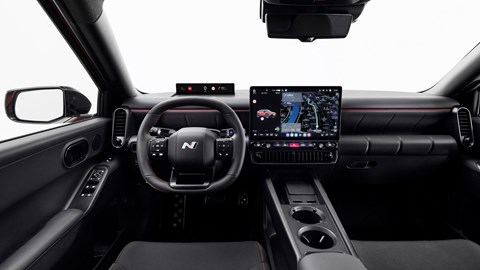
Hyundai is rolling out a new infotainment system to the Ioniq 3, called Pleos Connect, which is based on an Android Automotive infotainment system. Though already used in cars for other global markets, it’s a first for the firm in Europe.
Despite being available with screen sizes of 12.9 or 14.6 inches, depending on version, Hyundai says it’s mantra remains very much ‘hands on the wheel, eyes on the road’, with physical buttons retained for changing the climate control and heated seats below the touchscreen Proper steering wheel buttons remain, as does a small digital instrument cluster ahead of the driver.
Vicor Andrean, lead interior designer, said: ‘‘Eyes on the road, hands on the wheel’ is our mantra, whatever we design, it must work without looking. We’ve done a lot of studies, and designed the buttons to be an imprint of a finger.’
Prices and specifications are yet to be confirmed, but we imagine it will start from around £25,000 when sales open in the middle of the year..