


Here is where things stand as of 13 April 2026.
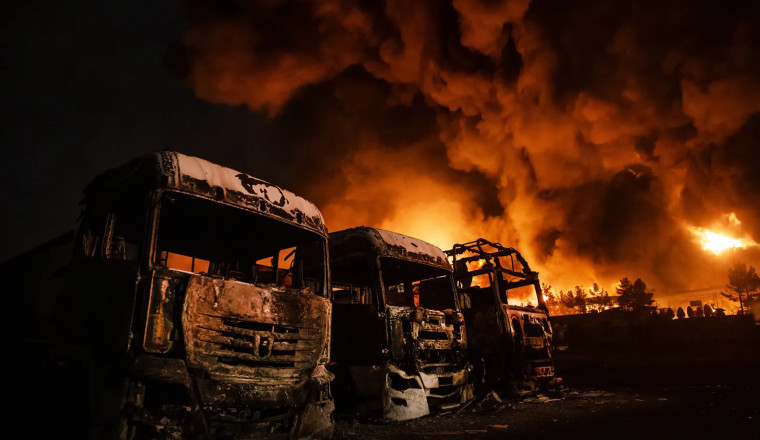
On 28 February 2026, the United States and Israel launched coordinated airstrikes on Iran under Operation Epic Fury, targeting military infrastructure, nuclear facilities and leadership. Iran's Supreme Leader Ayatollah Ali Khamenei was killed on the first day. Iran responded with missile and drone attacks and closed the Strait of Hormuz, the narrow waterway through which approximately one fifth of the world's seaborne oil and 20 percent of global liquefied natural gas passes every day.
The International Energy Agency described it as the largest supply disruption in the history of the global oil market.
The ceasefire that is not quite a ceasefire
On 8 April, brokered by Pakistan, the US and Iran agreed to a two week ceasefire to allow negotiations to take place. JD Vance flew to Islamabad with Trump's special envoy Steve Witkoff and Jared Kushner for what were described as the highest level direct talks between Washington and Tehran since the 1979 Islamic Revolution.
The talks lasted 21 hours. They ended on 12 April without agreement.
Vance told reporters before boarding Air Force Two:
"The bad news is that we have not reached an agreement. And I think that's bad news for Iran much more than it's bad news for the United States of America."
Iran's chief negotiator and parliament speaker Mohammad Bagher Ghalibaf said the US had failed to gain the trust of the Iranian government. He said Iran would not stop striving to secure the achievements of the war. Pakistan's foreign minister Ishaq Dar called on both sides to continue the ceasefire and maintain the spirit of dialogue. Both sides blamed the other for the impasse.
The core sticking points, as Al Jazeera and the Associated Press via PBS have both reported: the US is demanding Iran make a firm commitment to abandon nuclear enrichment and dismantle major enrichment facilities. Iran insists its nuclear programme is civilian and entirely off the table. The US 15-point proposal also calls for the full reopening of the Strait of Hormuz, the end of Iranian support for Hezbollah, Hamas and the Houthis, and broader regional security guarantees. Iran's 10-point counter proposal includes control over the strait, an end to attacks on its allies and a broader regional settlement.
The ceasefire formally expires 22 April. Trump responded to the failure of talks by announcing the US Navy would impose a "complete blockade" on the Strait of Hormuz. That blockade has not yet taken effect.
Like this? Get the app: iOS | Android
What is happening to oil prices
The Federal Reserve Bank of Dallas published analysis showing that the closure of the Strait of Hormuz, removing close to 20 percent of global oil supply from the market, is expected to raise WTI crude prices to around $98 per barrel in Q2 2026 and reduce global GDP growth by an annualised 2.9 percentage points in the same period.
Before the war, oil was trading around $60 a barrel. By 2 March it had surged to approximately $80 to $82. Bloomberg Economics estimated that US consumer price inflation hit 3.4 percent year on year in March 2026, up sharply from 2.4 percent in February, with rising fuel costs the primary driver. At $110 a barrel, Bloomberg's modelling projects a one percentage point increase in eurozone inflation and a 0.6 percent reduction in eurozone GDP. At $170 a barrel, those impacts roughly double.
US gasoline prices hit $4 per gallon on 31 March, a 30 percent increase since the war began. Jet fuel costs in the US have surged 95 percent since late February, according to the Argus US Jet Fuel Index. Time Magazine reports that jet fuel averaged $195 a barrel last week, more than double the average from 2025.
Why the US and UK are not as exposed as Asia, but still exposed
The United States is the world's largest oil producer. It does not import meaningful volumes of crude from the Persian Gulf. Domestic shale production means the US has a degree of insulation from Hormuz disruptions that most other major economies do not. However, oil is a global commodity priced on global markets, and a shock to 20 percent of supply raises prices everywhere regardless of where individual countries source their crude.
The US is also the world's largest LNG exporter, and its domestic gas market is relatively protected. But petroleum is the feedstock for plastics, fertilisers, chemicals and aviation fuel as well as petrol and diesel, and price increases in crude flow through to all of those.
The UK is in a more vulnerable position. The country has North Sea production but is a net importer of oil and gas. The UK also has significant dependence on Kuwaiti aviation fuel supplies. Ryanair CEO Michael O'Leary warned that the UK is the most exposed European country to jet fuel shortages because of Kuwaiti market share, and predicted summer flight cancellations of 5 to 10 percent if the Strait remains closed.
Europe is facing a broader energy crisis as a result of the war. Dutch TTF gas benchmarks nearly doubled to over €60 per MWh by middle of March, against a backdrop of European gas storage estimated at just 30 percent capacity following a hard winter. On 26 March the European Commission advised member states to fill storage early to avoid further price spikes.
The Philippines became the first country to declare a national energy emergency on 24 March, importing 98 percent of its oil from the Gulf. Australia temporarily suspended fuel quality standards to allow refineries to increase output.
Where things go next
The ceasefire, such as it is, remains technically in place until 22 April. The Strait of Hormuz remains effectively closed, with Iran limiting traffic and charging passage tolls. Pakistan is pushing for the ceasefire to continue and negotiations to resume. Trump has threatened a naval blockade. Iran has threatened to hold the strait indefinitely.
The Dallas Fed's analysis concludes bluntly that a closure lasting two quarters of the Strait of Hormuz, through the end of 2026, would push WTI crude towards $132 per barrel. A closure lasting three quarters approaches $150.
As of today, no timeline for reopening has been agreed, and the talks that were supposed to produce one have just failed.
Sources:
- Al Jazeera — US and Iran fail to reach a deal after marathon talks in Pakistan
- PBS NewsHour — Failed US-Iran negotiations in Pakistan
- CNN — Day 43 of Middle East conflict
- CBS News — Live updates: Iran war ceasefire talks
- Bloomberg — Iran War: How High Could Oil Prices Get
- Federal Reserve Bank of Dallas — What the closure of the Strait of Hormuz means for the global economy
- Federal Reserve Bank of Dallas — The Impact of the 2026 Iran War on US Inflation
- Time — The Strait of Hormuz Crisis Is Driving a Wave of Global Energy Rationing
- CNBC — Iran war-hit oil prices will soon rise if Hormuz stays shut
- Wikipedia — 2026 Strait of Hormuz crisis
- Wikipedia — Economic impact of the 2026 Iran war