
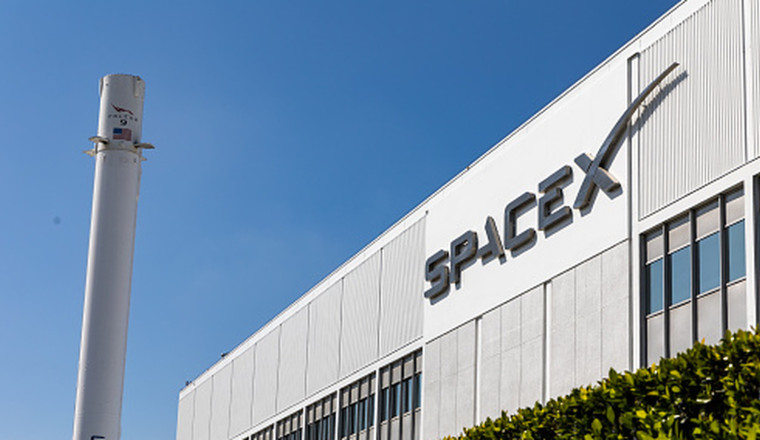

It would be ideal if satellites in a massive communications constellation didn't just spontaneously explode, but here we are. SpaceX announced that one of its Starlink satellites "experienced an anomaly on-orbit" on Sunday, which is a gentle way of saying that it blew to smithereens. This isn't the first time an Elon Musk internet box has detonated in low Earth orbit, with a similar incident in December. I would be surprised if Sunday's explosion was the last.
SpaceX claimed that the loss of Starlink satellite 34343 poses no new risk to the International Space Station or NASA's planned launch of Artemis II this week. According to The Verge, the incident created a debris field of "tens of objects." The debris should burn up in the atmosphere in a few weeks. Starlink satellites are already designed to die and completely disintegrate at the end of their service life. Hopefully, the debris doesn't cause any chaos in orbit before re-entry.
xnk/Shutterstock
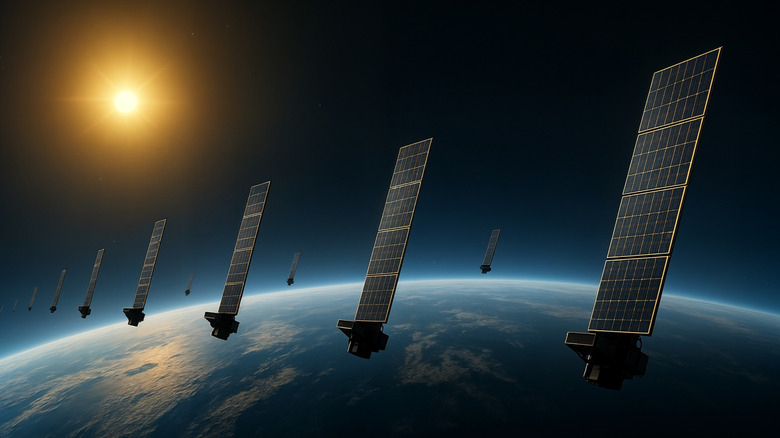
There are roughly 10,000 Starlink satellites in low Earth orbit, over a third of all the tracked objects in that part of space. Low Earth orbit is a crowded place, largely due to the business ventures of Elon Musk. It could get even worse. SpaceX filed a request with the Federal Communications Commission in January to launch one million AI data centers into orbit. Ignoring the fact that energy and cooling needs make that harebrained scheme impossible for even a single data center, the constellation would cut Earth off from the rest of space.
It would only be a matter of time before a SpaceX orbital data center exploded, spraying debris into neighboring data centers and triggering a chain reaction. The theoretical scenario was first posited in the 1970s by NASA scientists Donald Kessler. A Kessler syndrome event would destroy every satellite in low Earth orbit and smother the planet in a cloud of debris, making space launches impossible. While experimental technologies are being developed to capture space debris, it has already impacted human spaceflight: a Chinese crewed capsule was deemed unsafe following a debris strike in orbit last year.