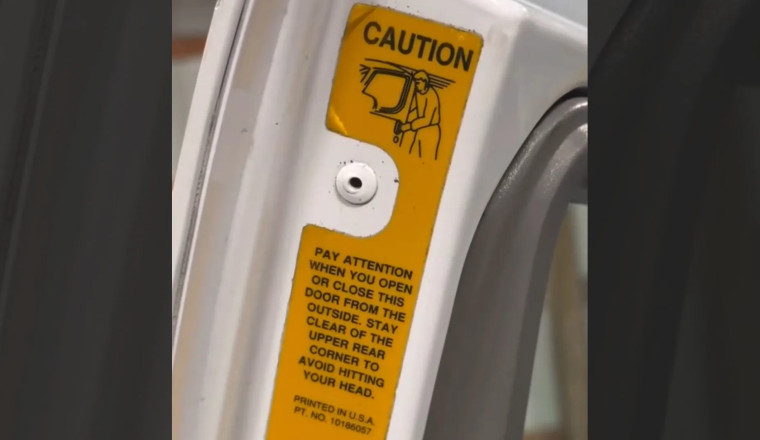

General Motors discovered their minivans were giving passengers concussions. The rear liftgates on the Chevrolet Uplander, Pontiac Montana SV6, Saturn Relay, and Buick Terraza opened just low enough to crack skulls when people walked underneath. GM's response wasn't a recall or redesign. They issued a Technical Service Bulletin telling dealers to slap warning stickers on the problem.
The issue surfaced around 2005 when GM started receiving reports of head injuries from their mid-size minivan lineup. Unlike SUVs with higher clearance, these minivans opened their rear doors at roughly six feet off the ground. Perfect height for catching the average adult right in the forehead.
Any reasonable person might expect an automotive giant to adjust the liftgate mechanism or modify the opening angle. GM chose differently. Their Technical Service Bulletin instructed dealers to install adhesive labels warning users to "Watch Your Head" or similar messaging. The stickers cost roughly two dollars per vehicle. A complete liftgate redesign would have run into the millions.
The affected models represented a significant portion of GM's minivan sales during the mid-2000s. The Uplander alone sold over 300,000 units during its production run from 2005 to 2008. Multiply that across four different nameplates and GM potentially saved enormous costs by avoiding engineering changes.
Like this? Get the app: iOS | Android
The sticker solution highlighted a fundamental tension in automotive safety. Companies face constant pressure to minimize recall costs while maintaining basic safety standards. GM's approach technically addressed the hazard by warning users, but it placed responsibility squarely on customers to avoid injury.
Industry observers noted the contrast with other manufacturers who modified liftgate designs when similar issues arose. Toyota adjusted their Sienna's rear door mechanism in the same era rather than relying solely on warning labels. The different approaches reflected competing philosophies about corporate responsibility versus consumer awareness.
The minivan models in question eventually disappeared from GM's lineup entirely. The Uplander, Montana SV6, Relay, and Terraza were all discontinued by 2009 as GM restructured through bankruptcy. Their replacement vehicles featured different liftgate designs that opened higher, eliminating the head-striking problem entirely.
GM's sticker strategy became a case study in cost-benefit analysis taken to its logical extreme. The company identified a safety hazard, calculated the cheapest possible response, and executed it perfectly. Whether that response actually protected customers remained debatable, but it certainly protected GM's bottom line.
Sources: GM Technical Service Bulletins (2005-2007), automotive industry safety reports, minivan sales data from manufacturer records