

Two million is a big number when it stands alone. In context, it is a different story.
There are approximately 40 million licensed passenger vehicles on UK roads. The Department for Transport's own vehicle licensing statistics confirm that at the end of 2025, zero emission cars accounted for 4.8 percent of all licensed vehicles. That figure improved by 1.1 percentage points in 2025. At that rate of growth, the UK would need more than two decades to reach majority electric ownership — before accounting for the fact that the existing internal combustion fleet replaces itself on roughly a 14-year cycle.
Transport Secretary Heidi Alexander called the two million figure "a key moment in the UK's transition to electric." She is not wrong. It is a moment. It is not an arrival.
What the numbers actually show
The growth is real. EV registrations are up 15 percent on last year, with March 2026 seeing the highest demand ever recorded. The Electric Car Grant, launched in July 2025, helped over 100,000 drivers save up to £3,750 off a new EV, and demand surged 10 percent in the six months after it launched. Electric cars are now cheaper to buy, on average, than petrol models for the first time, according to figures from Autotrader.
The top five EVs sold under the grant were the Ford Puma Gen-E, Vauxhall Frontera Electric, Renault 5, Skoda Elroq and Volkswagen ID.3 — not a Tesla among them. These are mainstream cars at mainstream prices, which matters because it means the growth is no longer driven exclusively by early adopters with high incomes and parking on their own property. It is beginning to reach the mainstream.
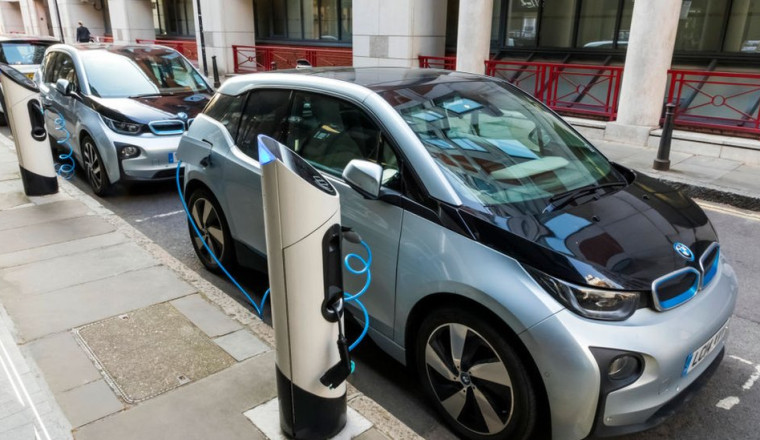
The charging infrastructure has grown with it. There are now 119,000 public chargers across the UK, which the government notes is roughly twice the number of petrol pumps. That comparison sounds impressive but slightly obscures the difference in refuelling time: filling a petrol car takes three minutes, and a significant proportion of EV charging still takes considerably longer on a standard unit.
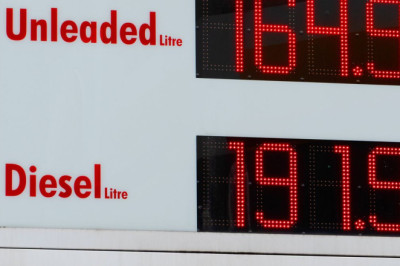
The Iran war and the resulting fuel price spike has also played a role. Colin Walker, head of transport at the Energy & Climate Intelligence Unit, noted that with pump prices rising as the conflict between the US and Iran destabilises oil supplies, interest in EVs is surging among British drivers. "These two million drivers are now protected from these sudden jumps in oil price," he said. That framing is accurate — and it is also doing most of the work for the government's announcement, because without the fuel price pressure, the milestone would look identical but feel less urgent.
Like this? Get the app: iOS | Android
The people the milestone does not include
Vicky Edmonds, CEO of EVA England, said something important that got less prominence in today's coverage than the headline figure: "Two million EVs is a huge milestone and shows what's possible when the right incentives are in place. But this can't just be about targets and big headline numbers. Getting the transition right means reaching the people who've so far been left out. Particularly those without easy access to home charging who face higher costs, and many middle and lower income households."
That is the structural problem the 15 percent growth rate cannot solve on its own. Electric vehicles still work most efficiently and affordably for people who can charge at home overnight. The average cost of using a public rapid charger in the UK is now higher per mile than petrol in many cases, because public charging carries VAT at 20 percent while domestic electricity for home charging attracts just 5 percent. Nobody in government has fixed that anomaly, despite repeated calls to do so from the industry.
The two million registered EVs are disproportionately concentrated in London, the South East and other areas with higher average incomes and higher rates of housing they own with parking on their own property. Scotland has made more progress in rural and island communities than might be expected. But in large parts of northern England, Wales and rural areas generally, the EV transition is still something people watch other people doing.
The ZEV mandate and where this is actually going
The government's Zero Emission Vehicle mandate requires manufacturers to ensure that 28 percent of new car sales in 2026 are fully electric, rising to 80 percent by 2030 and 100 percent by 2035. Several manufacturers have been paying penalties rather than meeting the targets, because the demand from consumers has not kept pace with the mandated supply. That gap between policy ambition and market reality is the defining tension of the entire programme.
The 2026 mandate figure is 28 percent of new sales. EVs are currently running at around 20 percent of new car sales in the UK. The mandate is pulling the market in one direction; consumer reluctance, charging infrastructure gaps and income inequality are pushing back in the other.
Tanya Sinclair, CEO of Electric Vehicles UK, put the two million number in its proper frame: "Two million electric vehicles in the UK shows that if the market offers choice, value and availability, drivers will snap it up... It is now more important than ever for government to build on these foundations with cohesive policy. If it does, the market and the next two million EVs will follow."
The next two million. That is a more interesting sentence than the first two million. Getting from two million to four million will require reaching the drivers the first phase did not reach. That means public charging costs that are competitive with home charging. It means EVs that work for people who rent, who live in flats, who do not have a driveway.
Two million is a milestone worth marking. It is also, on the road to 40 million, the point at which the easy part ends.
Sources:
- Department for Transport — 2 million EVs registered across the UK
- Renewable Energy Magazine — UK Government announces 2 million EVs registered
- EV Fleet World — Over two million EVs now on UK roads
- GB News — UK hits electric car milestone as EV numbers pass two million
- Tech Digest — UK hits 2 million electric vehicles milestone
- Energy & Climate Intelligence Unit — 2 million EVs registered across UK
- Autotrader — New electric cars now cheaper than petrol on average