
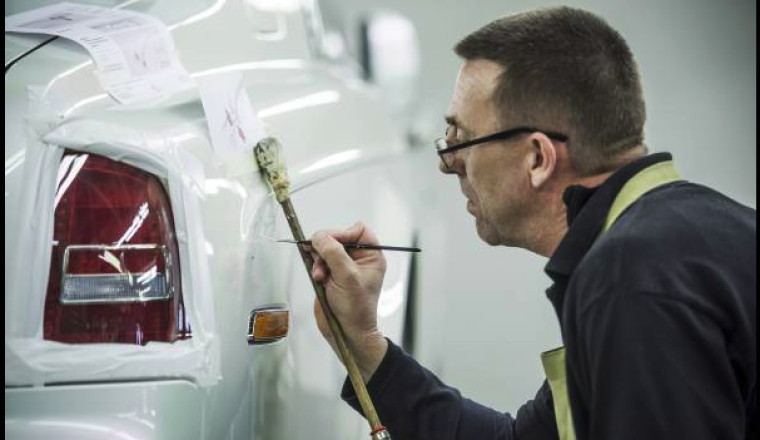

There are a lot of things that make a Rolls-Royce a Rolls-Royce. But one of the quietest—and somehow most mesmerizing—is the coachline. That thin pinstripe that traces the car’s body isn’t sprayed, stamped, or slapped on with vinyl. It’s painted. By hand. By one guy. One brush. His name is Mark Court.
The coachline has roots in the horse-and-carriage days. Back then, a line of paint highlighted the curves and contours of a coachbuilder’s work. Today, it’s not about function. It’s about obsession. At Goodwood, it’s about showing off just how far a brand will go to prove craftsmanship still matters.
Court doesn’t use tape. He doesn’t use stencils. No robot arms hover over the Phantom or Ghost, perfectly guided. Just him, a squirrel-hair brush, and enough paint loaded to stretch one uninterrupted line across a car that could easily cost more than your house. He loads the brush, steadies his hand, and lets it run. One slip, one wobble, and the line is gone. Start again.
Watching him work is hypnotic. The rest of the factory is quiet too, almost reverent. You can feel the tension in the air: this is one of those jobs where the smallest mistake is immediately obvious. And yet, Court moves like he’s done this a thousand times—which, let’s be honest, he probably has. It’s repetitive, exacting, and a little insane. And that’s the point.
Rolls-Royce could mass-produce this line in ten seconds with a machine. They don’t. They trust a human eye, a steady hand, and a little bit of madness.