


► Gerry McGovern to officially step down
► Leaves chief creative officer after months of uncertainty
► We look back at his incredible design legacy
Gerry McGovern is the most successful British car designer of the past 25 years and surely the greatest SUV designer of all time, as a string of handsome and highly successful Range Rovers proves.
That’s why there was so much fuss towards the end of 2025 about reports of a change to his employment status. What other car designer could generate so much comment?
It’s worth pointing out that CAR deliberately did not report on this news at the time because we could not corroborate the story with our own sources, before we were then provided with a statement from JLR that – at the time towards the end of 2025 – McGovern hadn’t left at all, and that these stories were untrue.
Now in March 2026, things have changed. In an official statement supplied by Jaguar Land Rover, it has confirmed that Professor Gerry McGovern OBE – to give him his full title – ‘has announced that he will step down as chief creative officer and as a member of the JLR board to establish his own creative consultancy.’ He will leave his role at the end of March.
In the statement, McGovern says: ‘It has been a great privilege to work at JLR across two extraordinary decades, and I would like to thank the Tata family in particular, for the opportunities they gave me. The dedication and passion of thousands of people across the business have made these brands what they are today, and I am enormously proud of what we have built together. I look forward to the next chapter of my creative career.’
PB Balaji, CEO of JLR added that ‘Gerry’s creative leadership, vision, drive and passion have left an indelible stamp on our brands. I would like to thank Gerry for the significant contribution he has made to JLR and wish him every success in his next creative chapter.’
Over decades, McGovern has piloted Jaguar and Land Rover’s design direction and brought it to new heights. But with success came controversy. Even so, his detractors would struggle to argue against the view that his influence on JLR over the past couple of decades has been profound, his legacy enormous. He was instrumental in elevating Land Rover (and Range Rover) from the mud and into Mayfair, boosting the brand’s urban image, prices and profits.
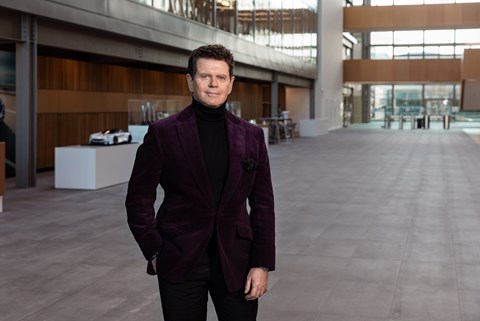
His two ‘big’ Range Rovers, the fourth-generation 2012 L405 and the fifth-generation 2022 L460, further reinforced the name plate as more of a rival to the Mercedes S-Class than other prestige SUVs. Distinctive, modern, luxurious and boldly British, both have been great commercial successes worldwide.
The big Range Rover remains the iconic luxury SUV, despite the efforts of Bentley, Rolls-Royce, Porsche, BMW, Mercedes and Cadillac. Much of that is down to McGovern’s design stewardship and vision.
The modern Defender is another McGovern success story, and a more surprising one. It not only sells much better than the old Defender, but it does so at much higher margins. It expertly blends premium technology and utility, while credibly updating and extending the 70-plus-year Defender lineage.
The Defender is also a very un-McGovern type of car. Gerry doesn’t do off-roading and traditional tough-guy 4x4s, and is no more likely to be found camping and outdooring than his fellow best-dressed GQ men. Gerry is sometimes criticised by traditionalists for making Land Rovers and Range Rovers less utilitarian: more city slicker than carry-all trail blazer. But in fact the current Defender does both. Its ultra clean surfacing and simple shape are so very Gerry.
Other design successes include the Range Rover Evoque, JLR’s big earner and best seller of the 2010s, which pioneered a new vehicle sector: the sleek coupe SUV. Its tough urban style broadened JLR’s customer base, particularly with younger women.
There were two handsome Range Rover Sports and the Range Rover Velar, the closest we got to Gerry Unleashed. No British car designer of today has been responsible for so many commercially and critically successful cars.
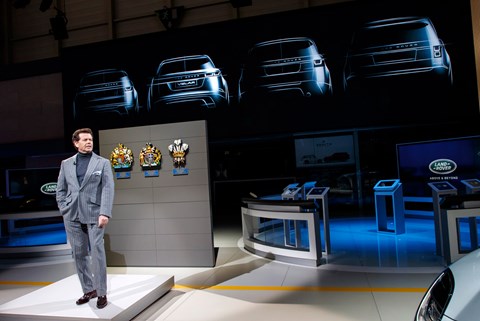
Born in Coventry and ‘obsessed by art since 15’, McGovern earned decent pocket money doing portraits of children at his local comprehensive for £5 a go. Chrysler UK sponsored him to study industrial design at Lanchester Polytechnic – now Coventry University – before he went to the elite Royal College of Art, specialising in industrial design.
He began his career at Chrysler in the UK and US, then followed his Chrysler design mentor Roy Axe to work at Austin Rover. There he designed the highly regarded MG EX-E concept, the MGF – his first production car – and the Freelander, the first small Land Rover. Gavin Green met him at that time. He could be combative, was frequently foul-mouthed, liked to stoke controversy, but was undeniably talented.
Now sporting long permed pop-star hair, Gerry was poached by Ford to head Lincoln-Mercury design, setting up a new studio in California. He returned to the UK where, under the guidance of Ford design boss J Mays, he replaced the popular Geoff Upex as Land Rover design director. After the formation of JLR, most Jaguar and Land Rover operations merged. CEO Ralf Speth wanted separate design directors to keep the two brands’ characters apart. When Thierry Bolloré replaced Speth, he rationalised the business further. McGovern was given Jaguar as well as Land Rover.
One of his first tasks was to reinvent Jaguar’s design language, and a competition began to find the winning design. The controversial Type 00 concept, unveiled in late 2024, was the result.
Most recently, McGovern was chief creative officer, a role based on that of Jonathan Ive at Apple, responsible for brand image as well as product design. Gerry reaches for the stars. He now wears the finest suits from Savile Row – Henry Poole is one of his favourite tailors – and displays exquisite watches on his wrist; he has a significant collection of Patek Philippes.
He has long been more comfortable at fashion events than at motoring awards ceremonies. He is not a car enthusiast – and, as the Type 00 shows, seemingly not much of a Jaguar enthusiast in the traditional sense.
Unlike most automotive designers, McGovern’s design comes with a narrative and a vision: his reductionist philosophy has been widely promoted and disseminated. It reduces clutter and prioritises clean, simple design with fine proportions and stance – a welcome contrast to much of the ‘surface entertainment’ that disfigures modern car design.
He increasingly regards himself as an artist and has said he’d rather be an architect than a car designer. His fine modernist house in Warwickshire is a little slice of LA cool in the Midlands, and testimony to his architectural credentials.
Like many successful men, he has his critics. It’s true that he did not elevate Range Rover to its premium position: the BMW-engineered, Geoff Upex-designed L322 of 2002 did. McGovern and JLR’s other designers, engineers and marketeers have since hoisted it a good deal higher again.
Nor did he design many of the cars himself. Yet many of the most influential designers – Pinin Farina, Bertone, Harley Earl – were overseers, not hands-on practitioners. Their role was to get other designers to do brilliant stuff. McGovern did that superbly.
His management style has been criticised. But successful leaders are often not universally liked. They are frequently difficult, for you need to be difficult and determined to grapple with management, engineering, marketing and finance, to ensure your finished car looks the way you want, as uncompromised as possible. Great self-belief is needed. That usually means a big ego.
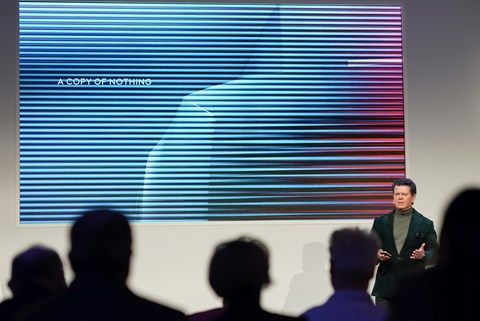
It’s also true that the Type 00 concept was highly divisive and loathed by many Jaguar traditionalists. But, along with that much derided ad, it got Jaguar widely talked about for the first time in almost 60 years. Jaguar made headlines around the world. Even Donald Trump joined the discussion. An audacious new direction is surely right for Jaguar, and it’s being spearheaded by a bold, brazen and extravagant car, overseen by the one of the brashest, most controversial and successful car design bosses of modern times.
Context:
McGovern transformed Land Rover from utilitarian off-roader to luxury urban status symbol over two decades.
Context:
His departure marks the end of an era for Britain's most commercially successful automotive design leadership.
Context:
McGovern's Range Rover designs consistently outsold rivals from Bentley, Rolls-Royce, and German luxury brands.