
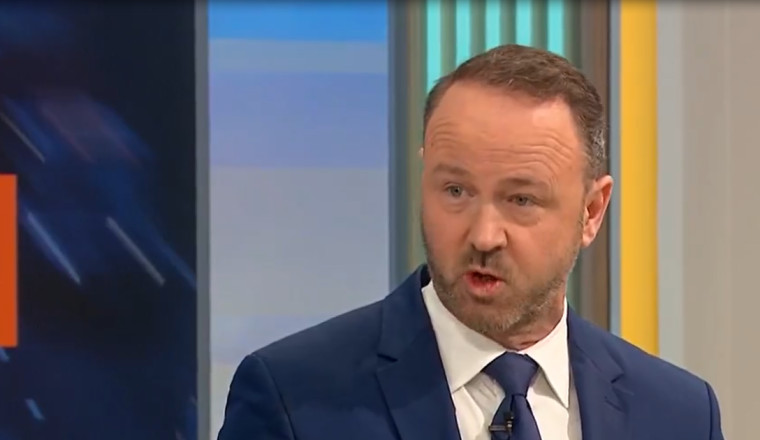

An ITV expert has said that an imminent change to the law is set to see drivers over the age of 70 be forced to take a new sight test every three years. Appearing on Good Morning Britain, correspondent Jonathan Swain said older people could be impacted by the changes, which are part of the government’s new road safety strategy, which will be published on Wednesday.
Other proposed measures, which were first reported in August, include lowering the drink-driving limit in England to match the limit in Scotland, and giving penalty points for not wearing seatbelts. Nearly one in four car drivers killed in 2024 were aged 70 or older, according to government figures.
Host Ed Balls said: “This is all about saving young lives, but is it going to mean quite a few bigger restrictions on older drivers?” Mr Swain replied: “Buckle up because this story could get quite a reaction this morning because some elderly drivers may feel upset or even alienated about these new proposals. But the stats are quite stark when you take a look at them, because last year more than a quarter of drivers killed on our roads were over the age of 70.
“Now, to make our roads safer, the government now wants older drivers to have their vision checked every three years. This will be a requirement by law. But there’s also new proposals for all drivers. So you may have to stop that post-work pint in future because ministers are also planning on reducing the current acceptable alcohol limit, bringing it in line with Scottish levels.
“So that could mean the new legal limit is this—pretty much a zero-tolerance policy. Alcohol, of course, affects us all differently, but even a small drink in future could push you over the limit. And people driving around uninsured are also being targeted as well. Fines could be doubled plus six points on your license.
“These changes then may feel like an intrusion for older people, but the message is clear: a small step, such as an eye test, could save lives.”
Edmund King, president of the AA motoring organisation, said: “Eye tests are free for people over the age of 60 anyway and healthcare professionals advise them every two years given they can help with diagnosis of other underlying conditions.
“In fact, the AA advises everyone to have an eye test every two years.”
Drivers in the UK must be able to read a number plate from 20 metres away, according to the Driver and Vehicle Licensing Agency (DVLA).
But currently, drivers of any age are not required to prove their skills or health once they obtain their licence.
Drivers must tell the DVLA if they become unfit to drive, but this is a self-reporting system. Lilian Greenwood, local transport minister, said: “We know driving can be very important for older people’s wellbeing and help them to live independently, but we must also make sure everyone is safe on our roads.
“As the country’s older population grows, our plans in the first road safety strategy in more than a decade will preserve personal freedoms where possible with action to save lives.”
Last year, an inquest into the deaths of four people killed by drivers with failing vision said enforcement of eyesight standards on the roads was “ineffective and unsafe”.
HM Senior Coroner for Lancashire Dr James Adeley pointed out that the UK was one of only three countries to rely on self-reporting of visual conditions affecting the ability to drive.
In the report, which was handed to Transport Secretary Heidi Alexander, he said: “Self-reporting of visual conditions permits drivers to lie about their current driving status to those performing an ophthalmic assessment and avoid warnings not to drive.
“Drivers may also admit they drive but then ignore instructions not to drive and fail to notify the DVLA.”
Calls have been rising for those over the age of 70 to be banned from driving if they fail a compulsory eye test. This comes after opticians expressed concern at the number of drivers they test who are not fit to be on the roads.