
The problem with being a car enthusiast is that passion and logic rarely occupy the same headspace. You see something beautiful, hear the right exhaust note, remember the poster on your bedroom wall when you were 14, and suddenly you're convincing yourself that a £100,000 purchase makes financial sense. It usually doesn't. Most cars depreciate. Some catastrophically. But a handful appreciate, and identifying which ones requires ignoring your emotions and following patterns the market has proven repeatedly.
Three factors separate cars that gain value from those that destroy it. Underappreciated cars trading below their true worth. Last of their kind models that will never be replicated. And vehicles where the buyer demographic is expanding as younger enthusiasts age into wealth. Master these three and £100,000 becomes an investment rather than an expensive mistake.
Underappreciated Cars That The Market Hasn't Noticed Yet
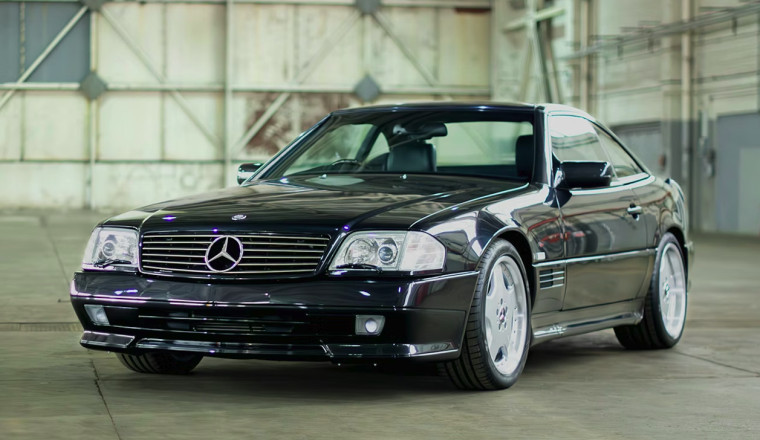
The Mercedes SL73 AMG exemplifies this perfectly. In 2015, you could buy one for £85,000. Today, clean examples command £600,000. That's not a typo. A 600 percent increase in under a decade. The market simply didn't understand what it had. A handbuilt 7.3 litre V12 producing 525 horsepower in a limited production roadster that Mercedes only made for two years. Fewer than 100 examples exist. But in 2015, buyers saw an old SL with high running costs and questionable electronics. They missed the point entirely.
Underappreciated doesn't mean unpopular. It means mispriced relative to significance. The market is slow to recognize certain combinations of rarity, engineering, and provenance. By the time consensus forms, prices have already moved. Your job is identifying what matters before everyone else does. Limited production numbers. Unusual specifications. Models overshadowed by more famous siblings. Cars dismissed during their era that history will treat kindly.
The difficulty is separating genuinely underappreciated from simply unpopular for good reason. Plenty of rare cars stay cheap because nobody wants them. Low production doesn't equal desirability. The SL73 worked because underneath the obscurity sat genuine engineering significance and a specification no manufacturer would dare attempt today. Handbuilt V12, minimal electronics, analogue driving experience. Everything modern regulations and economics have eliminated. Rarity mattered, but substance mattered more.
Scarcity Creates Value
The Audi R8 V10 with a manual gearbox proves the second principle. In 2015, you could buy one for £90,000. Today they trade around £150,000. The reason is simple. Audi won't make another. Ever. Naturally aspirated V10, manual transmission, mid engined supercar. That combination is extinct. Buyers in 2015 didn't fully grasp this. The R8 was current production. You could still order one new. Why pay a premium for used?
Because the window closed. Audi switched to dual clutch only. Then they announced the V10 itself was finished. Suddenly the manual cars became finite. No more would be produced. Supply became fixed while demand kept growing. Anyone who wants that specific experience now competes for a shrinking pool of survivors. Prices rose accordingly.
This pattern repeats endlessly. Porsche 911 GT3 with a manual. Ferrari 599 GTO with a gated shifter. Any naturally aspirated V12 without turbos or hybrid assistance. The market assigns premiums to finality. We intrinsically want things more when we can't have them. Last chances create urgency. Future scarcity drives present value.
The trick is identifying what actually qualifies as last of its kind versus simply outdated. Manual gearboxes in supercars are finished. Naturally aspirated high revving engines are finished. Hydraulic steering in performance cars is finished. These aren't coming back. Regulations, economics, and buyer preference have moved on. But four wheel drive sports cars? Turbo engines? Those are just the current phase. They'll be replaced by something else. Not everything discontinued becomes collectible. Only the things that represented an endpoint rather than an evolution.
Demographics and Demand
The Ferrari 550 Maranello demonstrates the third factor perfectly. In 2015, decent examples cost £75,000. Today they exceed £240,000. The car itself hasn't changed. Supply hasn't decreased dramatically. What changed is the buyers. People who had 550 posters on their walls in the late 1990s, who watched them race at Le Mans, who considered them dream cars when they were broke teenagers, are now in their 40s and 50s with disposable income. They're buying the cars they couldn't afford 25 years ago. Nostalgia plus wealth equals rising prices.
This generational buying wave is predictable. Whatever was cool when someone was 15 becomes expensive when they turn 45 and have money. The 550 caught this wave perfectly. Front engined V12 Ferrari from the era before paddle shifts and electronics dominated. It represented the last of a certain type of Ferrari before the company went modern. People who grew up during that transition now have the resources to own a piece of it.
The challenge is timing the wave correctly. Too early and you're waiting decades for buyers to age into wealth. Too late and prices have already moved. The sweet spot is identifying what the 35 to 40 year old demographic covets but can't quite afford yet. Give them five years. They'll be earning more. Some will have exits, inheritances, bonuses. And they'll spend it on the cars they've wanted since adolescence.
Right now, that demographic is targeting late 1990s and early 2000s icons. Cars from their formative years. Specific models vary by region, but the pattern holds globally. Japanese performance cars from the era before everything got heavy and complex. European exotics from before paddle shifts became mandatory. American muscle from before everything needed 700 horsepower to be taken seriously. These cars are appreciating not because they're getting better, but because the buyer pool is expanding as more people age into wealth.
Applying the Framework
Take £100,000 today and the question becomes which current opportunities satisfy these criteria. Underappreciated? Maserati MC12. Still trading below Ferrari Enzo values despite similar mechanicals and far lower production. The market hasn't corrected that gap yet. Last of their kind? Any remaining manual transmission supercars from major manufacturers. Lexus LFA. Porsche Carrera GT. Those ships have sailed on price, but similar logic applies to more accessible models. Growing buyer market? Whatever was cool in the early 2000s that millennials with money are starting to chase.
The £100,000 budget is enough for serious cars but not infinite choice. You're looking at the bottom end of proper collectibles or the top end of future appreciators. Either is viable. What matters is avoiding the middle ground where you're buying neither rarity nor future significance, just an expensive car that will be worth less in five years.
Apply the three filters ruthlessly. Is it genuinely underappreciated or just unpopular? Is it actually the last of something meaningful or simply outdated? Is the buyer demographic growing or is this someone else's nostalgia trip that won't translate to your generation? Answer honestly and you avoid expensive mistakes. Lie to yourself because you want to own something and you've just spent £100,000 on a depreciating asset you convinced yourself was an investment.
Being a car guy means fighting the urge to justify what you want with fake logic about future values. The cars that actually appreciate do so for reasons that exist independent of your desire to own them. Recognize the difference and £100,000 buys something meaningful. Ignore it and you're just another enthusiast learning expensive lessons about market dynamics while telling yourself it's about the driving experience.