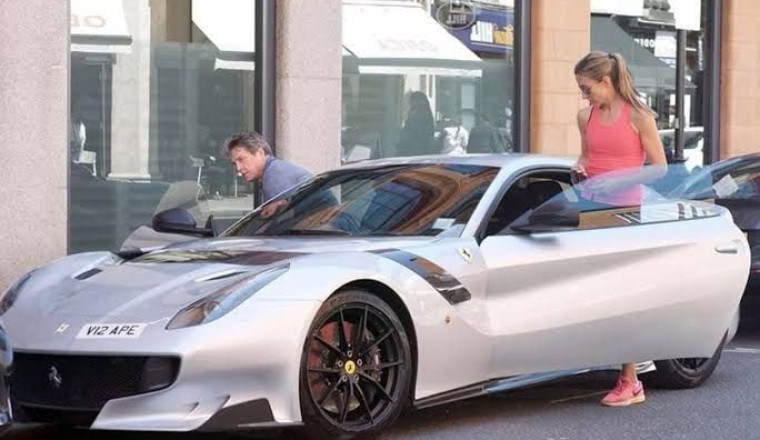

Hugh Grant purchased a Ferrari F12 TDF new in 2016 for approximately £400,000. Ten years later, that same vehicle commands around £900,000 in the current market, representing a gross profit of £500,000 or a 125 percent appreciation. The actor's experience demonstrates a reality that contradicts conventional automotive wisdom: carefully chosen limited-edition supercars can outperform many traditional investments.
The F12 TDF, short for Tour de France in homage to Ferrari's 1950s racing victories in the gruelling endurance event, arrived as the hardcore variant of the standard F12 Berlinetta. Ferrari produced just 799 examples globally between 2015 and 2017, a deliberate scarcity that underpins the model's investment potential. Each carried a 6.3-litre naturally aspirated V12 producing 769 horsepower, revised suspension, weight reduction totalling 110 kilograms, and aggressive aerodynamic modifications.
The £400,000 list price in 2016 represented substantial money, roughly double the cost of a standard F12 Berlinetta. Buyers needed not just financial resources but allocation from Ferrari, typically requiring ownership history with the brand and dealer relationships built over years. Grant apparently possessed both, securing one of approximately 60 examples officially imported to Britain.
Current market data from specialist dealers including Tom Hartley Jnr and Romans International shows F12 TDF values ranging from £850,000 to £950,000 depending on specification, mileage, and colour. The £900,000 figure represents a realistic mid-point for a well-maintained example with moderate mileage, placing Grant's appreciation at around £500,000 over the decade.
This performance vastly exceeds typical automotive depreciation curves. According to CAP HPI, the average new car loses 60 percent of its value within three years. Even mainstream Ferraris follow downward trajectories, with a 2016 California T originally costing £155,000 now worth approximately £95,000, a 39 percent loss. The F12 TDF's trajectory runs opposite, climbing steadily since production ended.
Several factors explain this appreciation. Limited production created fundamental scarcity that demand vastly exceeds. Ferrari's client list for special models runs into thousands, yet only 799 TDFs exist. This imbalance supports pricing regardless of broader economic conditions. Wealthy collectors seeking entry to this exclusive club must pay whatever current owners demand.
The naturally aspirated V12 carries significance beyond mere performance. Ferrari subsequently turbocharged its V12 engines, making the F12 TDF among the last of its kind. Enthusiasts and collectors prize naturally aspirated engines for their linear power delivery and emotional soundtrack, qualities turbocharging diminishes despite efficiency gains. This "last of a breed" status amplifies desirability.
Specification influences values considerably. Buyers could personalise F12 TDFs extensively through Ferrari's Tailor Made programme, selecting unique paint colours, interior materials, and trim details. The most sought-after examples feature traditional Ferrari racing colours like Rosso Corsa red or Giallo Modena yellow, manual gearboxes where available, and carbon fibre racing seats. Grant's specific specification remains undisclosed, though any F12 TDF commands premium pricing regardless.
Mileage affects pricing but less dramatically than for conventional cars. A TDF showing 15,000 miles might command £850,000 while a 2,000-mile example reaches £950,000, a relatively modest £100,000 spread given the total values involved. Collectors increasingly accept that these cars were built for driving, not museum storage, and that maintained examples retain value even with use.
The comparison to traditional investments proves instructive. A £400,000 investment in the FTSE 100 in January 2016 would have grown to approximately £520,000 by January 2026, assuming dividend reinvestment, according to data from financial analysts AJ Bell. This represents 30 percent growth over the decade. Grant's F12 TDF delivered 125 percent growth, quadrupling the stock market return.
Property offers another comparison. According to Nationwide Building Society house price data, UK residential property values increased roughly 32 percent between 2016 and 2026. A £400,000 house purchased in 2016 would be worth approximately £528,000 today, remarkably similar to the FTSE return and far below the Ferrari's performance.
However, these comparisons ignore running costs that erode the TDF's apparent profit. Ferrari recommends annual servicing regardless of mileage, costing between £2,000 and £3,000 at franchised dealers. Major services at three-year intervals run £8,000 to £12,000. Insurance for a vehicle worth £900,000 with 769 horsepower costs several thousand pounds annually. Storage, whether in climate-controlled garages or professional facilities, adds further expense.
Fuel costs, while trivial relative to the car's value, still accumulate. The F12 TDF returns approximately 15 miles per gallon in mixed driving according to owner reports, consuming premium unleaded at £1.50 per litre or more. Even moderate annual mileage of 2,000 miles costs roughly £1,000 in fuel alone.
Depreciation's absence doesn't eliminate all costs. Tyres wear quickly when exploiting available performance, with replacement Pirelli P Zero Corsa sets costing over £3,000. Brake components, particularly carbon ceramic discs if specified, require eventual replacement at eye-watering expense. A full brake system rebuild can exceed £20,000.
Accounting for these expenses across ten years, a conservative estimate suggests £50,000 to £70,000 in total running costs, reducing net profit from £500,000 to perhaps £430,000 to £450,000. This still represents extraordinary return on investment, but the calculation matters for understanding true economics versus headline appreciation figures.
Capital gains tax potentially applies to profits from collectible assets including cars, though rules vary based on individual circumstances and whether vehicles qualify as wasting assets. HMRC guidance suggests mechanically propelled vehicles with expected useful life under 50 years typically avoid capital gains tax, though high-value collectibles sometimes face different treatment. Grant's specific tax situation remains his private affair, but buyers contemplating similar investments should seek professional advice.
The F12 TDF's performance isn't unique among limited Ferrari models. The 599 GTO, F12 TDF's predecessor in Ferrari's hardcore V12 tradition, appreciated similarly. A 2011 GTO costing £300,000 new now commands £650,000 to £750,000. The LaFerrari hypercar, originally £1 million in 2013, trades around £3 million today. Ferrari's strategy of deliberate scarcity and allocation to loyal customers creates investment-grade assets alongside driving experiences.
Other manufacturers struggle replicating this formula. Porsche's limited models appreciate but rarely match Ferrari's trajectories. A 2016 Porsche 911 R, produced in similar limited numbers at £136,000, now sells for £300,000 to £350,000, representing strong appreciation but lower percentages than the TDF. Lamborghini and McLaren special editions show mixed results, some appreciating while others depreciate normally.
Ferrari's brand cachet, racing heritage, and disciplined production strategy create conditions supporting values. The company deliberately produces fewer cars than demand justifies, maintaining waiting lists and allocation systems that treat vehicle purchases as privileges rather than transactions. This cultivates exclusivity that translates directly to residual values.
Whether the F12 TDF will continue appreciating remains uncertain. Markets for collectible cars fluctuate based on economic conditions, generational preferences, and regulatory environments. Future emission regulations could restrict where and how V12 Ferraris operate, potentially dampening enthusiasm. Alternatively, increasing restrictions might enhance values further as these cars become rolling relics of an ending era.
Grant's ownership demonstrates that automotive enthusiasm and financial prudence needn't conflict. Buying carefully selected limited-edition supercars allows enjoying extraordinary driving experiences while potentially profiting financially. The F12 TDF delivers 769 horsepower, soundtrack from a naturally aspirated V12, and handling honed for maximum driver engagement. That it also appreciated £500,000 makes it perhaps the most pleasurable investment imaginable.
For those considering similar strategies, the formula requires significant capital, patience, manufacturer relationships securing allocations, and storage facilities protecting investments. It also requires accepting that not every limited Ferrari appreciates, and timing matters enormously. Buying at peak hype often leads to losses when enthusiasm fades.
The F12 TDF succeeded because it combined the right elements at the right moment: limited production, exceptional engineering, last-of-breed significance, and Ferrari's carefully cultivated brand mystique. Grant either understood these factors or got extraordinarily lucky. Either way, his £400,000 is now £900,000, and he presumably enjoyed every mile along the way. Not bad for a car purchase.