

► From 1996 to now
► Has anything really changed?
► Or is the automotive industry cyclical
The same month Damon Hill won the 1996 Australian Grand Prix, the opening round of the year’s Formula 1 season, Stanford University PhD student Larry Page launched BackRub, an algorithm designed to crawl the new World Wide Web and count and rank its backlinks.
Larry Page is why today anyone can tell you within seconds not only that Hill won 22 GPs in an eight-year F1 career driving for Brabham, Williams, Arrows and Jordan, but also that he went to the Haberdashers’ Aske’s Boys’ School in Hertfordshire (and where the apostrophes go). We had no idea at the time, but this breakthrough would shape the world we’d still be living in 30 years on, as would several other innovations – from VW, Ford, GM, Porsche, Volvo and others – in propulsion, production, design and safety.
Like this? Get more CAR delivered to your browser! Click here to add CAR Magazine as a preferred source on Google.
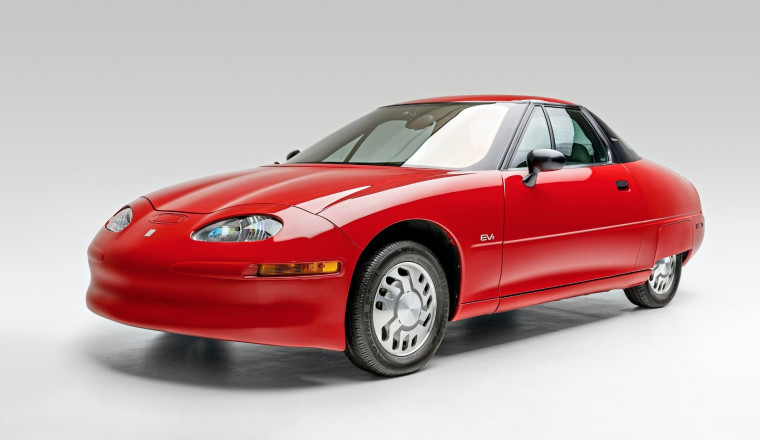
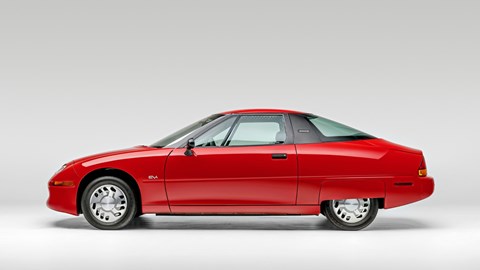
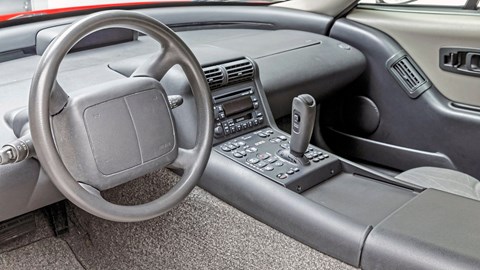
In 1996, while Larry Page turned the past into the future, General Motors brought the future into the present. Americans could, for between $399 and $549 a month, lease the most technically advanced car in the world, the product of the best and the brightest brains at GM, then the world’s largest and wealthiest car maker. The electric-powered GM EV1 went further on less energy than any production car built up to that point, thanks to bleeding-edge engineering and design that focused on light weight, low drag and high efficiency.
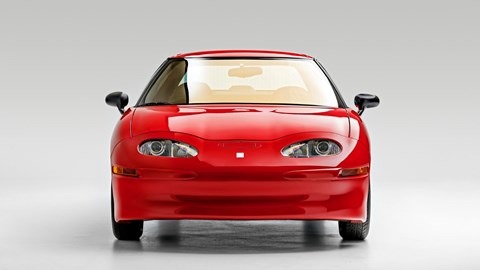
It previewed technologies and concepts such as by-wire acceleration and regenerative braking, electro hydraulic power steering, tyre-pressure sensing, a heat-pump cabin climate system, and inductive charging that would not begin to become commonplace until the second decade of the 21st century.
But the internet-age EV1 had a major flaw. At its core was essentially a 19th-century technology, an 18.7kWh lead-acid battery pack that totalled 40 per cent of the car’s mass and gave it a range of just 55 miles. Almost 20 years before it entered the mainstream automotive lexicon, I experienced range anxiety as I drove the little coupe from Beverly Hills to Long Beach. Back then, there were no public charge points; the only way to top up the battery was to plug the 1.2kW onboard charger into an ordinary wall socket and wait 12 to 14 hours. The compulsive checking of the battery charge indicator and range predictor began after just 30 miles on the road.
The EV1 was built to meet a mandate proposed by the California Air Resources Board (CARB) that by 1997 two per cent of all cars sold in that state should produce zero tailpipe emissions. That mandate was never enacted. And the EV1 proved a point about the regulatory myopia surrounding electric vehicles that still holds 30 years later: CARB’s bureaucrats never made the imaginative leap that was Elon Musk’s Tesla Supercharger network and mandate a charging infrastructure.
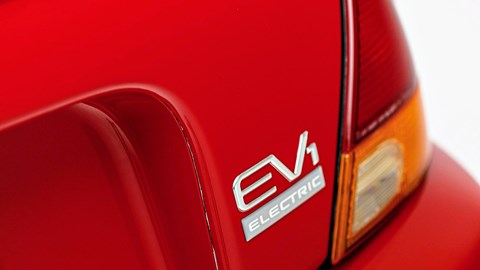
As GM wrestled with its car of the future – the EV1 cost $1 billion to develop and only 1117 were built – Porsche R&D chief Horst Marchart was busy future-proofing an icon of the past with such success that, here in 2026, we’re still enjoying the benefits.
After the boom times of the 1980s, Porsche sales had spun out of control like a 911 on an icy hairpin, crashing from a peak of 50,000 vehicles to 14,000. Enter Wendelin Weideking, an iconoclastic manufacturing engineer who told Porsche’s board he could cut the time taken to build a 911 by 30 per cent if the company adopted the lean and efficient Toyota Production System. To prove his point, he made a new $6 million interior trim shop obsolete in just three days. Impressed and chastened, the board made Weideking Porsche’s chairman and CEO.
In addition to making Porsche’s manufacturing operations more efficient, Weideking knew the company also needed fresh product to replace the ageing 928 and 968 models, and that the 911 required a major rethink. At Weideking’s direction, Horst Marchart began work on what would become the Boxster and the 996-series 911.
Developed in parallel, the two cars would share 38 per cent of their components, including their basic engine architecture, front body structure and suspension. ‘We did two cars for the price of one-and-a half,’ said then Porsche design boss Harm Lagaay.
Much of the media attention on the 996 focused on the fact this was the first ever water-cooled 911; to die-hard aficionados it was the automotive equivalent of Bob Dylan picking up an electric guitar. But the real story of the 996 ran much deeper. In 1994 it took Porsche 130 hours to build a 993-series 911; the 996 took just 60 hours to build. The 911 of the future had arrived.
As Horst Marchart put the finishing touches on the modern Porsche 911 in Stuttgart during 1996, Ferdinand Porsche’s grandson was in Wolfsburg busily re-inventing the company his grandfather’s car had created, Volkswagen. Ferdinand Piëch was appointed head of VW in 1993, when the ailing company was said to have been within three weeks of filing for bankruptcy. His assignment was simple: turn around VW like he’d turned around Audi. His solution was to slash costs and then expand the range, the masterstroke being the implementation of a modular platform-sharing strategy that reduced the number of platforms from 19 to four. Piëch’s first VW, the B5 Passat, was launched in 1996. It was notable not just for the fact it shared its underpinnings with the Audi A4 – previewing a philosophy that today sees even Bentleys, Lamborghinis and Porsches built using a vehicle architecture shared with a VW – but also because its exterior and interior design looked far more upscale and premium than any previous Wolfsburg car.
Volkswagen wasn’t the only brand seeking to redefine itself in terms of design that year, as Volvo’s 1996 Paris motor show display revealed. The glistening vertical chrome grille of its star car was familiar, as was the gentle arching tension in the beltline that echoed the 240, the Amazon and the PV544. But this bright saffron-coloured Volvo also had a sweeping coupe roofline, a tightly tucked-in tail, and oodles of understated sex appeal.
‘My new company car,’ grinned Volvo design director Peter Horbury as the covers came off the new C70 coupe. With timing as good as Gielgud’s he paused just long enough to let the audience laugh before delivering the punchline: ‘This time, we kept the toy – and threw away the box!’
The Volvo C70 coupe was a car that firmly put the once solid, stolid Swedish car maker on a path to building sharp and sophisticated-looking saloons, estates and SUVs. Another 1996 Paris show design star was Ford’s Ka, an unconventionally modern and perky hatchback designed by Brit Chris Svensson. Built on Fiesta hardware, the Ka was developed under the direction of Jac Nasser while he was chairman of Ford of Europe for the bargain cost of $250 million. But while Volvo was able to expand and evolve the C70’s sophisticated design vocabulary, Ford could never figure out how to do another car like the Ka. But perhaps more significantly, also in 1996 Ford figured out how to put the car into cyberspace. Early in the year, at the Chicago show, a handful of Ford engineers had demonstrated an intriguing new technology. Designed to contact an emergency operator in the event of an accident or if roadside assistance was required, it was called RESCU and would be available on the 1996 Lincoln Continental. RESCU stood for Remote Emergency Satellite Cellular Unit. It used the 24 satellites of the US military’s Global Positioning System to determine the car’s location, and sent voice messages between the car and a call centre.
No one remembers RESCU. But GM North American Operations boss Rick Wagoner would announce GM’s similar OnStar system two days later, and GM would subsequently spend billions more on improving and maintaining the system, while Ford would ultimately allow RESCU to wither and die. But RESCU was the forerunner of today’s connected car systems that power everything from infotainment to autonomous driving. Ford had built the first connected car.
It took a while for GM to return to EVs, leaving others to pick up the baton and continue the work of shaping the future we’re now living in. But Ford – and others – stuck with connected thinking, and today it’s all around us.