
I’ll be the first to admit that I have a bit of a problem: I really like buying cars. In fact, through an unlikely sequence of alternatingly decent and horrendous financial decisions, I spent my 20s and 30s putting my money where my proverbial mouth was, buying one brand-new, manual-transmission enthusiast car after another. Naturally, I gravitated toward hot hatches, pony cars and sport sedans—a fairly common trajectory for those who get the bug for spending their weekend beating the hell out of perfectly good tires. And for the most part, I was buying them new. Say what you will about the impact on my retirement portfolio, but when it comes to keeping the fun-car segment alive, I’ve done my part and then some.
To this day my manual gearbox streak remains unbroken, but my purchasing pace has slowed considerably, and that’s at least partly owing to the fact the the industry’s pace of releasing traditional fun cars has declined at an even more alarming rate. Yes, my IRA is much healthier for it; thanks for asking. But my inner YOLO-vator would much rather be talked down from a new car purchase every few months than shop amongst the dead carcasses littering the political minefield that is the current car market.
Let’s review: Affordable ICE options are dropping like flies due to a lethal combination of rising costs and declining interest (a classic feedback loop if there ever was one), and the few remaining options aren’t bringing customers in the doors. We were just starting to get a taste of some legitimately cool and unique EVs when Congress dropped the axe on incentives, slamming that door shut and kicking the prospect of a sporty, affordable electric car even further down the road.
Prices continue to rise while options dwindle, effectively shunting young enthusiasts into the used market, where they’re at the mercy of yesterday’s shopping habits. Even the Miata has evolved from the distilled essence of “could’ve had a V8” to the new benchmark for affordability, and the only reason it’s cheap (relatively speaking) is because it’s ooooold. Its tooling and R&D costs were long ago paid off, allowing Mazda to more gracefully absorb rising prices elsewhere in its production chain.
Realistically, the Miata only continues to exist because it has solid development inertia. A new, ground-up platform for such a niche model would be dead on arrival for a small automaker, and I’m skeptical that Mazda could justify keeping it alive going forward without a development partner. Not that long ago, they managed to share some costs with Fiat. Remember the 124? Recent rumors suggest that the company may have a new co-conspirator in Toyota, but when asked, Mazda declined to either confirm or refute the story.
Now, what happens if you’re an automaker like Dodge and you’d like to make a sports car? You don’t have a platform of your own to use and thanks to the volatile trade climate, you have nothing to gain by paying a partner like Mazda to build one for you; tariffs would push the price up far too high for it to make financial sense. Dead end, right?
Think again—and think less.
When we spoke with Dodge CEO Matt McAlear late last year, we asked him what a hypothetical new sports car from Dodge might look like, and his answer stuck with me:
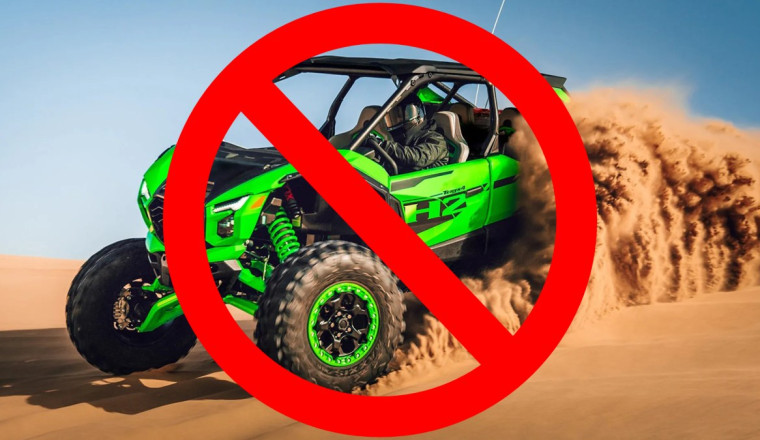
“I don’t know what I’d compare it to,” he said. “I think there’s inspiration in seeing what some of the powersports companies have done. Not only the crazy side-by-sides, but the three-wheelers, the Slingshots, I think there’s something there.”
Now, look, I’m a Miata guy. I buy the “less is more” approach to fun cars. I kick around the idea of a kit car or an Ariel build of some sort from time to time for just that reason. Simplify and add lightness, and all that. But is that the future of car ownership in America? A driveway full of trucks and SUVs hauling little trucklets and SUVlets around like some sort of AI approximation of an Xzibit meme?
One executive’s comments at a round table event might easily be dismissed as idle speculation or even a thinly disguised pitch. But what if I told you it isn’t just Dodge? Don’t look now, Toyota fans, but there’s smoke rising from your camp too.
I get it: Cars are expensive to build. And yes, some of that is down to safety and emissions regulations, which aren’t applied to these little toys the same way they are to grown-up automobiles. That makes them very appealing to cost-conscious automakers. Even more to the point, Stellantis doesn’t have to actually build you a three-wheeler for this formula to work; it just has to contract with somebody willing to do it for them, effectively licensing their brands to another manufacturer, limiting their investments (and thus their exposure) should the partnership not bear fruit.
That’s great, if you’re a corporate accountant. But what about us—the experimental population?
I have no problem with trikes and UTVs on spec. I think they’re hilariously fun little machines. If I had the land to enjoy one, I’d have a side-by-side in my garage right now. But these are toys for those with free time and money—things young enthusiasts have precious little of. The Gen Z car nut who can’t charge an EV at their apartment probably also doesn’t have room in their budget (or parking lot) for a toy. And that’s what these things are—toys. Hell, in plenty of states, you can’t even register UTVs as on-road vehicles.
For decades, we leaned on sport compacts as the do-it-all solution for enthusiasts on a budget. They’re practical in ways a Miata (or even a pony car) isn’t while still offering an experience that isn’t completely devoid of emotion or engagement. These were the true gateways to the hobby, and if you ask me, this is where automakers need to innovate if they intend to remain in the enthusiast game.
While there may be something admirable about the notion of making affordable replacements for fun cars, the industry should be focusing instead on finding new ways to make affordable cars fun. In the meantime, three-wheelers? Pfft. Miss me with that garbage.
Not a news tip? Let us know at tips@thedrive.com! Think the author is a blowhard? Let him know at byron@thedrive.com!
Byron is an editor at The Drive with a keen eye for infrastructure, sales and regulatory stories.