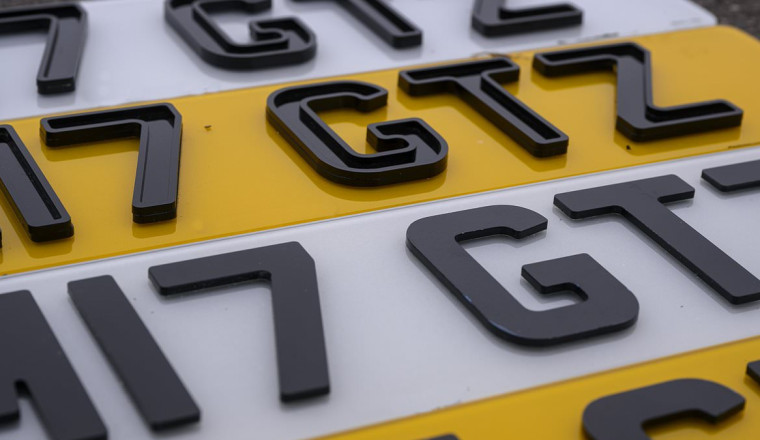

As many as one in fifteen vehicles may carry modified, non-compliant plates including ghost and stealth plates designed to evade ANPR detection. That's not a criminal fringe. That's hundreds of thousands of vehicles driving British roads with plates engineered to defeat the surveillance systems watching them. Ghost plates often use raised 3D or 4D lettering made from gels or plastics that create shadows and distortions confusing Automatic Number Plate Recognition cameras. More advanced versions use materials that become transparent under infrared light, rendering them completely invisible to cameras at night.
A Daily Mail investigation bought ghost plates from a DVLA registered supplier with no checks whatsoever. The plates boasted 4D raised lettering, but when tested by researchers from Cranfield University, six of the seven characters were made from material that became transparent under infrared light. The characters fully disappear under infrared illumination. The supplier didn't advertise this openly, but clearly understood exactly how the product would be used.
The Criminal Element: A Real Threat
Criminals are using ANPR evasive plates to facilitate activities including rogue trading, drug dealing and organised crime such as human trafficking and people smuggling. National Trading Standards testified that ghost plates pose a serious threat to counter terrorism operations. The Met Police warned they represent a critical vulnerability for national security. Transport for London is estimated to be losing £950 million a year in unpaid fines, while one driver alone owes Hackney Council £250,000.
MPs heard evidence from trading standards officers asking whether anyone would let their daughter get into a taxi that cannot be traced. Grooming gangs are reportedly using ghost plates. The threat is genuine and serious. Nobody disputes that.
The Other Side: Motorist Rebellion
But here's what the pearl clutching headlines won't admit: Critics warn ordinary motorists also have an incentive to obtain ghost plates due to controversial green policies like London's camera enforced Ulez zone. When you've turned entire cities into surveillance zones charging drivers £12.50 per day to use roads they already paid for with fuel duty and road tax, don't act surprised when people find workarounds.
The explosion in ghost plate use didn't happen in a vacuum. It happened alongside the rollout of ULEZ, Clean Air Zones, Low Emission Zones, congestion charges, average speed cameras on every A road, and 20mph limits enforced by cameras every hundred metres. Data shows 2 to 5 percent of vehicles on typical UK roads operate with ghost plates, rising sharply to 25 percent in road charging or congestion areas. That's not coincidence. That's cause and effect.
Drivers are being nickel and dimed to death by cameras enforcing regulations designed primarily to generate revenue rather than improve safety. Average speed cameras where there are no accidents. Bus lane cameras positioned to catch people unaware rather than protect buses. ULEZ cameras expanded to areas with perfectly acceptable air quality. At some point, compliance becomes optional when the rules feel less about safety and more about extraction.
The Technology Arms Race
Authorities are responding with upgraded camera systems specifically designed to detect ghost plates. Operation Phantom in Birmingham, a collaboration between West Midlands Police and Redspeed International, trialled cutting edge technology detecting vehicles displaying illegal 3D and 4D ghost plates, leading to a substantial increase in identification of vehicles using illegal ghost plates. Over 4,300 were caught in the first phase.
MAV Systems' AiQ ANPR technology uses artificial intelligence and advanced on camera algorithms capturing both colour and infrared images simultaneously, allowing the system to compare how plates appear under different lighting conditions. When discrepancies appear between visible light and infrared captures, the system flags them automatically. The ghost plate loophole is closing fast.
Parliamentary Response
An All Party Parliamentary Group for Transport Safety report recommended standardising registration plate design with security features, banning 3D and 4D plates entirely, significantly restricting licensed sellers via annual fees and audits, increasing fines to £1,000 with six penalty points, and seizing vehicles of repeat offenders.
Labour MP Sarah Coombes said the number plate system is just completely broken, completely messed up, with MPs now calling for an outright ban on 3D and 4D plates, tougher penalties and a complete overhaul of the system. The crackdown is coming. Whether it addresses the underlying reasons people are using ghost plates in the first place remains questionable.
The Uncomfortable Truth
Yes, criminals use ghost plates. Yes, that's a problem requiring enforcement. But pretending this is purely about terrorism and organized crime ignores the elephant in the room. When one in fifteen cars carries plates designed to defeat surveillance, and that number jumps to one in four near charging zones, you're not dealing with a criminal underground. You're dealing with mass civil disobedience.
The issue is particularly acute in London, where Transport for London issued 36,794 fines to vehicles with cloned number plates in the past year, a sharp increase from 22,450 fines in 2022. Cloning, ghosting, obscuring. The methods vary but the motivation is consistent. Drivers are rebelling against systems they perceive as unfair, punitive, and primarily revenue driven.
Drivers caught using ghost plates face fines up to £1,000 and six penalty points, serious consequences that could result in disqualification. That will deter some. But when the alternative is paying thousands annually in ULEZ charges, congestion fees, parking fines, and camera enforced penalties, plenty will take their chances.
Where This Ends
The technology will win eventually. AI powered cameras comparing infrared and visible light will catch ghost plates. Enforcement will tighten. Fines will increase. More cars will be seized. The loophole closes.
But the resentment driving people toward ghost plates in the first place? That's not going anywhere. You can't camera your way out of a legitimacy crisis. When drivers feel the system exists to extract money rather than improve safety, they'll find new workarounds. They always do.
The ghost plate epidemic is a symptom, not the disease. The disease is a surveillance and enforcement regime that's lost public consent. Banning 4D plates and deploying smarter cameras treats the symptom while ignoring why hundreds of thousands of otherwise law abiding drivers decided that defeating ANPR cameras was worth the risk.
Maybe instead of just building better enforcement technology, someone should ask why so many people are trying so hard to avoid it.