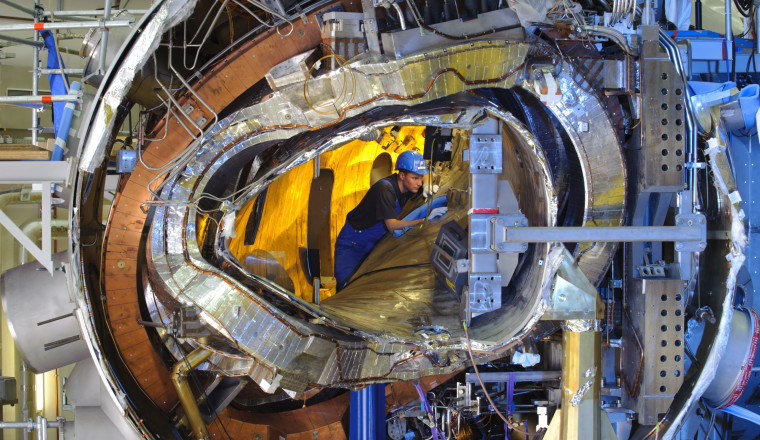

Fusion energy's promise of clean, limitless power is inching toward reality, with Germany taking a lead in commercializing stellarator fusion reactors. The Munich-based start-up Gauss Fusion born from collaboration among German and European partners released its comprehensive Conceptual Design Report (CDR) outlining the blueprint for building the first fusion power plant by around 2031.
Gauss Fusion's design leverages the advanced magnetic confinement stellarator technology developed at the Max Planck Institute’s Wendelstein 7-X experiment in Greifswald. Stellarators shape the plasma in twisted, complex magnetic fields allowing steady-state, disruption-free fusion key advantages over tokamaks.
This summer, Germany's government unveiled a €2 billion Fusion Action Plan closely tied to Chancellor Friedrich Merz's 2025 coalition agreement. The plan aims to consolidate Europe’s fusion leadership through massive public-private investment. With over €15 billion estimated to realize the first working commercial fusion reactor, the project involves stakeholders from across industry, science, and finance.
Proxima Fusion, a spinout from the Max Planck Institute, is simultaneously progressing its own advanced stellarator concept, Stellaris, aiming to demonstrate net energy gain by 2031 and prepare for grid connection by the 2030s.
Germany’s vision is clear: secure energy independence through fusion, create a fusion industry "Eurofighter," and become the global standard for next-generation, carbon-neutral power. The country’s stellarator focus contrasts with laser-based fusion efforts, indicating a diverse and robust approach to the technology race.
While fusion power plants remain years from commercial launch, Germany’s decisive funding, world-class research, and industrial expertise position it as a formidable contender in the revolution of clean energy. The mid-21st century may well be powered by the stellarator, a remarkable machine twisting plasma and hope into something close to limitless energy.