Happy Tuesday! It's February 18, 2026, and this is The Morning Shift — your daily roundup of the top automotive headlines from around the world, in one place. This is where you'll find the most important stories that are shaping the way Americans drive and get around.
In this morning's edition, we're looking at Ford's hopes for future EVs, as well as Canada's hopes for future auto manufacturing. We'll also look at Uber's plans for AV charging, and new proposed legislation around catalytic converter theft.
 Brandon Bell/Getty Images
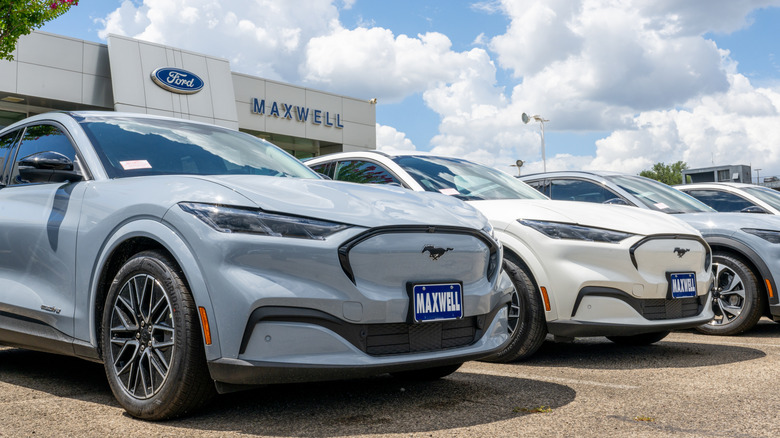
Ford may be backtracking on EVs, but the company doesn't want to be done with them entirely. It has a new one in the works, and it's targeting a $30,000 price point by making cuts somewhere most people wouldn't expect: The size of the battery. From Bloomberg:
Ford Motor Co. is out to prove that it hasn't retreated entirely from the electric vehicle race, despite the $19.5 billion retrenchment it revealed in December. In doing so, it's gearing up for next year's debut of a budget-priced EV line to contend with China.
The automaker engineered its next-generation EV to be lighter, sleeker and more electrically efficient so that it can go farther on a charge and still start at $30,000, some $20,000 cheaper than the average new car in America. In a social media blitz Tuesday, Ford touted how it shrunk the size of the costly battery while also extending its driving range by nearly 50 miles in a bid to field a mid-sized electric pickup in 2027 for the price of a traditional gasoline-fueled vehicle.
...
"The only way to compete with them is innovation," Farley said of China's carmakers last summer while unveiling Ford's new affordable EV line. "You're not going to beat them – you've got to get close on cost — but then you have to apply the innovation. That's what we've done. That's our bet."
Ford's clearly terrified of Chinese automakers sweeping the low-cost end of the market, a side of the auto buying world that many manufacturers in the U.S. have entirely abandoned. Perhaps that was shortsighted of them.
 Jonathan Weiss/Shutterstock
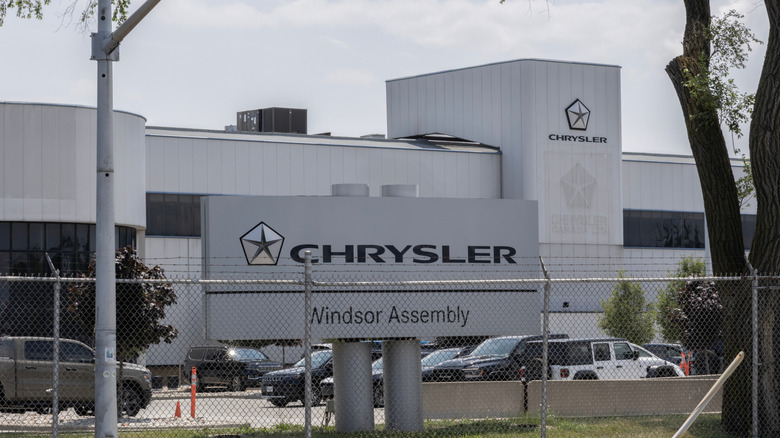
The United States has instituted tariffs to try and onshore more auto production, which has had the unintended side effect of making other automaking countries very angry. Canada, in particular, is sour about the jobs and money the country is now losing as automakers like Stellantis move production stateside. So, Canada is going to China and Japan to put its auto workers back to work. From Bloomberg:
The companies sometimes called the Detroit Three — GM, Stellantis and Ford Motor Co. — used to dominate the Canadian automotive industry. But last year, they were responsible for just 23% of the cars and light trucks made in the country, according to an Ontario research group, down from 56% a decade ago. Two Japanese giants, Honda Motor Co. and Toyota Motor Corp., are now the firms that matter most.
And inside Prime Minister Mark Carney's government, there's a growing belief that if the big US automakers are slowly abandoning Canadian factories, there's no longer any reason to do them favors.
So Carney and Joly have done two things that would have been unthinkable just 15 months ago, before Trump moved back into the White House and began to say, over and over again, that he no longer wanted the US to buy Canadian-made automobiles. They've gone to Beijing to court Chinese investment in the auto sector — opening up the future possibility of Canadian-made BYD or Chery vehicles roaming the streets of Toronto and Montreal. And earlier this month, they introduced a new automotive strategy with a proposed system of import credits.
Chinese automakers moving right across the border from the U.S., and building high-quality cars there, is what we call the "find out" phase of our domestic and foreign policy. This is what Ford is afraid of.
 Konektus Photo/Shutterstock
No matter how much they hate it, ride-hailing apps still have to pay their drivers. Uber and Lyft have long wanted to cut that expense out of their books, replacing drivers with autonomous cars, but that brings all sorts of issues around maintenance and even things as simple as charging. Uber now wants to solve the latter, by pouring nine figures into autonomous charging infrastructure. From Reuters:
Uber Technologies said on Wednesday it would invest more than $100 million to develop autonomous vehicle charging hubs, underscoring the ride-hailing company's latest push to scale up self-driving operations.
The move includes building DC fast charging stations at its autonomous depots where Uber runs day-to-day fleet operations, and at pit stops throughout priority cities.
Uber has made autonomous vehicles a key strategic priority, partnering with more than 20 firms across the world on self-driving freight, delivery and taxi services, as it races to secure market share and fight competition from companies such as Tesla.
The charging expansion will begin in the U.S. in the Bay Area, Los Angeles and Dallas before moving to more cities over time.
Remember Tesla's autonomous charging concept from back in the day? The creepy snake robot? I wonder if Uber will bring back the creepy snake robot.
 Justin Sullivan/Getty Images
Catalytic converter theft is rampant, and lawmakers want to do something about it. The problem is, theft is already illegal. Now automakers want to make catalytic converters easier to find after they've been stolen, in hopes of catching thieves when they try to unload their ill-gotten goods. From Automotive News:
Legislation aimed to help law enforcement combat catalytic converter thefts across the country moved out of a Congressional subcommittee on Feb. 10 and will go to the House Committee on Energy and Commerce.
The bill mirrors legislation working its way through the U.S. Senate.
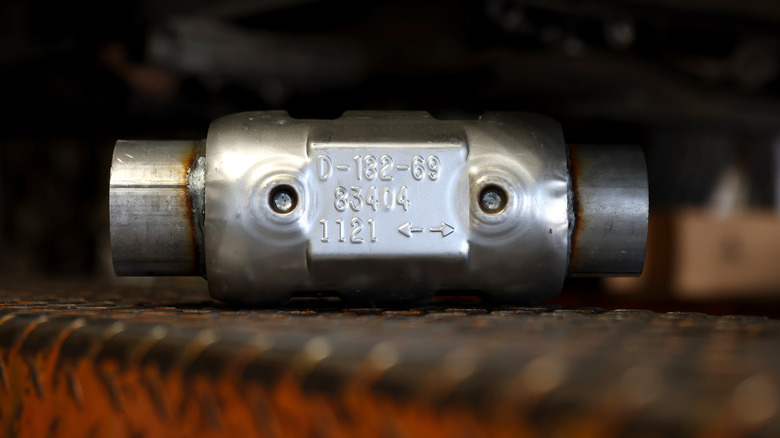
The Preventing Auto Recycling Theft — or PART — Act would give law enforcement tools to trace stolen catalytic converters, prevent theft and trafficking and facilitate prosecutions.
It would require new vehicles to have the VIN stamped onto the converter. That way, law enforcement officers can connect the stolen parts to vehicles.
The PART Act would establish a grant program to allow dealerships, repair shops and other eligible parties to mark catalytic converters of cars already on the road at no cost to their owners.
The bill also would increase record-keeping requirements for purchasers and establish a federal criminal penalty of up to five years specifically for the theft, sale, trafficking or known purchase of stolen catalytic converters.
Surely no one has ever filed a serial number off of something before. Now let me just take a big sip of coffee and look at every gun theft ever.
Fun fact about Chelsea Manning: She's shorter than you'd expect. Shorter than I expected, anyway.
Is it just me, or is the mix of this track much worse in the music video than on the record? It feels compressed, right?