

Ford’s top executive Jim Farley has issued one of the most stark warnings yet about the competitive threat facing the U.S. auto industry from China. In an October 26 interview with CBS Sunday Morning, Farley drew a powerful comparison between today’s Chinese car industry and Japan’s surge in the 1980s, but with a twist: “It’s on steroids.”
“They have enough [production] capacity in China with existing factories to serve the entire North American market, put us all out of business,” Farley said bluntly. “Japan never had that, so this is a completely different level of risk for our industry.”
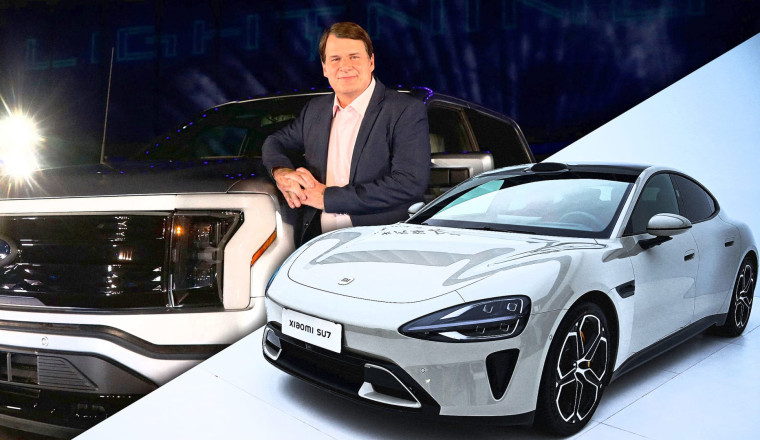
Farley, who has been openly driving a Chinese electric vehicle, the Xiaomi SU7, for months, praised China’s quality, digital experience, and affordability. He made it clear that to compete, American automakers must deeply understand their new rival: “To beat them, you have to know them.” Chinese vehicles offer advanced AI integration, seamless digital life mirroring, and aggressive pricing that’s proving hard to match.
This warning comes amid Ford’s mounting financial challenges, including a $1.4 billion loss in Q3 2025 linked to the electric vehicle division and an estimated $2 billion cost hit from tariffs imposed by the Trump administration. Despite these struggles, Ford is weaponizing Chinese technology through partnerships like its Michigan battery plant deal with CATL.
China’s dominance is not just about manufacturing volume it’s about technological and strategic leadership. With 70% of global EVs produced in China and nearly 40% priced under $25,000, Chinese automakers have created an affordable, high-tech alternative that threatens traditional Western brands.
Farley’s blunt assessment signals a seismic shift in the global auto industry landscape. With China’s factories capable of flooding entire markets and technology racing ahead, the challenge to American automakers couldn’t be more severe or more urgent.
The message is clear: innovate, adapt, or risk being left behind.