
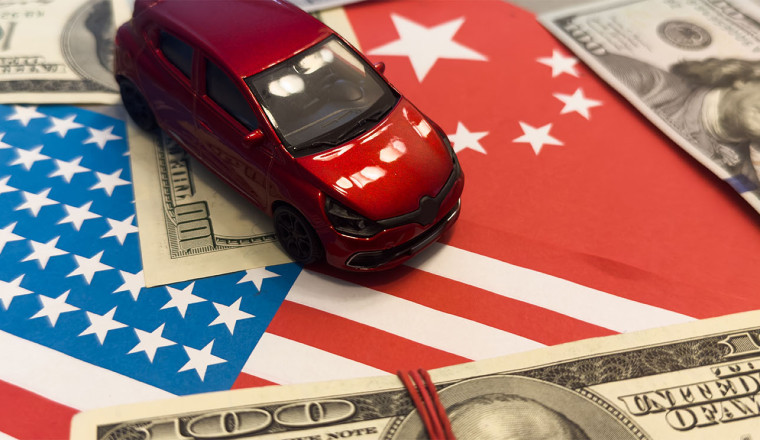

Most people think manufacturers absorb tariffs. Wrong. Economists have the data. You're paying an extra $2,000 to $5,000 per vehicle. Here's why tariffs are just taxes on consumers wearing a patriotic costume.
President Trump imposed 25 percent tariffs on imported vehicles and components in 2025. Politicians promised the tariffs would punish foreign manufacturers, protect American jobs, and revive domestic industry. Voters believed manufacturers would pay.
They don't. You do. Every economist studying the 2025 tariffs confirms the same conclusion: consumers bear most of the burden through higher vehicle prices. The data is unambiguous. Tariffs are taxes. Foreign companies don't write the checks. American buyers do.
Who Actually Pays Tariffs? Follow The Money.
When a Toyota built in Japan crosses into the United States, U.S. Customs collects a tariff before the car can be sold. Toyota writes a check to the government. That much is true.
But Toyota doesn't eat that cost. Neither does any other manufacturer. They add it to the vehicle price. You pay it at the dealership.
The Federal Reserve Bank of Richmond examined tariff pass through rates and found they're "generally high, often near 100 percent," meaning the burden falls on domestic consumers and firms rather than foreign exporters, according to their April 2025 Economic Brief.
Translation: Foreign companies set prices to maintain their margins. American buyers pay the tariff plus dealer markup. Foreign manufacturers keep their profits. You get a higher payment.
Benn Steil at the Council on Foreign Relations tracked who bore tariff costs month by month in 2025. In June, importers absorbed 64 percent of tariff costs. By October, that figure dropped to 27 percent. Consumers went from paying 22 percent to 55 percent in four months, per Tax Notes analysis.
The trend continues. Steil projects consumers will eventually shoulder roughly 67 percent of tariff burdens as businesses finish adjusting prices. That's not theory. That's documented data showing exactly how tariffs get transferred from importers to buyers.
The Car Industry Numbers Are Brutal
Cox Automotive estimates automakers racked up over $25 billion in tariff obligations during the first seven months of 2025, assuming tariffs applied from January 1. That equals roughly $5,200 per imported vehicle or $2,500 across all vehicles sold including domestically assembled models, according to their August 2025 analysis.
Those costs hit every major manufacturer:
- General Motors: $1.1 billion in Q2 alone, projecting $4 to $5 billion total impact for 2025
- Ford: $800 million in Q2, expecting nearly $3 billion for the full year
- Toyota, Nissan, Hyundai, European brands: All reported similar multi billion dollar tariff costs
Anderson Economic Group calculated that tariffs add an average $2,000 to the price of U.S. assembled SUVs even when built domestically, because they use foreign made components. Every vehicle contains imported steel, aluminum, electronics, batteries, or parts subject to tariffs.
J.P. Morgan projects automakers will implement "low single digit price increases" translating to several hundred basis points of margin compression as costs rise faster than they can raise prices without destroying demand.
Cox Automotive forecasts retail prices climbing 4 to 8 percent by late 2026 as model year changeovers provide cover for passing tariff costs to consumers. That's $2,000 to $4,000 extra on a $50,000 vehicle.
Automakers Absorbed Costs Temporarily. That's Over.
General Motors reported absorbing tariff costs in Q2 2025 to "support customers and dealers." Ford did the same. Nearly every manufacturer prioritized maintaining sales volume over immediate price increases.
That strategy has limits. No company can absorb billions in costs indefinitely. Shareholders demand profits. Manufacturers either raise prices or cut expenses elsewhere.
Guess which one they're choosing.
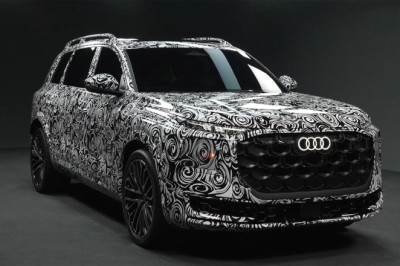
Audi announced price increases ranging from $800 to $4,100 across most 2026 models. Nissan promised stable pricing early in 2025 but warned increases would come late in the year. Multiple brands confirmed to J.P. Morgan that 2026 model year launches would include price adjustments reflecting accumulated tariff costs.
The temporary absorption created a sales spike. Buyers rushed to purchase before prices rose. Annualized sales rates hit 17.8 million in March 2025 and 17.2 million in April as consumers tried beating tariff price hikes, per Cox Automotive data. That pull forward demand borrowed from future months.
Sales declined afterward as expected price increases deterred purchases. The spike and subsequent drop demonstrate consumer awareness that tariffs mean higher prices. Buyers tried timing purchases to avoid paying more. They succeeded temporarily.
But tariffs don't disappear. Manufacturers can only delay price increases so long. The Tax Foundation estimates the average effective tariff rate reached 7.7 percent in 2025, the highest since 1947. Even after Supreme Court rulings invalidated some tariffs, the remaining levies will keep rates at 6.0 percent through 2026, the highest since 1971.
Those costs must land somewhere. Manufacturers won't accept reduced margins permanently. They're raising prices.
The "Made In America" Fantasy
Trump and tariff supporters claim domestic manufacturing will replace imports, creating American jobs and reducing reliance on foreign production. Reality is more complicated.
Building cars in the United States doesn't avoid tariffs. Nearly every component uses imported materials or parts. Steel from Brazil. Aluminum from Canada. Electronics from China. Batteries from South Korea or China. Copper from Chile. Rare earth minerals from multiple countries.
Even a Toyota Camry assembled in Georgetown, Kentucky contains approximately 30 percent imported content by value. That 30 percent faces tariffs. Assembly location doesn't eliminate foreign supply chains. It just reduces how much of the vehicle crosses borders after final assembly.
Stellantis, Ford, General Motors, Toyota, Honda, Nissan, Hyundai, BMW, Mercedes, and Volkswagen all manufacture vehicles in the United States. All reported massive tariff costs despite domestic production. The integrated global supply chain means tariffs hit everyone regardless of where final assembly occurs.
Relocating production to the United States doesn't happen overnight. Building new factories requires years and billions in capital investment. Environmental reviews. Permitting. Construction. Tooling. Worker training. Supply chain development. The fastest timeline is three to five years.
Coverage from automotive sites like GaukMotorBuzz.com has documented how manufacturers respond to tariff uncertainty by delaying or canceling U.S. investment rather than accelerating it. Why commit billions to facilities if tariff policy changes with each administration?
The threat of tariffs creates instability. Manufacturers need predictable policy lasting decades to justify factory investments. Trump's tariffs get challenged in courts, modified quarterly, and face potential reversal if different leadership takes office. That's not investment certainty. That's chaos.
Who Benefits? Nobody, Really.
Tariffs were supposed to protect American autoworkers. Instead:
- Volvo Cars: Cutting 3,000 jobs globally, including consultant roles, as tariff pressures force cost reduction
- Ford: Warned tariffs threaten profitability and could force workforce reductions
- GM: Absorbed billions in costs impacting reinvestment budgets for plants and employees
Tariffs don't create jobs when they destroy demand. Higher prices mean fewer sales. Fewer sales mean reduced production. Reduced production means layoffs regardless of where vehicles are assembled.
The Tax Foundation projects remaining tariffs will reduce U.S. GDP by 0.2 percent before accounting for foreign retaliation. When other countries respond with their own tariffs on American exports, the economic damage multiplies.
American farmers already faced retaliatory tariffs from China during Trump's first term. Agricultural exports collapsed. The government spent billions bailing out farmers to compensate for lost sales caused by trade wars.
Automotive exports face similar retaliation. Ford ships trucks to China. GM exports Cadillacs to Europe. Tesla sends vehicles worldwide. Retaliatory tariffs make American cars more expensive abroad, reducing sales and eliminating jobs.
Everyone loses except the narrow political benefits politicians claim from appearing tough on trade.
The Tax Nobody Admits Is A Tax
Politicians call tariffs "making foreign companies pay." Economists call them regressive consumption taxes that hit lower income households hardest.
Adam Posen at the Peterson Institute for International Economics told Tax Notes this is "one of the worst ways to impose a tax and one of the most regressive ways to redistribute income from poorer to richer Americans."
Why regressive? Because vehicle purchases consume a larger share of income for middle and lower income households. Someone earning $50,000 spending $30,000 on a used car dedicates 60 percent of annual income. An extra $2,000 from tariffs represents 4 percent of their annual earnings.
Someone earning $200,000 buying a $60,000 new car spends 30 percent of annual income. That extra $4,000 tariff cost equals 2 percent of earnings. The burden falls disproportionately on people with less money.
Sales taxes work identically. They hit consumption rather than income or wealth. Tariffs are sales taxes by another name, collected at the border instead of the register.
The Tax Foundation confirmed this. Tariffs raised $264 billion in federal revenue during 2025 compared to $79 billion in 2024. That's $185 billion in additional taxes extracted from consumers and businesses importing goods.
Customs duties revenue jumped because tariffs increased. More tax collected means more tax paid. The government doesn't print money to cover tariff bills. Importers and consumers fund it through higher prices.
What Actually Happens When You Buy A Car
Let's walk through the process:
- Toyota builds a Camry in Japan. Manufacturing cost: $18,000.
- Ship it to California. Shipping and logistics: $1,200.
- U.S. Customs assesses tariff. 25 percent on $19,200 = $4,800.
- Toyota pays tariff. Toyota's cost is now $24,000.
- Toyota sets wholesale price. Needs profit margin, so wholesale price: $28,000.
- Dealer marks up retail. Dealer margin plus prep and fees: $33,000 retail price.
The $4,800 tariff became a $5,000+ price increase by the time you see the window sticker. Every step adds margin on top of the tariff cost.
If the tariff disappears, what happens?
- Toyota builds a Camry in Japan. Manufacturing cost: $18,000.
- Ship it to California. Shipping and logistics: $1,200.
- No tariff. Toyota's landed cost: $19,200.
- Toyota sets wholesale price. Same margin percentage, but lower base: $23,500.
- Dealer marks up retail. Same dealer margin percentage: $27,500 retail.
You just saved $5,500 because the tariff disappeared. Toyota made the same profit percentage. The dealer made the same profit percentage. The car is identical. Only the price changed.
That's how tariffs work. They inflate every step of the supply chain. The final price to consumers includes the tariff plus margin stacking at every level.
The Political Logic Versus Economic Reality
Tariffs make political sense. "Making foreign companies pay" sounds tough. Voters like tough. Protectionism feels patriotic. Supporting American workers resonates emotionally.
But economic reality doesn't care about feelings. Tariffs are taxes. The burden falls on consumers. Prices rise. Sales decline. Manufacturers adjust by cutting costs elsewhere. Workers lose jobs despite tariffs supposedly protecting them.
Every major economic study of the 2025 automotive tariffs reaches identical conclusions:
- Consumers pay most tariff costs through higher prices
- Domestic production doesn't avoid tariffs due to imported components
- Job losses from reduced demand offset any manufacturing gains
- GDP declines when tariffs reduce economic efficiency
- Retaliation from trading partners magnifies damage
The Federal Reserve Bank of New York published research in February 2026 confirming that U.S. importers and consumers bore nearly all tariff costs. Foreign exporters reduced prices minimally. American buyers paid the difference.
That's not opinion. That's peer reviewed economic research published by the Federal Reserve.
Yet politicians continue claiming tariffs punish foreign manufacturers. The data proves otherwise. Manufacturers maintain margins. Consumers pay more. End of story.
What Happens Next
Cox Automotive projects 4 to 8 percent retail price increases by late 2026. On a $40,000 vehicle, that's $1,600 to $3,200 extra. On a $60,000 SUV, it's $2,400 to $4,800.
The increases will accelerate as 2026 model years replace 2025 inventory. Dealers will blame supply chain issues, inflation, or market conditions. The real cause is tariffs. Manufacturers absorbed costs temporarily. Now they're passing them forward.
Sales will decline. Higher prices reduce affordability. Some buyers will delay purchases. Others will buy used instead of new. A portion will simply go without.
The decline feeds back through the supply chain. Fewer sales mean reduced production. Reduced production means layoffs at assembly plants, parts suppliers, logistics companies, and dealerships. The tariffs intended to protect jobs will eliminate them through demand destruction.
Eventually, political pressure might force tariff reductions or eliminations. The Supreme Court already ruled some tariffs illegal. Congress could act if economic damage becomes undeniable.
But reversing tariffs doesn't instantly reduce prices. Manufacturers who raised prices to cover costs won't voluntarily cut them. Market competition might force some reduction, but full rollback is unlikely. Prices are sticky downward. Once they rise, they rarely return to previous levels.
The Bottom Line
Tariffs are taxes on imports paid by importers and passed to consumers through higher prices. That's not debatable. It's documented across decades of economic research and confirmed by real world data from the 2025 automotive tariffs.
Politicians claiming foreign manufacturers pay tariffs are either economically illiterate or deliberately misleading voters. Manufacturers add tariff costs to vehicle prices. Dealers mark up those higher wholesale costs. Consumers pay at the register.
The average imported vehicle now carries roughly $5,200 in tariff costs according to Cox Automotive. When spread across all vehicles sold including domestic assembly, that's $2,500 per vehicle industry wide.
You're paying that. Not Toyota. Not BMW. Not Hyundai. You. Through higher prices, reduced choice, and diminished purchasing power.
Tariffs don't protect American jobs when they destroy demand through price increases. They don't revive domestic manufacturing when supply chains are globally integrated. They don't punish foreign companies that simply pass costs to consumers.
Tariffs are taxes. Simple as that. The government collects revenue. Consumers pay the bill. Everything else is political theater designed to make protectionism sound like patriotism instead of acknowledging it's just another way to extract money from your wallet.
Next time a politician promises tariffs will make foreign companies pay, remember the data. Check your vehicle's price increase. Look at manufacturer earnings reports documenting passed through costs. Read economist analysis confirming consumer burden.
Then realize the tariff supporter is selling you a tax increase wearing a flag pin and calling it economic policy.
Because that's all tariffs ever were. Taxes on the people, marketed as taxes on foreigners, implemented by politicians who bet voters won't understand the difference until the bill comes due.
And the bill always comes due.