

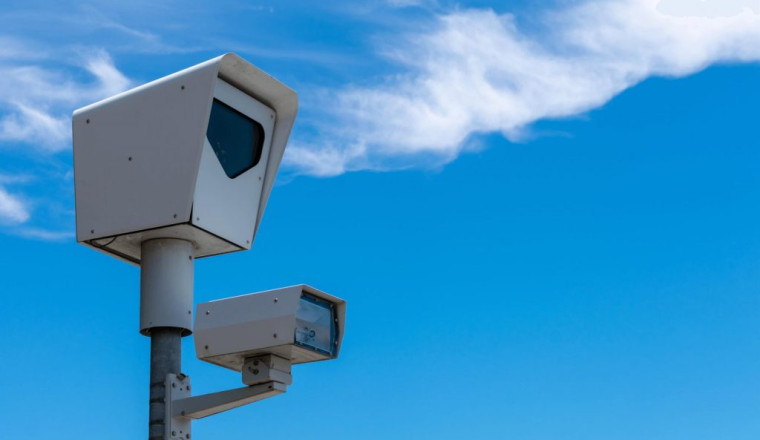

The Official Information Act data obtained by MotorBuzz revealed 2 million speed camera tickets issued between 2023-2025, generating $285 million in revenue. What the data doesn't show is how many of those tickets were issued without meeting the legal requirements for enforceable speed detection.
Every speeding ticket in New Zealand must meet specific evidential standards. Cameras must have current calibration certificates. Officers must follow documented procedures. Radar and laser devices require pre-deployment testing. If police can't produce this documentation, the ticket is not legally enforceable. Requesting this information isn't obstruction - it's your legal right and the only way to ensure enforcement meets required standards.
Why Proper Documentation Matters
Speed detection equipment can fail. Cameras can malfunction. Radar can lock onto the wrong vehicle. Laser devices require precise operation. The legal framework acknowledges these risks by requiring strict documentation and procedure. When police issue tickets without following these requirements, they're enforcing fines that don't meet evidential standards for prosecution.
The New Zealand Police Speed Detection Equipment Operators Manual (2015) and associated Code of Operations establish binding requirements for all speed enforcement. These aren't suggestions. They're mandatory procedures that must be followed for a reading to be admissible in court. If police can't demonstrate compliance, the ticket should be withdrawn.
What You're Entitled to Request: Speed Cameras (Fixed and Mobile)
For any ticket issued by speed camera, you can request:
- Photograph showing your vehicle and registration plate clearly visible
- Photograph showing the speed reading at time of detection
- Current Certificate of Accuracy for the camera (must be less than 12 months old per Land Transport Act 1998 s146)
- Calibration records showing when the camera was last tested and results
- Testing logs proving the camera was functioning correctly on the day your ticket was issued
- Operator certification (for mobile cameras - proof the operator holds current certification)
- Site approval documentation (cameras must be placed at approved locations meeting specific criteria)
- Maintenance records showing the camera was properly maintained
- Time synchronization records (camera clocks must be accurately synchronized)
If police cannot provide:
- A valid, current certificate of accuracy → The reading is inadmissible
- Clear photos showing your vehicle and speed → They cannot prove it was your vehicle
- Proper calibration and testing records → The reading's reliability is unproven
What You're Entitled to Request: Officer-Issued Tickets (Radar/Laser)
The requirements for officer-issued tickets are more extensive because human operation introduces more variables. For radar or laser stops, you can request:
- Officer's Proficiency Certificate (must be current - officers require periodic recertification)
- Device Certificate of Accuracy (less than 12 months old)
- Patrol Vehicle Speedometer Certificate (if radar used in moving mode)
- Pre-Deployment Testing Records:
- For radar: Tuning fork tests, serial number match between device and forks
- For laser: Distance accuracy tests
- Complete Tracking History documented in officer's notebook:
- Visual: Officer identified and continuously monitored your specific vehicle, confirmed it was within device range, estimated speed based on observation
- Audio: Clear, consistent Doppler tone (radar) matching speed estimate, audio not muted during detection
- Device: Steady reading consistent with visual estimate and audio tone, ground speed matching speedometer (radar only)
- Officer's Notebook Entries showing all of the above for your specific stop
- Device Logbook Pages showing tests passed, serial numbers, shift entries
- Site Compliance Evidence:
- Must be >250m from speed limit change
- Clear line of sight
- Safe stopping area available
- Evidence of Vehicle Identification if multiple vehicles were in the detection beam (largest reflector/fastest vehicle risk with radar)
The Speed Detection Equipment Operators Manual explicitly states these elements form the "chain of evidence" required to eliminate errors and establish reliability. Absence of any element means the reading is unreliable and unenforceable.
How to Dispute A Ticket
Disclaimer
If You've Received a Traffic Infringement — Before You Pay, Read This
We believe that many fines were not enforceable lacking one or multiple metrics as laid out in Speed Detection Equipment Operators Manual. By silently accepting these fines, we hand over unchecked power to expand surveillance networks. Questioning every ticket's validity demands transparency, channels public anger, and opens the system to individual scrutiny.
IMPORTANT: Disclosure is a valid request for both police issued tickets and the new wave of ai camera issued tickets. We are not disputing New Zealand's speed laws. We are requiring that Police and camera operators demonstrate the detection meets the minimum operational standards required by the Speed Detection Equipment Operators Manual before a fine can be considered evidentially valid. If those standards weren't met, there is no admissible evidence Sic [OPERATORS MANUAL] of the offence and the court cannot be asked to apply the law.
Resources:
Important Disclaimer — Traffic Fine Dispute Process
Please read this carefully before taking any action in relation to an infringement notice.
The information provided in this guide about disputing traffic infringement notices is general information only. It is not legal advice. It does not take into account your individual circumstances, the specific facts of your case, or any developments in New Zealand law that may have occurred after the date of publication.
This process is entirely optional. You are under no obligation to dispute your fine. Paying your infringement notice by the due date remains available to you at any time and is a perfectly valid choice.
You undertake this process entirely at your own risk. By electing a court hearing you acknowledge and accept that:
- If you proceed to court and are convicted of the offence, the penalty imposed by the court may be significantly higher than the original infringement fee
- Court proceedings may result in additional costs including court costs
- The process requires you to meet strict deadlines — missing the 28-day deadline to elect a court hearing will result in the loss of your right to dispute the fine
- Requesting disclosure does not guarantee the fine will be withdrawn — Police may provide complete and compliant documentation, in which case you will need to decide whether to proceed to court or pay the fine
- We cannot predict or guarantee the outcome of any individual case
We are not lawyers. Nothing in this guide creates a lawyer-client relationship between you and this campaign or its organisers. The information provided is based on publicly available New Zealand law and the Speed Detection Equipment Operators Manual 2015. Laws and procedures can change. Always verify current requirements before taking action.
We strongly recommend that before electing a court hearing you:
- Read your infringement notice carefully and note the deadline
- Consider seeking independent legal advice, particularly if the fine involves licence suspension, demerit points, or a high penalty amount
- Carefully review any disclosure you receive before deciding whether to proceed to court
- Weigh the potential maximum penalty against the original infringement fee and make an informed personal decision
By using this guide you acknowledge that you have read and understood this disclaimer, that you are making your own independent decision to dispute or not dispute your fine, and that neither this campaign nor its organisers accept any liability for the outcome of any action you take in relation to your infringement notice.
This guide is published in good faith as general public interest information. It is not a substitute for professional legal advice. If you are in any doubt about your situation, consult a lawyer.
DIsputing a Fine - The Process
Step 1 — Don't pay yet (but act within the deadline)
You have 28 days from the date of the infringement notice to respond. Paying the fine waives your right to dispute it. Do not pay while you are still deciding whether to challenge.
Step 2 — Elect a court hearing
Write to the issuing agency (NZ Police or NZTA) requesting the matter be heard in court. Use our template letter below. Once you elect a court hearing, enforcement action is paused pending the court process.
Step 3 — Request disclosure
Under the Criminal Disclosure Act 2008, you are entitled to request the evidence the prosecution intends to rely on. For a speed detection fine, this must demonstrate that the detection was operationally valid under the Speed Detection Equipment Operators Manual. Request:
- Operator certification for the specific device used
- Pre- and post-deployment equipment tests for that session
- Tracking history confirming clean visual and/or audio identification of your vehicle
- Device type approval documentation
- For Acusensus camera fines: site approval records, deployment location compliance, and operator certification for that specific camera system
Send your disclosure request to the NZ Police District Prosecutions office handling your file. Use our template letter below.
Note: The Speed Detection Equipment Operators Manual states that if there is any doubt about the validity of a detection, a ticket should not be issued. Disclosure allows you to assess whether doubt existed — and whether the issuing officer or operator met that standard.
Step 4 — Assess the disclosure and decide
Once you receive disclosure (Police have an obligation to respond), review it against the Manual's requirements. You can then:
- Pay the fine at any time to end proceedings — this remains available to you throughout the process
- Defend the charge in court if the documentation reveals the detection was operationally deficient — for example, incomplete tracking history, failed equipment tests, uncertified operator, or non-compliant deployment site
- Seek legal advice on the strength of what has been provided
⚠️ Important: Electing a court hearing means that if you are convicted, the penalty may increase to the maximum fine for the offence — which is higher than the infringement fee. You should weigh this carefully when reviewing your disclosure.
-----------------------
Do not pay the fine at this stage. If you pay the fine you lose the ability to dispute it. The ticket will say you have the right to defent it but in the author's experience once you've payed you're done. They ignore you.
NOTE: You can choose to pay your fine at any time and that will cease the request/dispute.
If you choose to go to court and lose you may be orderd to pay costs.
----------------------
Template 1: Speed Camera (Fixed or Mobile) Disclosure Request
[Your Name]
[Your Address]
[Date]New Zealand Police Infringement Processing Centre
RE: Infringement Notice [NUMBER] – Request for Full Disclosure Prior to Court Hearing
Dear Sir/Madam,
I dispute Infringement Notice [xxxxx] issued on [DD/MM/YYYY] for alleged speeding detected by [fixed/mobile] speed camera.
I hereby reserve my right elect a court hearing pursuant to section 21 of the Summary Proceedings Act 1957.
Prior to any hearing, I require full disclosure of the following evidence within 14 days pursuant to my right to natural justice and fair trial:
1. Clear photograph showing my vehicle with registration plate visible
2. Photograph showing the speed reading at time of alleged detection
3. Current Certificate of Accuracy for the camera (Land Transport Act 1998 s146)
4. Calibration records showing:
- Date of last calibration
- Results of calibration test
- Name and certification of person who performed calibration
5. Testing records proving camera function on [date of alleged offence]:
- Pre-operational tests
- Any tests conducted during the operational period
- Post-operational verification
6. Camera operator certification (mobile cameras only):
- Copy of operator's current certification
- Expiry date of certification
7. Site approval documentation:
- Evidence this location meets approved site criteria
- Distance from any speed limit changes
- Road characteristics justifying camera placement
8. Maintenance records for 6 months prior to alleged offence
9. Time synchronization records proving camera clock accuracy
If the above evidence demonstrates non-compliance with ANY legal requirement for speed camera operation, I request immediate withdrawal of this infringement as the prosecution lacks a prima facie case.
If disclosure reveals:
- Expired or absent Certificate of Accuracy
- Inadequate calibration or testing
- Unclear photographic evidence
- Non-compliant site placement
- Equipment malfunction
Then this infringement is not enforceable and must be withdrawn.
Failure to provide complete disclosure within 14 days will be raised at hearing with application for dismissal and costs.
Yours faithfully,
[Signature]
[Printed Name]
Template 2: Officer-Issued Ticket (Radar/Laser) Disclosure Request
[Your Name]
[Your Address]
[Date]New Zealand Police Infringement Processing Centre
RE: Infringement Notice [NUMBER] – Request for Disclosure prior to Court Hearing and Full Disclosure
Dear Sir/Madam,
I dispute Infringement Notice [xxxxx] issued on [DD/MM/YYYY] for alleged speeding detected by [radar/laser] device operated by [Officer Name/Number if known].
I hereby reserve the right to elect a court hearing pursuant to section 21 of the Summary Proceedings Act 1957.
The NZ Police Speed Detection Equipment Operators Manual (2015) and Code of Operations establish mandatory procedures for enforceable speed detection. These require a complete "chain of evidence" including visual observation, audio confirmation (radar), and device reading, all documented in the operator's notebook.
Prior to any hearing, I require full disclosure of the following evidence within 14 days:
Operator and Device Certification:
1. Officer's current Speed Detection Device Operator Proficiency Certificate
- Issue date and expiry date
- Device types certified for (radar/laser/both)
2. Device Certificate of Accuracy (must be <12 months old per LT Act 1998 s146)
- Device serial number
- Calibration date
- Certifying authority
3. Patrol vehicle speedometer certificate (if radar used in moving mode)
Pre-Deployment Testing:
4. Device logbook entries for [date of alleged offence] showing:
- Tuning fork tests passed (RADAR): Serial numbers must match device
- Distance accuracy tests (LASER)
- Officer signature and time
- Any equipment issues noted
Complete Tracking History for My Vehicle:
Per the Operators Manual, the following must be documented in the officer's notebook:
5. Visual Tracking:
- How officer identified my specific vehicle
- Continuous visual monitoring from initial sighting to stop
- Confirmation vehicle was within device range/line of sight
- Estimated speed based on observation BEFORE device reading
6. Audio Confirmation (radar only):
- Clear, consistent Doppler/target tone heard
- Tone consistent with visual estimate
- Audio NOT muted during detection
- Tone distinguished from other vehicles if multiples present
7. Device Reading:
- Reading steady and consistent with visual/audio estimates
- Ground speed matched patrol speedometer (radar moving mode)
- No error messages or anomalies
- Reading matched officer's visual estimate
8. Officer's Full Notebook Entries:
- Complete contemporaneous notes for my stop
- All elements of tracking history date stamped and documented IN CONTEXT AT THE TIME OF THE OFFENCE
- Weather/traffic/road conditions
- Any factors affecting detection
Site Compliance:
9. Evidence that detection occurred:
- More than 250m from speed limit change [I note officer indicated a limit change at the stop location]
- With clear line of sight to vehicles
- With safe stopping area available
- Under conditions suitable for accurate detection
Multiple Vehicle Differentiation:
10. If multiple vehicles were in the detection beam:
- How officer ensured device locked onto MY vehicle
- Evidence excluding reflection from other vehicles
- Documented reasoning for target selection
The Operators Manual states these elements form the mandatory "chain of evidence" that eliminates operator error and equipment malfunction. Absence of ANY element renders the reading unreliable and unenforceable.
If disclosure reveals:
- Expired certifications (operator or device)
- Failed or undocumented pre-deployment tests
- Incomplete tracking history in notebook
- Non-compliant site (e.g., <250m from limit change)
- No documented audio confirmation (radar)
Multiple vehicles without documented differentiation
- No tracking history in context. A GENERIC COMPUTER PRINTOUT WITH NO DATE STAMP IS NOT ACCEPTABLE, IT COULD HAVE BEEN WRITTEN AT ANY TIME.
Then I request immediate withdrawal as the prosecution cannot prove the reading is reliable or that procedures were followed.
Failure to provide complete disclosure within 14 days will be raised at hearing with application for dismissal and costs pursuant to my right to examine evidence and mount a proper defense.
Yours faithfully,
[Signature]
[Printed Name]
What Happens Next
When police receive your disclosure request, they must review whether they can provide all requested documentation. If they cannot produce:
- Valid, current certificates
- Proper testing records
- Complete tracking history (officer-issued tickets)
- Clear photographic evidence (camera tickets)
Then they have three options:
- Withdraw the ticket (most common when evidence is inadequate)
- Provide partial disclosure and proceed (you can challenge adequacy in court)
- Ignore the request (grounds for dismissal at hearing)
Why This Matters
Every ticket you successfully challenge on evidential grounds sends a message: enforcement must meet legal standards. When police know drivers will request disclosure, it incentivizes proper procedure. If cameras aren't calibrated properly, they shouldn't be issuing tickets. If officers don't follow tracking protocols, their readings aren't reliable.
This isn't about getting away with speeding. It's about ensuring enforcement is accurate, fair, and legally sound. If you were genuinely speeding and police have proper documentation, you'll lose in court. But if police are issuing tickets without meeting required standards, those tickets should be withdrawn.
The Success Rate
Based on anecdotal evidence from traffic lawyers and defendants, disclosure requests result in withdrawal in roughly 20-40% of cases when genuine documentation problems exist. Common issues that lead to withdrawal:
- Expired camera calibration certificates
- Missing tuning fork tests for radar
- Incomplete notebook entries lacking tracking history
- Speedometer certificates not current for patrol vehicles
- Devices used beyond certification date
These aren't technicalities. They're legal requirements that exist because speed detection can be inaccurate without proper procedures.
Your Rights Are Not Frivolous
Requesting disclosure is a fundamental right in New Zealand's justice system. You're entitled to see evidence against you. Police must demonstrate their equipment was working correctly and procedures were followed. If they can't, the ticket isn't enforceable. That's not a loophole - it's how the law is supposed to work.
Every person who challenges inadequately documented tickets makes enforcement more accountable. If this creates "work" for police, that work is ensuring compliance with their own procedures. That's not punishment - it's the job.
Do This Every Time
If you receive a speeding ticket and want to challenge it, request full disclosure. Every time. Make police prove they followed procedures. Make them produce certificates and testing records. Make them demonstrate the reading was reliable and the equipment was functioning correctly.
Some tickets will have all required documentation. Those are legitimate and enforceable. But many won't. Those tickets should never have been issued, and you have every right to demand their withdrawal.
This is your legal right. Exercise it.