
by Brad Anderson
- Tesla crashes where doors won’t open are drawing new scrutiny.
- At least 15 deaths cited doors as a possible contributing factor.
- More than half of those deaths occurred within the last year.
A new report has put the spotlight on a troubling pattern of fatal crashes in the US involving Teslas, where passengers were unable to open the doors, trapping them inside. As the brand’s EVs grow more common on American roads, so too does scrutiny over their safety features, or in this case, the lack of physical fail-safes in the event of a crash.
Read: Tesla Sued Again After Doors Wouldn’t Open As Car Burned
The investigation zeroes in on Tesla’s electronic door handles, a signature design feature that has since been adopted by several other automakers, raising concerns about an industry-wide trend toward software-dependent safety mechanisms.
During an ongoing investigation into safety concerns about these door handles, Bloomberg found evidence that at least 15 people have died in the past decade in incidents involving Teslas where locked or inoperable doors were cited as a potential factor in the victims’ inability to escape.
More than half of those deaths occurred within the past year, suggesting the issue may be becoming more common, or at least more visible, as awareness grows.
Behind the Numbers
The report acknowledges a critical limitation. There is no publicly maintained federal database that tracks fatalities specifically linked to electronic door handle malfunctions. As a result, the findings aren’t meant to represent a definitive or exhaustive total.
Instead, Bloomberg built its list by reviewing every known fatal electric vehicle crash involving fire in the US, then analyzing whether evidence suggested that the doors could not be opened either by occupants or emergency responders.
In each of the 15 cases they flagged, nonfunctional door handles were cited as having “impeded either the occupants’ efforts to escape or rescuers’ attempts to save those inside the vehicle.”
One such incident happened in Virginia, where a Tesla Model 3 skidded off a snowy highway, hit a tree, and caught fire. Footage from inside the patrol car shows that the officer was unable to open the Model 3’s door, forcing him to bash open one of the windows and pull out the driver.
Audio from the Wreckage
One fatal crash occurred in Wisconsin last year, killing five people inside a Tesla Model S. Audio from three 911 calls was later obtained, including one placed automatically by an occupant’s Apple Watch.
At least two of the occupants can be heard screaming and crying for help in the recordings, with one clearly saying, “I’m stuck” as the fire spread through the vehicle, ultimately claiming their lives. It remains unclear whether the other three victims survived the initial impact before the blaze took over.
Tesla Responds to Design Concerns
Tesla, for its part, appears to have quietly acknowledged the concerns in part. In September, reports surfaced that the company was exploring revisions to its door handle system. Future models may include a combination of electronic and manual release mechanisms, something already standard in brands like Audi and Lexus.
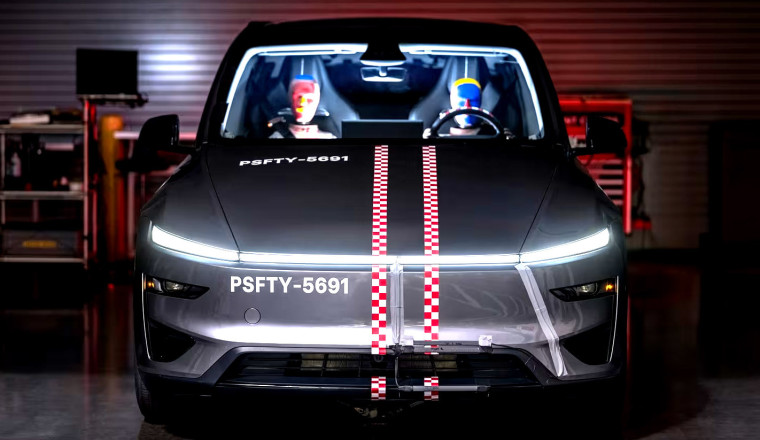
Perhaps eager to reassure shoppers about the safety of its vehicles, Tesla recently launched a new page on its website focused purely on safety. There, the company explains that its vehicles are designed to automatically activate hazard lights and unlock doors in the event of a serious collision. It also notes that the vehicle can contact emergency services autonomously.
However, Tesla also includes a key disclaimer: these features “may not be available in all regions or for all vehicles based on build date.”
While Tesla appears to be making some moves to address the issue in the future, questions still remain, not just about the company’s design choices, but also about the regulatory landscape and the lack of clear oversight. The analysis doesn’t claim that electronic door handles are inherently unsafe, but it does point to the need for more reliable fail-safes in situations where delays can be deadly.