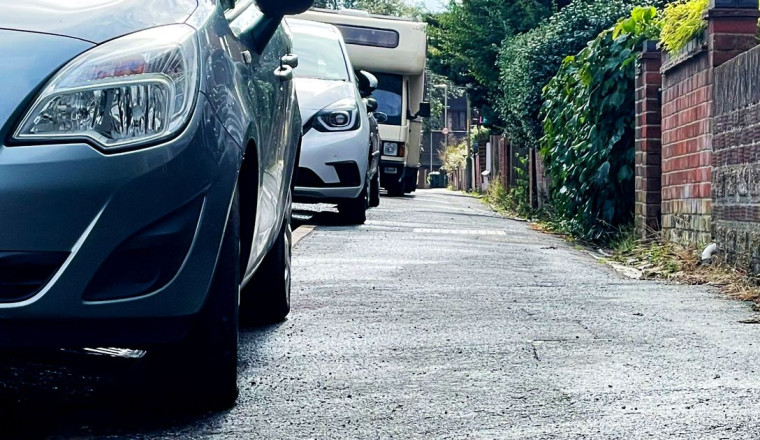

The government has announced new rules on pavement parking with additional powers to tackle the problem. Minister for Local Transport Lilian Greenwood said they are 'ensuring consistency, clarity and fairness for all road users'.
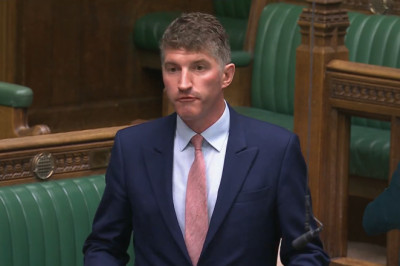
The update comes in response to a 2020 public consultation into pavement parking. Ms Greenwood said: "The government is taking forward a new, devolved approach to pavement parking, reflecting our commitment to decisions being made closer to the communities they affect. Local leaders know their communities best, so they are in the strongest position to meet local needs effectively.
"Our overarching objective to make pavements accessible and safe remains unchanged, but rather than introducing a ‘one size fits all’ national prohibition, which was one of the consultation options, we will instead enable local transport authorities to prohibit pavement parking across their areas at the next legislative opportunity. "
Pavement parking is already banned in Scotland and London - and the new powers mean local councils will also be able to bring in a ban.
Legislation will be introduced in 2026 to enable local authorities to enforce against 'unnecessary obstruction of the pavement'. Ms Greenwood said: "This provides a practical and proportionate interim solution, allowing councils to act where pavement parking is observed by uniformed civil enforcement officers. This power will sit alongside existing traffic regulation order-making powers, enabling councils to enforce pavement parking restrictions both where TROs are in place and in other areas where obstruction occurs."
She added: "Taken together, these steps will give local authorities the powers they need to address pavement parking effectively and fairly in their areas, and I commend the government’s response to the House."
RAC senior policy officer Rod Dennis said: “Our research shows a clear majority of drivers agree that no pavement user should be made to walk or wheel into the road because of someone else’s inconsiderate parking. These proposals should clear the way for councils to prevent pavement parking where it causes problems, but permit drivers to partially park on pavements where doing so helps keep traffic flowing and doesn’t inconvenience other people.”
It comes as a raft of new rules for drivers are also under consideration. Cutting the drink-drive limit in England and Wales is among Government plans.
The road safety strategy also proposes to require some convicted drink-drivers to have alcolocks fitted to their vehicles, and new powers to suspend driving licences for people suspected of drink or drug-driving offences. Other planned measures to be consulted on include introducing mandatory sight tests once drivers reach 70, a minimum learning period for new drivers, and a crackdown on uninsured drivers and illegal number plates.
The strategy – which is the first of its kind in more than a decade – aims to reduce deaths and serious injuries on Britain’s roads by 65% by 2035, and by 70% for children under 16.
Transport Secretary Heidi Alexander said: “Every life lost on our roads is a tragedy that devastates families and communities. For too long, progress on road safety has stalled. This strategy marks a turning point.
“We are taking decisive action to make our roads safer for everyone, from new drivers taking their first lessons to older motorists wanting to maintain their independence. The measures we are announcing today will save thousands of lives over the coming decade.”
The drink-drive limit in England, Wales and Northern Ireland is 35 micrograms of alcohol per 100ml of breath, which is the highest in Europe alongside Malta. Under the strategy, this may be reduced to 22 micrograms in England and Wales, bringing those nations into line with Scotland, which cut its drink-drive limit in 2014.
Officials hope introducing sight tests for drivers aged 70 and above will help protect all road users.