

By FREDA LEWIS-STEMPEL, MOTORING REPORTER
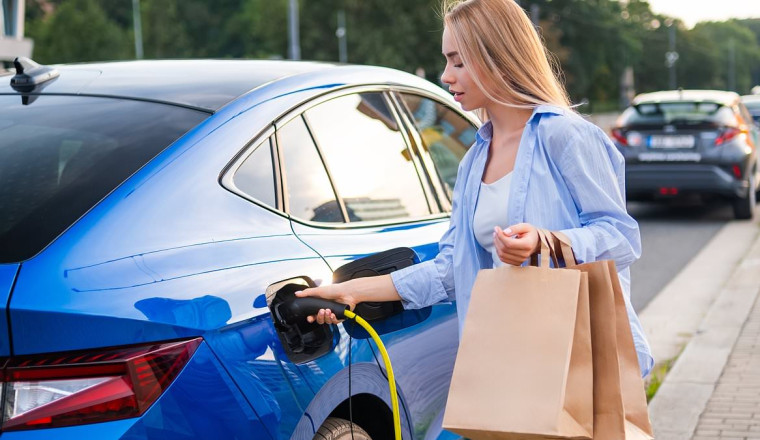
Electric vehicles sales took a sector-shuddering 'dip' in January with registrations rising by just 0.1 per cent in the first month of 2026.
Just 29,654 EVs were sold last month, which is only 20 more battery cars than were registered in January 2025.
With car sales across all fuel types rising 3.4 per cent to 144,127 units, it means EVs represented only 20.6 per cent market share in January, figures from the Society of Motor Manufacturers and Traders (SMMT) show.
This is the lowest market share since April 2025 and well below the 33 per cent binding sales targets set out by the government's Zero Emission Vehicle mandate.
Industry bosses said the flatlining sales performance was set against a strong January 2025, which saw buyers rush to get their hands on new EVs before Vehicle Excise Duty rules came into force in April that saw electric cars lose their road tax exemptions.
The motor trade body forecasts that EV market share will reach 28.5 per cent this year, due to increasing model choice, improved ranges and last year's re-introduction of electric car grants.
However, experts believe the Chancellor's announced pay-per-mile tax on electric cars - due to come into force in 2028 - has already started to weigh heavy on EV demand.
EV sales only rose 0.1% in January, with EVs holding their lowest market share since April 2025, new figures from the SMMT show
Even if EV uptake does rise to 28.5 per cent in 2026, this is still more than four percentage points short of the ZEV mandate threshold for the year.
The SMMT says this shortfall exists despite car makers investing billions in model development and discounts, and an improving charging network.
ZapMap data shows the UK public EV charging network grew by just over 19 per cent in 2025, with 14,097 new charge devices added over the year.
The SMMT is therefore urging pushing for 'a holistic review' of the transition to phasing out of new petrol and diesel models, before the proposed introduction of 'eVED' pay-per-mile tax in two years' time.

Rachel Reeves' announced in her Autumn Budget that electric vehicles will be subject to a highly controversial 3p per-mile road pricing charge from April 2028.
The Chancellor referred to this as a 'modest' charge.
John Cassidy, managing director at Close Brothers Motor Finance, said: 'The Government’s current [EV] incentives, such as the electric car grant, need to see a strategic alignment with tax policy. Direct pay-per-mile tax on electric vehicles may hamper consumer appetite.'
Plug-in hybrid cars - which have small batteries and are capable of running for a capped period on EV-only range - will be stung by eVED, with drivers forced to pay a 1.5p per mile charge on top of paying duties on petrol and diesel.
In her Autumn Budget Chancellor Rachel Reeves announced that electric vehicles will be subject to a highly controversial and so called 'modest' 3p per-mile road pricing charge from April 2028
Your browser does not support iframes.
Your browser does not support iframes.

Mike Hawes, the SMMT's chief executive, warned the 'pace of the EV transition may be slowing and is certainly behind mandated targets'.
He added: 'With sales of new pure petrol and diesel cars planned to end in less than four years, there needs to be a comprehensive review of the transition now, to ensure ambition can match reality.'
Vicky Edmonds, CEO of electric-car think tank EVA England, added: 'Despite strong growth in EV adoption, with nearly one in four new cars sold last year being electric, the latest figures reinforce the need to continue to do more to encourage drivers to switch.
'While we welcome the Government’s initiatives to tackle these issues, it is clear that further urgent action is needed.
'Without stronger signals to drivers that these are the right cars to buy, and better-targeted incentives at the right moment, many drivers will continue to be priced out of switching to electric.'
The new car market as a whole sold over 140,000 cars, marking the best start to a year since pre-pandemic 2020, and growth was recorded across all buyer types
While electric car sales flatlined, petrol and diesel registrations fell in January by 1.9% and 8.8% respectively. It was the incredible 47.3% growth in PHEV deliveries that really propped up the new vehicle market last month
The new car market as a whole is expected to swell 1.4 per cent this year, after shifting 144,127 units in the first month of 2026.
This is despite petrol car registrations declining by 1.9 per cent, with 68,757 deliveries in January down 1,300 units on the same month in 2025.
Diesel sales also continued to fall, last month by 8.8 per cent with only 7,862 new diesels entering the road. That represents around one in 20 new cars, down from one in two a decade ago.
Propping up the market's performance last month was plug-in hybrids, which recorded an impressive 47.3 per cent growth.
With the new car market surpassing 140,000 deliveries last month, it marked the strongest start to a calendar year since pre-pandemic 2020
The Kia Sportage (left) was the best-selling car in January with 4,675 deliveries. Close behind in second place was the Chinese 'Temu Range Rover' - the Jaecoo 7 (right) - with 4,059 registrations
This was driven predominantly by the available of new PHEVs from Chinese brands, including Jaecoo's 7 SUV, which was the second most-sold car in January.

The 7 amassed 4,059 registrations in total last month, beaten only by the Kia Sportage (4,675), which - like the Jaecoo - is available with the choice of petrol and PHEV drivetrains.
January also signalled the dramatic growth of Chinese brands in Britain.
While MG remained the most popular of all Chinese marques last month, its 5,079 deliveries were down 6.6 per cent on January 2025. It was the 14th best-selling brand of all.
Jaecoo was 15th with 4,850 sales - a remarkable feat given the brand launched in January last year.
BYD was two places lower with 4,021 sales, with the three biggest Chinese players in the UK all outselling Volvo, Mini and Citroen.
Newcomer Chery (which is also the parent group of Jaecoo and Omoda) chalked-up 2,127 sales in January, having only entered the UK market in August. It was 23rd in the popularity charts above Dacia and sister brand Omoda (1,846).
With the new car market surpassing 140,000 deliveries last month, it marked the strongest start to a calendar year since pre-pandemic 2020 - and growth was recorded across all buyer types.
Private sales increased 4.5 per cent, while fleet sales increased 1.6 per cent.
Even low-volume sales - these kind of manufacturers include Morgan, Aston Martin and Rolls-Royce - recorded a rise in sales, with a 46.5 per cent increase in uptake.
Matas Buzelis from vehicle history check provider Carvertical, said: 'Today’s SMMT figures show the new car market has got off to a positive start in 2026, suggesting more drivers are feeling ready to commit when the right deal is on the table.
'Manufacturers have been working hard to stay competitive, and stronger registrations typically reflect a combination of pricing, availability and improved confidence.'
The This is Money Motoring Club is designed to make car ownership cheaper and simpler for This is Money and Daily Mail readers.
Powered by MotorEasy it's the place to keep on top of tax, MOTs and servicing - and manage the important documents and receipts that boost your car’s value.
You can also save money on maintenance and repairs - and book into one of 10,000 trusted workshops nationwide.
New members receive a £20 reward voucher, which you can put towards repairs or even a warranty - giving you peace of mind that if something goes wrong, you won’t be left footing the bill.
You can even get £20 off an MOT with one of MotorEasy's listed providers.
> Find out more about the This is Money Motoring Club