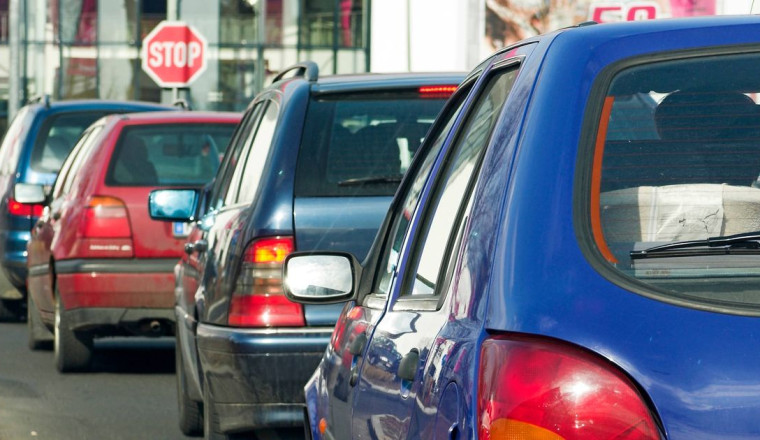

Whether you're an experienced driver or just starting out, having another car glued to your bumper can be incredibly frustrating.
However, it's far more than just an annoyance – because it poses a genuine hazard by removing the vital stopping distance required if you need to brake unexpectedly.
Tailgating remains a frequent factor in road traffic collisions and can result in serious injuries or deaths in the most severe cases. So what should you do when you spot someone driving dangerously close behind you?
Annie Winterburn, who runs Spot On Driving, highlights that many motorists are uncertain about how to tackle this scenario, as slamming on the brakes could cause a crash.
The driving specialist recommends: "If the car behind is too close to you and you have to brake suddenly, that car behind you will crash into the back of you. So you have to make sure you don't have to brake suddenly."
To manage tailgaters safely, Annie suggests you should "leave a bigger gap between your car and the car in front of you".
This approach enables you to slow down gradually if the vehicle in front stops abruptly, giving the tailgating driver time to brake safely too.
Driving instructor Annie pointed out that this specific guidance frequently appears in theory tests. It shows just how prevalent the problem is on our roads.
She explained: "You should leave at least a 2-second time gap, on dry roads, between your car and the vehicle in front of you. This is doubled to 4-seconds on wet roads and is ten times the gap on icy roads. Ten times the gap is 20-seconds."
The DVLA has emphasised the legal ramifications of 'driving without due care and attention', which includes tailgating.
Motorists caught driving too close to the vehicle ahead could be hit with a fine starting at £100 and three penalty points on their licence. In more serious instances, drivers could end up in court facing heftier penalties.
After research revealed that tailgating is responsible for one in eight collisions on England's motorways and major A roads, National Highways launched a campaign in 2022 to tackle the issue.
The Highway Code recommends drivers keep a minimum two-second gap from the vehicle in front, a distance that should be increased in high-speed zones and tunnels where visibility might be reduced.
Further guidance on the government's website sets out the recommended distances. It adds: "The gap should be wider as speeds increase. It rises to 2.4 seconds - about 53 metres - when driving at 50mph and 3.1 seconds - or 96 metres - at 70mph."
Jason Wakeford, the campaign chief at Brake, the road safety charity, emphasised the importance of this advice. He further declared: "It's vital that drivers leave enough distance between the vehicle in front in order to react in time to any sudden dangers. We'd urge everyone to respect the two-second rule to keep them, and others on the road, safe."