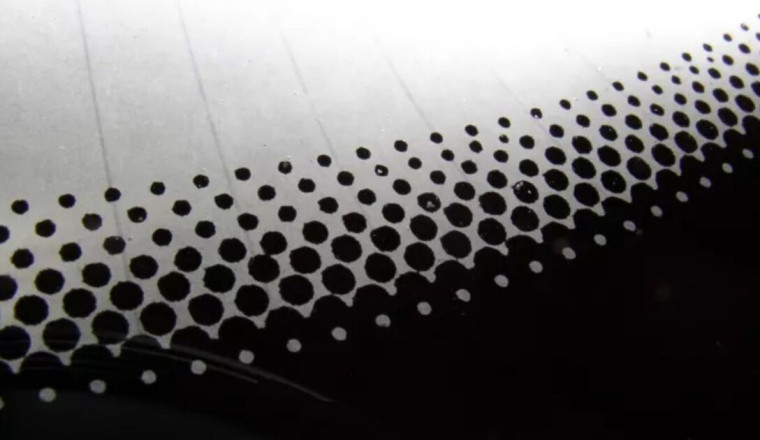

Motorists have only just discovered that the black dots on car windscreens serve a hidden purpose. Drivers across the UK will have noticed that vehicles feature a series of black dots on the windscreen.
Known as a "frit", these black dots are typically located on the outer edges of the front windscreen adjacent to an enamel bar, and can be found on nearly every car in the UK.
However, beyond their distinctive appearance, there is a concealed function behind the "frit". The black dots help to regulate the vehicle's temperature and ensure the glass remains firmly in position.
The black enamel shields the urethane sealant from the sun's ultraviolet rays, thereby preventing cracks or deterioration.
Adhesives are now employed to secure the glass in place, and the "frit" band is required to keep them intact and safeguard the adhesive.
Specialists at Autoglaze explained: "The black dots, or dot matrix, actually help distribute temperature evenly to lessen optical distortion."
This happens when the frit band (the solid black one) heats up much faster than the windscreen's glass, creating an optical distortion that makes either straight lines look curved or bowed inwards toward the centre.
"Those 'gradually sinking' black dots help lessen this phenomenon by dissipating the heat and spreading it out evenly. Frits are slowly evolving over the years and modern cars now add "third visor frits" right behind the rear-view mirror to block the sun between two sun visors."
Whilst the dots also serve a stylistic purpose, the bands ensure the glass remains fixed to the windscreen. The black dots are crucial for drivers, especially during the winter months, as they help to control heat and enhance visibility.
Despite their significance, manufacturers have made sure that the black dots adhere to design standards, transitioning smoothly from a solid black line to dots – all with a sleek polished finish.