

► Nissan’s Vision explained
► Fewer models, more choice
► Efficiency and technology will win
Nissan has just revealed a new roadmap which it believes will put it back at the forefront of innovation and tilt it towards growth. Catchily named ‘Mobility Intelligence for Everyday Life,’ it was outlined at Nissan’s Vision event in Tokyo today. It may sound like an automotive word salad – but the plan itself seems to have real substance.
Designed to combat Nissan’s ailing state, the new strategy further clarifies the Re:Nissan plan and injects efficiency into everything the company does. ‘Clearer, sharper and closer to everyday life,’ said President and CEO Ivan Espinosa of the new plan.
Like this? Get more CAR delivered to your browser! Click here to add CAR Magazine as a preferred source on Google.
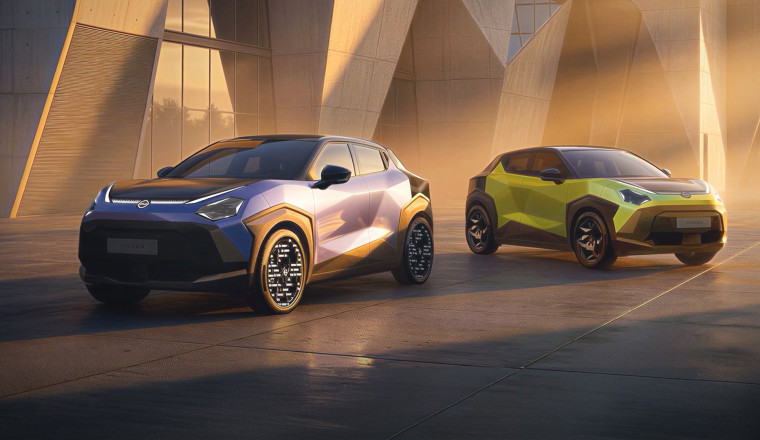
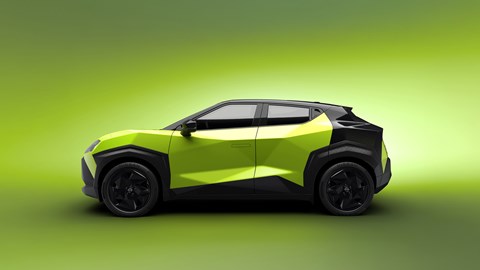
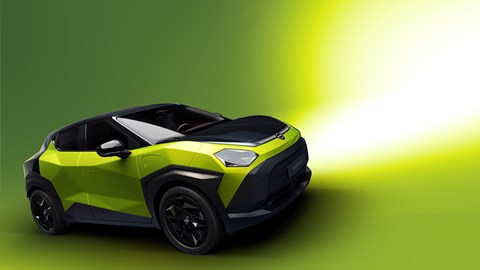
As you’d expect from any roadmap published in 2026, it’s focused around two key areas: electrification and AI-led intelligence. In Europe, the former will be spearheaded by the Micra EV, the newly revealed Nissan Juke EV (which will be built in Sunderland and sold in Europe) and a forthcoming A-segment EV. It’ll also be supported by a suite of hybrids, which remain an important ‘bridge to BEV.’
A history of over investing
The silent part of the plan is an acceptance that Nissan is bloated, and out of shape right now – mainly due to a period of unsustainable investment.
‘We had an ambition of growing the company far beyond the natural growth that the company could accept; in terms of brand positioning, brand strength and revenue commanding capabilities’ explained Ivan Espinosa, president and CEO of Nissan.
‘This was the behaviour of the company for maybe 10 years, and the volume reached a peak of 5.7 million. But the company was designed to receive 8 million cars.’
Nissan still aims to go big on its key strengths, but it’ll do so in a more focused, deliberate fashion: ‘That’s how we formulated this new plan, which started with re:Nissan,’ explained Espinosa. ‘We needed a bit of a strong shot of medicine unfortunately, because there were many hopes for growing the company that didn’t happen.’
Fewer models, more choice
Nissan models are now divided into three categories: Heartbeat models that carry the brand essence, Core models that deliver volume and Growth models that aim to exploit new sectors. Those three will cover more than 80% of the brand’s overall volume. Finally. partner models such as the Micra (in cooperation with Renault) fill in the gaps.
As part of this reorganisation, the overall line up will be condensed from 56 to 45 models – though those remaining 45 will offer more powertrain choices than before.
Three markets, one Nissan
In a similar way, Nissan has stopped trying to focus on the global picture and is simply focusing on its three most important markets: Japan, the U.S and China. Each market serves a dual purpose, in addition to delivering volume and revenue.
Japan is all about brand position and strength, while the Chinese market is concerned with fast-forwarding to the ‘China speed’ we’re used to seeing from the likes of Geely and Chery. Nissan believes that the work practices developed in these markets will osmose to the rest of the world.
What about the other technology?
Nissan is heavily focused on using AI in autonomous driving and in AIDC (AI-Defined Vehicles) but more interesting are its possible targets around solid-state battery technology. Both are perennially two years away from production: solid-state has a target of 2028 mentioned, while the new Nissan Elgrand promises to debut end-to-end autonomous capability by the end of fiscal 2027.
Will it work?
‘It was very impressive for me how quickly we came into the sharpness of our mission,’ said Espinosa, explaining how the plan came together, ‘because we are a company that has deep roots in technology.’
Less ambitious on the surface but braver in what it perhaps doesn’t do, Nissan’s new strategy feels like a dose of common sense. It’s both more deliberate and conservative in its approach, but that’s relatively radical when you consider the behaviour of the company in the last ten years.