
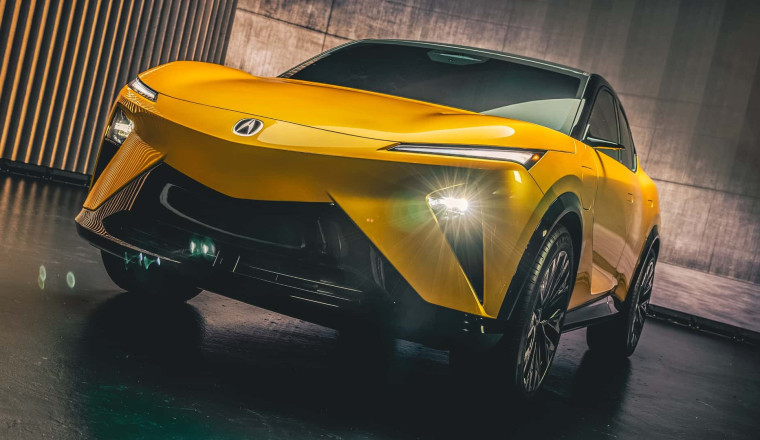

Honda announced on Thursday that it is cancelling the development and production of the Honda 0 Series SUV, the Honda 0 Sedan, and the Acura RSX electric crossover, all three of which were scheduled to be built at Honda's EV Hub in Ohio. The company cited the slowdown in US EV market growth, the ongoing uncertainty of American tariff policy, and what it called "various factors including recent changes in the business environment." The financial consequence is a projected total loss of up to $15.8 billion.
The Honda 0 Series cars had been presented as flagship statements of Honda's EV direction. Unveiled at CES in Las Vegas in January 2025, they represented Honda's first vehicles on its own in-house EV platform rather than the GM Ultium architecture borrowed for the Prologue and the now-defunct Acura ZDX. The design was distinctive, the Sedan in particular drew comparisons to a Dustbuster in early press coverage, not entirely affectionately and Honda had committed to Ohio manufacturing as both a strategic and political statement in an era of American industrial politics. That commitment is now cancelled.
The Acura RSX was scheduled to begin production in the second half of 2026. It had been positioned as the replacement for the TLX sedan, which Honda ended production of in July 2025 after 30 years and more than one million North American sales, and as the successor to the ZDX electric SUV, which was discontinued after just one model year in September 2025 following what Honda described as changing market conditions. The ZDX had been built on the GM Ultium platform at GM's Spring Hill, Tennessee plant, and had required discounts of up to $30,000 off MSRP to move. The RSX was supposed to fix all of that — Honda's own platform, Honda's own factory, Acura's own identity. It will not now be built.
Acura, to be clear, is not being discontinued. The brand will continue with the Integra, the ADX, the RDX and the MDX. But every EV it had coming is now gone. The Ohio plant that was being retooled as an EV hub will revert to producing what it has always produced reliably and profitably: the Honda Accord and the Acura Integra. The future Acura was supposed to drive has been cancelled.
Like this? Get the app: iOS | Android
Honda's replacement plan is hybrids. The company is strengthening the Civic Hybrid, developing a new V6 hybrid powertrain for the Passport, Pilot and Acura MDX, and says it will further outline its revised long-term business strategy in May. The phrasing in the official statement was careful but clear: Honda will "reassess its resource allocations and further strengthen its hybrid models." Hybrids sell. The Honda CR-V Hybrid is among the best-selling vehicles Honda makes in North America. The transition path away from combustion that runs through hybrid technology is, commercially, far less risky than a straight jump to battery electric in a market where the federal EV tax credit has been eliminated and tariff costs are rising.
Honda is not alone in this reassessment. Ford, as MotorBuzz reported in our Mustang Mach-E sales coverage, watched Mach-E sales fall 70.5 per cent in a single month after the tax credit expired. GM has been adjusting EV production targets. Toyota, which was criticised for moving too slowly on EVs, now looks vindicated by its hybrid-first strategy. The market is telling the industry something that the industry is finally listening to: consumers want electrification in the form of manageable, practical technology, not a binary leap to infrastructure they are not yet confident in.
The $15.8 billion Honda is writing off is real money. It is also, in the context of Honda's overall capitalisation, survivable. What is not so easily recovered is the brand narrative that the 0 Series represented: a Honda taking big swings on a clean-sheet EV platform, making something genuinely new, and betting on the future at Ohio. That narrative lasted about fourteen months from reveal to cancellation.
The Ohio factory will build Accords. The Acura lineup will be ICE and hybrid. The RSX that was supposed to revive the nameplate, and with it some of the emotional energy of the original RSX Type-S, will exist only in the renders Honda showed the press at trade shows and then withdrew.
Sources: Edmunds, 13 March 2026 | GM Authority, 13 March 2026 | Electrek, September 2025 | CarBuzz, July 2025 | Truth About Cars, September 2025 | Autoblog, October 2025 | MotorBuzz Mustang Mach-E sales