

by Thanos Pappas
- Greece deployed AI cameras in central Athens locations.
- 2,500 violations were recorded in just four days of use.
- Eight pilot zones were monitored during initial rollout.
Artificial intelligence is everywhere these days, increasingly cast in roles once reserved for humans, including traffic enforcement. In Greece, authorities have embraced a new, more convenient and cost-effective method to catch drivers in the act using AI-powered cameras.
A pilot rollout across eight locations in Athens recorded nearly 2,500 serious violations in just four days, offering a rather blunt reminder that many drivers aren’t exactly sticklers for the rules.
The counterargument, of course, is that if you start flagging every minor infraction, even the most conscientious drivers, and yes, even policemen, begin to look like offenders.
What Are These Smart Cameras Catching?
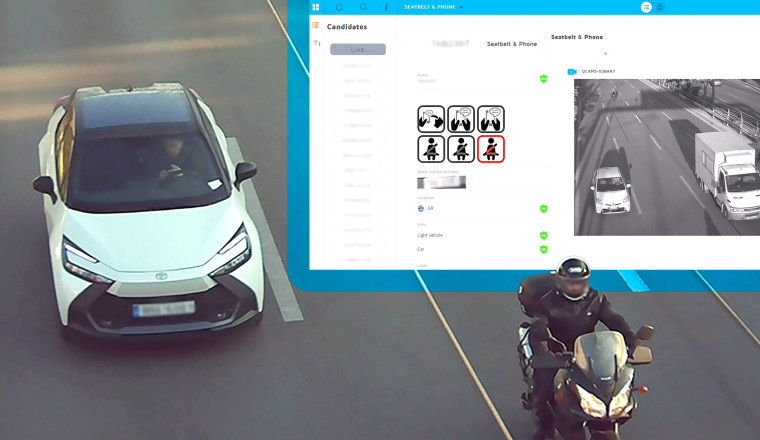
Beyond speeding and ignoring traffic signals, the AI cameras are programmed to spot a range of infractions. These include drivers not wearing seatbelts, using phones at the wheel, and misusing emergency lanes.
When a violation is detected, the camera captures a time-stamped video and still image, both encrypted to ensure the integrity of the evidence.
More: This Guy Makes Over $100,000 Snitching On NYC’s Most Annoying Traffic Offense
Fines aren’t delivered by a police officer at the roadside. Instead, offenders receive digital notifications, by SMS, email, or through a government portal, where they can pay the fine directly. An appeal process exists, though the video evidence usually leaves little room for argument.
One Camera, One Thousand Violations
According to the authorities, a single AI camera on Syngrou Avenue, the major thoroughfare linking Athens to the port of Piraeus, recorded over 1,000 violations in just four days. That location alone accounted for nearly half of all infractions picked up during the pilot period.
Elsewhere, the numbers were no less revealing. At the busy intersection of Mesogeion and Halandriou avenues in Agia Paraskevi, 480 drivers ran a red light. Another 285 were caught doing the same at the junction of Vouliagmenis Avenue and Tinou Street in Kalithea. In short, the problem isn’t isolated.
More: Radar Catches Repeat Offender At Twice The Speed Limit, But They Don’t Give Two Quacks
Those not wearing a seatbelt or using a mobile phone behind the wheel face a fine of €350 (equal to $410 at current exchange rates), while speeding could cost Greek drivers between €150-750 ($180-880) depending on the case.
With that scale of penalties, it is estimated that a single AI camera could generate up to €750,000 ($880,000) in fines in just three days. Whether that’s a sign of deterrence or dysfunction is open to interpretation, but the revenue potential is real.
From Pilot Project to Citywide Surveillance
Currently, just eight AI camera locations are active, all operated by the Ministry of Digital Governance. But that’s about to change. Plans are underway to expand the network to 2,000 fixed cameras across the country, along with 500 mobile units. These will be mounted on public buses and used to monitor unauthorized use of dedicated bus lanes.
Officials hope the expanded system will reduce traffic accidents and fatalities, ease pressure on police resources, and generate consistent revenue for public services. Whether or not it changes driver behavior, the state seems ready to lean into automation.
Digital Governance Minister Dimitris Papastergiou told Kathimerini that the government’s intention is not to punish but to protect. “This is a political decision with a clear social objective: to reduce traffic accidents and save human lives,” he said. “We are not adopting a punitive approach. We want citizens to know that the rules apply to everyone and are enforced in a fair and modern way.”
Not Just a Greek Experiment
Greece is not alone in turning to technology for traffic enforcement. AI cameras are already in use in countries such as the UK, Germany, France, Spain, Australia, India, China, Japan, and across the Middle East and the United States. The road ahead, for many, will be watched.