
Love the Cybertruck. Hate the wiper system. Tesla needs to issue a voluntary service providing a free upgraded/redesigned wiper arm and sprayer. This is not a one-time event. Happens every time we hit salt/slush and snow. It's highly unsafe. That Twitter complaint from a Cybertruck owner driving Interstate 70 captures what's become painfully obvious as winter storms batter North America: the truck's signature four foot single wiper blade simply doesn't work when conditions get difficult.
As of December 23, 2025, Tesla has opened an active Engineering Investigation into the performance of the Cybertruck's substantial windshield wiper, affectionately dubbed the Gigawiper. The investigation comes despite earlier attempts to fix the problem through software updates and a June 2024 recall that replaced faulty wiper motors. Tesla already replaced the original V1 arm assembly on many early Cybertrucks with a V2, but according to certain service staff, a V3 arm assembly is already in early testing stages.
The Problems Keep Piling Up
Improper stowage at high speeds, where the wiper arms do not return to the correct angle, slightly obstructing the driver's view. Poor contact during operation, leading to ineffective cleaning over crucial forward facing Full Self Driving cameras and the passenger side of the windshield, often rendering FSD unavailable in certain conditions. Faulty washer fluid delivery due to kinks in the hose assembly or loose fittings, which causes leaks or dribbles rather than a proper spray.
Winter has made everything worse. Owners report the blade fails to clear snow and slush effectively, leaving dangerous blind spots. Salt spray accumulates faster than the wiper can remove it. Many owners say the blade fails to adequately clean the area in front of the forward facing FSD cameras or the passenger side of the glass, often leaving Full Self Driving unavailable in snowy or salty winter conditions. You've paid for autonomous driving features that don't work because the wiper can't keep cameras clean.
One owner's complaint to Tesla service revealed the scope of the problem. The service notes state that wiper performance is now under active engineering investigation and that the customer will be contacted once a broader solution becomes available. That's service documentation admitting this goes beyond isolated failures. Explicit mention of an ongoing engineering investigation suggests the issue may extend beyond a single vehicle or defective component. It also implies that Tesla engineers are assessing whether the problem is related to design, software control, hardware tolerances, or environmental factors.
The Design Was Ambitious. Too Ambitious.
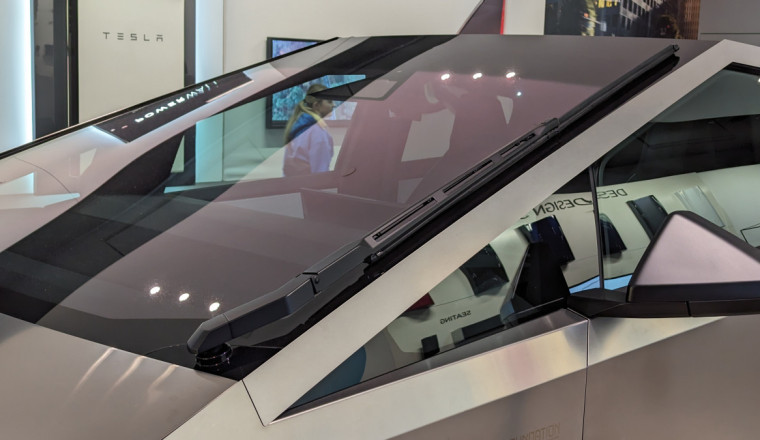
The Cybertruck incorporates the largest single wiper blade found on a passenger vehicle, measuring an impressive 4 feet in length, designed to effectively clean the vehicle's extensive and flat windshield. That unconventional approach also introduces new challenges, including blade pressure distribution, arm flex, motor torque, and performance at highway speeds or in heavy rain and snow.
A single blade spanning four feet across a flat windshield creates physics problems no software update can fix. The pressure applied at the blade root differs dramatically from the pressure at the tip. The arm flexes under load. The motor struggles to maintain consistent speed across the entire sweep. And when salt, slush, or snow overwhelms the system, visibility vanishes exactly when you need it most.
Tesla Admits Defeat on Future Models
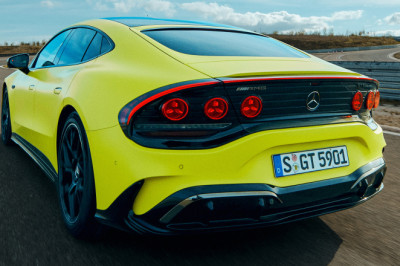
The production ready version of the Cybercab autonomous two seater is now coming with a regular dual wiper system with two arms and two blades instead of the monowiper that was styled after the Cybertruck's windshield wiping concept. The sheer fact that Tesla has given up on the single wiper system for the Cybercab and has placed the Gigawiper concept under engineering investigation could lead to a massive physical Cybertruck recall.
That's the most damning evidence. Tesla's next vehicle abandons the entire single wiper concept and returns to conventional dual blade systems. The company tried making the Gigawiper work. They failed. And rather than repeat the mistake on future models, they're admitting defeat by going back to proven technology.
Owner Frustration Boils Over
Social media is filled with Cybertruck owners venting about dangerous conditions created by inadequate wiper performance. The Cybertruck windshield wiper is the absolute worst piece of engineering to ever come out of Tesla. I mean, holy f*ck it's bad. It can't clean a dirty windshield. There needs to be a recall, one owner posted alongside video of salt spray obscuring visibility.
Tesla recalled the wiper motors in June 2024 and has also updated the software, aiming to improve the blade's movement and how it sits when not in use. A revised V2 blade has also been installed on many trucks, but that version appears to have its own reliability concerns. Each fix creates new problems. Owners who've been through multiple service visits report ongoing issues regardless of which hardware or software version they're running.
The Investigation Continues
The service note confirms that Tesla is conducting an investigation and will reach out to customers when a solution is available. While not always a direct indication, Engineering Investigations often lead to manufacturer initiated recalls. We expect that Tesla suspects a mechanical deficiency in the wiper arm assembly itself, possibly related to the spring tension, hose mount, or structural rigidity, rather than just a calibration issue.
For now, owners experiencing wiper issues should log a service ticket. Replacing a wiper blade with a fresh one seems to resolve at least some of the ongoing issues, but not all. That's Tesla's current solution. Replace the blade and hope. If that doesn't work, wait for V3 hardware that may or may not fix fundamental design problems.
The Cybertruck was supposed to redefine what pickup trucks could be. Bold, futuristic, uncompromising. The single wiper blade was part of that vision, a dramatic departure from conventional design that emphasized the vehicle's radical nature. Two years after deliveries began, that bold design choice has become a winter safety hazard that Tesla can't fix through recalls or software updates. Sometimes conventional engineering exists for good reason. The Cybertruck's wiper proves it.