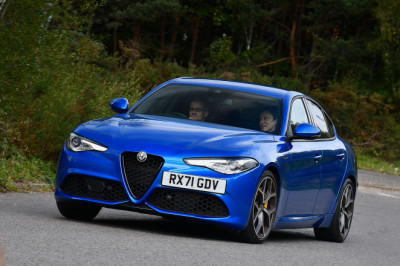
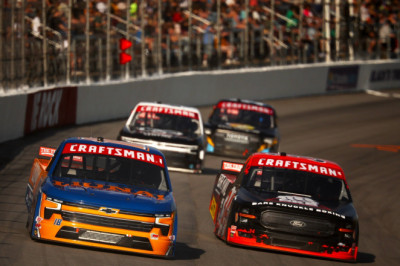
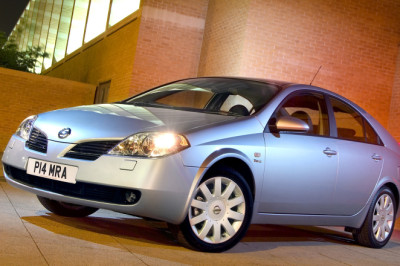
If you've been behind the wheel of a variety of automobiles, from compact sedans and crossovers to pickups and SUVs, you can likely attest to the vast differences in the driving experience between each. One thing you may have noticed is that many cars feature a windshield that's aggressively angled. Although, in some cases it's absent entirely, like with the Mercedes-AMG PureSpeed that ditches the windshield for a ton of cool points. However, larger vehicles like big rigs or class A motorhomes typically have a windshield that's nearly vertical in its positioning. This isn't simply a design choice, but rather a matter of safety.
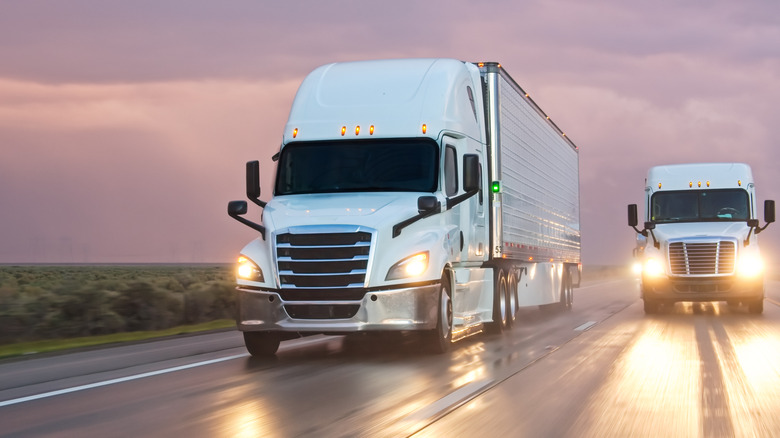
Visual distortion through the glass becomes much more evident when the windshield is slanted, and is also more prominent the larger the windshield is. Cars can get away with an angled orientation because the windshields are much smaller. A semi truck, on the other hand, uses a more expansive piece of glass, so those visual anomalies (which can give off a wavy appearance) can become a safety issue. Not only can these distortions be disorienting, but they can also affect things like depth perception, which is critical in any driving scenario, but especially so in a vehicle that can weight up to 80,000 pounds.
 Halbergman/Getty Images
Colossal vehicles like big rigs and buses have larger windshields to provide a greater amount of visibility to the driver. A standard car's windshield measures around 31.5 inches tall by 59 inches wide, while a sizeable motorhome may have one 71 inches tall and 104 inches wide. Although, the size of the glass doesn't always necessarily translate to its price, as windshield replacement costs a fortune for these cars, despite the fact that their windshields are smaller than those of a semi. Not only is the glass more significant in its dimensions, but you'll also notice a lack of curvature on large vehicle windshields. In fact, some semis have a nearly completely flat glass design, enhancing a driver's ability to see outside the truck from different viewing angles.
However, cars do benefit from the aerodynamic enhancement achieved using slanted windshields. The engine is always working against the resistance of air as it propels a vehicle forward. Automotive engineers have leaned into wind tunnel testing since the late 1920s and early '30s. You can tell just by comparing the differences in shape between something like the Ford Model T, with its sharp boxy design, and the visibly sleeker 1934 Ford Model 40 Special Speedster. These tests accurately showcase how flowing air reacts to the car's body, allowing for changes that reduce drag, put less stress on the engine, and enhance efficiency.
Okay, but shouldn't semis also want to be more aerodynamic? Yes, but not at the cost of reducing visibility. Many big rigs do have extra features designed to reduce drag, such as a raised and curved cab roof, trailer skirts, and even TrailerTail aerodynamic systems (the pieces you see affixed to the back of the trailer).