

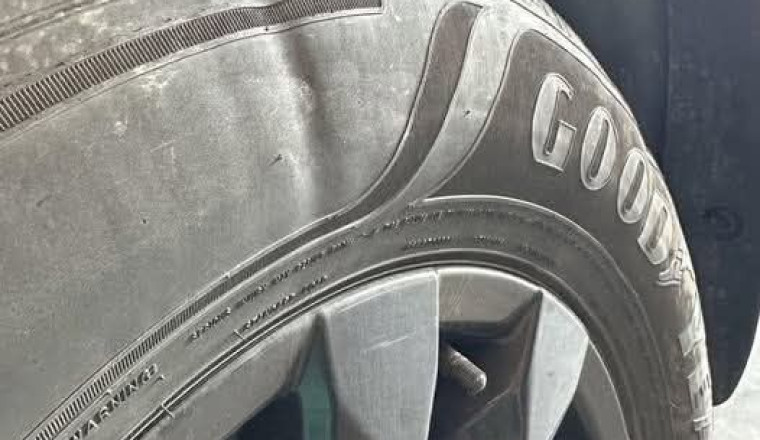

You bend down to check your tyres and spot it, a mysterious divot or dent in the sidewall that just wasn’t there yesterday. Is your tyre about to blow, or is this no big deal? Spoiler: it’s almost never something to ignore.
First off, those “divots” can be a sign of a manufacturing imperfection a result of overlapping fabric plies inside the tyre that don’t stretch the same way as the rest of the rubber when inflated. In those cases, the dent can sometimes be purely cosmetic and not a risk if the tyre is brand new and the indention lines up with where you’d expect ply overlaps. But sometimes, especially if the tyre is older or the dent wasn’t always there, it’s the start of something much worse.
Impact damage is public enemy number one for sidewalls. A pothole, curb strike, or nasty bit of road debris hammers the internal cords and leaves a weak spot behind. Under-inflated tyres or overloading can make the problem much worse, leading to sidewall deformations and bulges or, just before all that, a divot as the structure inside starts to let go. When the internal supporting cords fail, you’re one sharp turn or emergency stop away from a blowout.
Bottom line? If the tyre is fresh and the divot is subtle, it might be safe, but you need a pro to check it. If the dent showed up after a hit, or it feels softer than the rest of the rubber, park it and get it inspected fast. Sidewall damage isn’t like tread wear, you can’t just patch it up and hope for the best. Safety first, wallet second.